


 admin
admin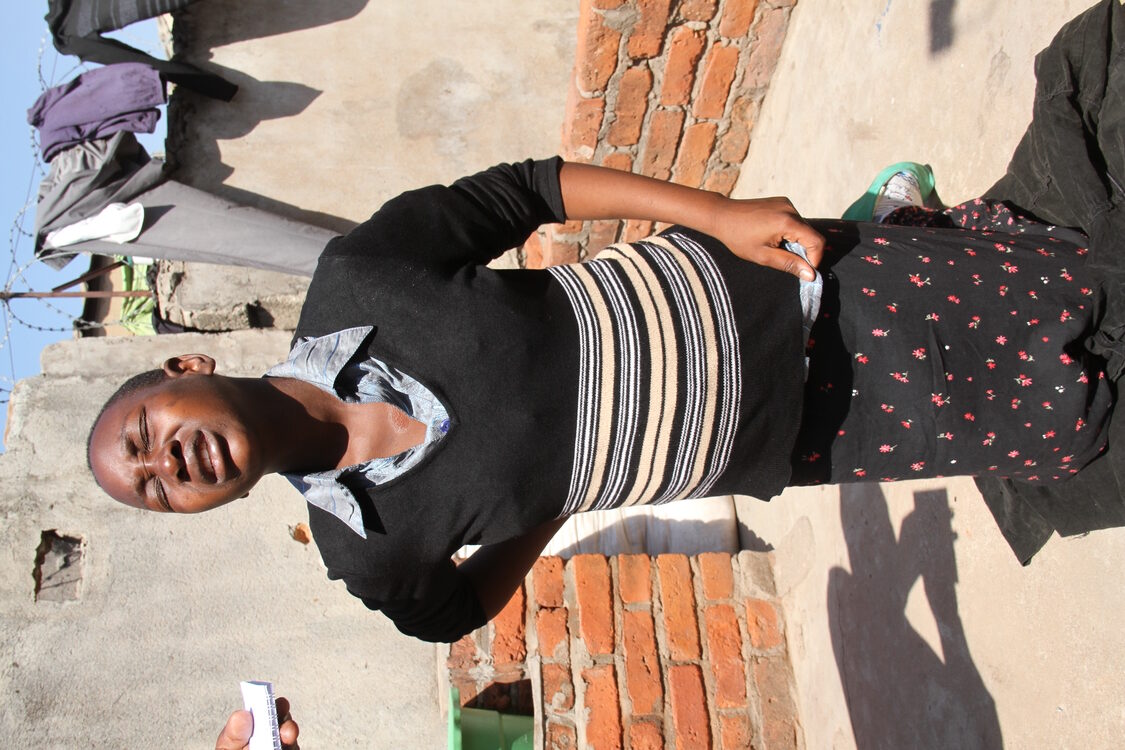
Medical experts have said that Tarisai Batoni, the young woman who recently appeared in our sister paper Kwayedza claiming that she is growing genital warts that resemble mushrooms, flowers and animal footprints, is actually suffering from extensive genital warts.
Tarisai, who was also pregnant at the time, told Kwayedza that she was bewitched by a South African man whom she had slept with for money a few years ago.

But according to Tarisai’s clinical report from Glen Norah Antenatal Care Clinic, the 21-year-old, who has since given birth to a baby boy, is suffering from extensive genital warts that are growing like cancerous cells, covering her female reproductive organ as well as her anal region, to the extent that she cannot wear undergarments.
While others still believe that she is a victim of a sexual ritual, local health experts said she always had the genital warts but they only grew extensively due to her pregnancy.
In a bid to understand her medical condition, The Sunday Mail Extra visited Tarisai in Glen Norah last week. Her aunt, Ms Elboy Batoni was busy cleaning the sofas that had been stained by watery excretions from Tarisai’s warts while she was holding her yet-to-be-christened eight-day old baby.
“I am still in pain from the caesarian operation I had for my baby at Parirenyatwa Central Hospital recently. However, that operation is nothing compared to the genital warts I have,” said Tarisai as she breastfed her son.
“These warts hurt so bad that I always cry out loud when I urinate or try to excrete. I experience excruciating pain every time I make any movement.”
She said she has been keeping the genital warts for four years without seeking treatment because they were not yet serious. Unfortunately when she fell pregnant, the warts started growing with each day.
She added: “What I experience is worse than being skinned alive. In some cases the pain brings a lot of confusion, depression and suicidal thoughts.”
Tarisai was once diagnosed with herpes in 2003 when she was still doing Grade 3 at a local primary school. Obviously, this shocked her relatives.
“When the herpes virus affected Tarisai’s stomach, we initially thought that she was sexually abused by someone who was also infected,” said her aunt, .
“However, it turned out that she got the viral infection from her grandmother who was also infected around her neck. The herpes re-appeared on her stomach in 2007.”
She said since childhood, her niece has been having on and off flu attacks, headaches and stomach pains.
This led Ms Batoni to think that maybe Tarisai was born HIV-positive.
“Tarisai’s father, my brother, passed away after a long illness when she was an infant. This also increases the possibilities that she was born with HIV.”
However, Tarisai only got to know her HIV status in 2008 when she got tested after falling ill.
During that time, she was staying in Chikurubi, she tested positive and was put on anti-retroviral treatment (ART). Unfortunately, she relocated to Kwekwe and defaulted on her treatment.
“Tarisai has a negative attitude towards ART, during her pregnancy she never took her medication. Instead, she threw away her pills and sometimes hid them,” Ms Batoni said.
“Her immune system is very weak and she is not consistent with her treatment. This is the main reason why her warts are not improving and it may take longer for her operation wound to heal.
“My fears are that she may have transmitted the virus to her baby, because her baby is not growing. She struggles to breastfeed him, especially during the night.
“As such, I always wake her up and hold the breast for her while her baby suckles the milk,” she said with a sad face.
Ms Batoni has been taking care of her niece since she relocated from Kwekwe to Harare.
Dr Steven Dhlovu, a local general practitioner, said genital warts are treated by a process called cauterisation.
“The warts easily bleed and are very painful, I have seen it in my patients. This young lady should see a gynaecologist who will dissolve the warts with electricity through a process called cauterisation,” Dr Dhlovu explained.
“Such warts are a precedent of genital cancers and after being cauterised, they can re-appear if the person carrying the virus has a low immune system.”
He said during pregnancy, a woman’s immune system is weakened and as such if a pregnant woman is having untreated warts, they can grow continuously.
Dr Ndlovu added: “Tarisai’s situation is being worsened by her HIV status, therefore she has to be on ART to ease her pain and boost her immunity, even after cauterisation.
National Aids Council (NAC) Monitoring and Evaluation director, Mr Amon Mpofu urged people to adhere to ART to prevent opportunistic infections such as genital warts, among others.
“It is essential for people living with HIV to be on treatment in order to suppress the virus. If the virus is suppressed, the chances of genital warts recurrence will be reduced,” said Mr Mpofu.
Ministry of Health and Child Care national co-ordinator of prevention of mother to child HIV transition, Dr Angela Mushavi said there are chances that Tarisai’s baby may have been infected during early and mid-pregnancy.
“While it is possible that her baby may still turn out to be HIV-negative, there are higher chances that this baby may be HIV-positive because Tarisai was not taking any measures of preventing HIV transmission to her son,” said Dr Mushavi.
She said the risk of HIV transmission from mother to child is 20 to 45 percent in the absence of any interventions.



 Online Reporter