admin
admin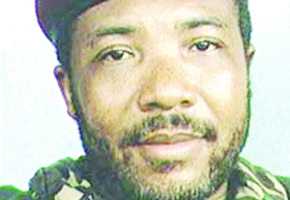
Yet not one of these well thinking governments, whose record in the last five centuries demonstrate that the wellbeing of the African people is the least of their concerns, has the audacity to talk about their ties with these “evil dictators”.
Who is Charles Taylor? How did he become the leader of Liberia?
Why must his demise be a lesson to African leaders who are blindly aligning themselves behind ruthless imperialist forces?
Charles Taylor was born in 1948 and brought up in a relatively well-to-do family, to an Americano-Liberian father and to a mother of the Gola ethnic group.
By 1972, the 24-year-old Taylor obtained a United States student visa and arrived in Boston, Massachussetts, where he first attended Newton’s Chamberlayne Junior College, before continuing at Bentley College. During his undergraduate years at Bentley, Taylor joined the Union of Liberian Associations (ULA). He rose through the ranks of the organisation to become its national chairman.
It was while he chaired the ULA that Taylor emerged as a political force. In 1979, then-Liberian President William Tolbert visited the United States. Taylor led a demonstration outside the Liberian mission in New York City to protest Tolbert’s policies. Rather than ignore the rally leader, the Liberian leader asked Taylor to debate him. Taylor outshined the president during the debate and declared that he would take over the Liberian mission in New York. Taylor was arrested and jailed. Instead of pressing charges, however, Tolbert invited him to return to Liberia.
Taylor returned, a few days before Samuel Doe’s coup, which overthrew President William Tolbert and during which most of his cabinet members, with the notable exception of the Finance Minister and future president, Helen Johnson Sirleaf, were executed.
While there is no conclusive evidence that Taylor participated in the April 1980 military coup, he did support Samuel Doe, and as a result was named head of the General Service Agency.
In May 1983, Charles Taylor, who was directing the purchasing of the Liberian Government, was accused of embezzling more than $900 000 that had been transferred to a US bank account at Citibank.
Charles Taylor fled to the United States in October 1983 and was arrested in May of 1984.
A court in Boston determined that there were sufficient grounds to detain him while Liberia’s request to send the fugitive back was considered. In September of 1985, while awaiting extradition, Taylor escaped from a maximum security prison in Plymouth, Massachusetts.
In September 1985, Taylor managed to escape the detention centre with the support of the CIA which enabled him to leave the United States.
Taylor disappeared from radar screens between 1985 and 1989, though he was rumoured to be undertaking military training in Colonel Gaddafi’s Libya.
Taylor reappeared in Cote d’Ivoire in December 1989 as the leader of the NPFL (National Patriotic Front of Liberia) under the protection of then Ivorian President Felix Houphouet Boigny, a key architect of France’s influence in the region. It is from Cote d’Ivoire that Taylor and his militiamen launched their invasion of Liberia which was still under the rule of Samuel Doe, a former US “ally” who had fallen in disgrace in Washington.
For nearly eight years, with the support of French-African mafia-type networks also known as Franceafrique, which were providing weapons, fighters from Burkina Faso and sympathetic media coverage, Taylor managed to control most of the Liberian territory (except the capital, Monrovia). The interior of the country being very rich in wood, rubber, iron and diamonds, Taylor found himself at the top of a huge empire granting trade concessions to President Houphouet Boigny, to the Bollore French Group, or to the Dutch Timber Corporation.
The backing of these French-African mafia type networks reflected a French desire for vengeance with reference to her “defeat” in Biafra, Nigeria, in the early 1970s.
This was first of all a commercial revenge, thanks to the impetus given to the very influential Lebanese-Ivorian networks in Paris over their Anglophones rivals for the control of gold, timber and all local trafficking.
It was also a military revenge with the setback of the predominantly Nigerian Ecomog peacekeeping force which was deployed in Liberia as early as 1990.
France’s involvement in Liberia was initially perceived as a “success” by these French-African networks given the fact that Charles Taylor, a former warlord, managed to get himself elected President of Liberia in 1997 after a six-year bloody civil war which killed over 150 000 people.
As the new “democratically elected” President of Liberia, Taylor was greeted with great pomp in Paris in October 1998 by the French President Jacques Chirac. During this visit, he requested France’s support, particularly in regards to the departure of the Ecomog troops still stationed in the country as well as to the lifting of the arms embargo imposed on the country.
The honeymoon between Paris and Monrovia was also characterised by Taylor’s support to the Ivorian rebels who used the Liberian territory in September 2002 to attack Cote d’Ivoire.
In addition to the rear base provided to the Ivorian rebels, Taylor also supplied fighters as requested by the French, which spawned a major source of instability in the western region of Côte d’Ivoire.
In 2003, as relations between Washington and Paris were deteriorating due to the French position on the war in Iraq, the US blew the final whistle and forced France to toe the line and drop Taylor.
LURD (Liberians United for Reconciliation and Democracy), a Liberian rebel group and the Special Court for Sierra Leone, eventually sounded the death knell of Taylor’s downfall. First, the Liberian rebels, who were supported by the regime of Lansana Conte in Guinea (whose army was receiving important US logistical support) managed to besiege Monrovia in June 2003. Second, and amid, the collapse of military forces loyal to Taylor, an indictment against the Liberian President for crimes against humanity and war crimes was issued and made public by David Crane, the US Prosecutor of the Special Court For Sierra Leone. Washington seized the opportunity as early as July 2003, to demand Taylor’s departure from power and from the country.
President Olusegun Obasanjo of Nigeria was then entrusted with the mission of convincing Taylor to relinquish power in return for agreeing to be exiled with “immunity” in Nigeria. On August 10, 2003 Taylor’s powers were transferred to his Vice President and he went into exile in Nigeria, after an immunity from prosecution deal had been arranged and secured by the African Union.
In March 2006, in flagrant violation of the African Union agreement, President Obasanjo, under pressure from a US sponsored public relations campaign, made the decision to hand over his guest to the new Liberian authorities, who promptly delivered him to the UN-backed court in Sierra Leone. While based in Freetown, Sierra Leone, the Special Court relocated through a magic trick to The Hague, following a decision of the United Nations Security Council on June 16, 2006.
Obasanjo is believed to have agreed to hand over Taylor in exchange for a US Government promise to “turn a blind eye” on his aspiration to amend the constitution to seek a third term. Since promises only bind those who believe in them, Washington mobilised all its Nigerian networks of influence to prevent Obasanjo from changing the constitution.
The key point in the Taylor case is that this former Western agent is ending his career in disgrace, like so many African leaders before him who have chosen to blindly and zealously serve imperialism.
May his example be a lesson to those leaders who still believe that being “knighted” by the British Empire is tantamount to a shield against destabilisation and humiliation.
The likes of Blaise Compoaré, Goodluck Jonathan and Alassane Ouattara who have chosen the path of absolute subjugation to predatory imperialism, are in any case warned!


 Online Reporter