Chronicle Editor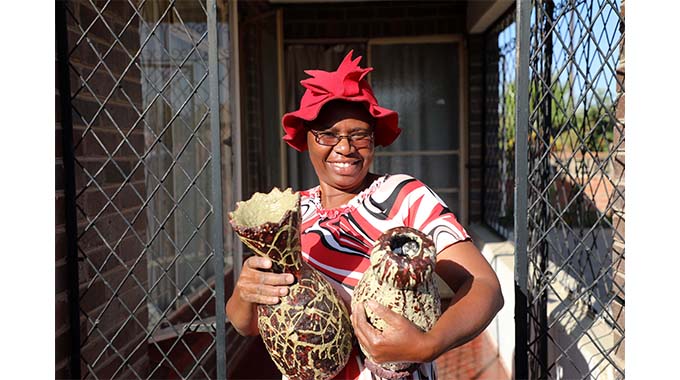
Flora Fadzai Sibanda, [email protected]
NATURALLY, it’s hard to believe that leftover isitshwala and waste paper could be turned into an amazing work of art that is life-sustaining.
For most us, leftovers are dumped in the dustbin but for Mrs Dianah Makhetho (51) of Gwabalanda suburb in Bulawayo, they serve a whole different purpose. They are her livelihood as she turns them into decorative vases.
Mrs Makhetho, an arts teacher, recycles leftover isitshwala and paper by making vases of different sizes and designs and selling them.
Drawing inspiration from her mother who was into making clay pots and flower vases, Mrs Makhetho said she managed to perfect the technique after watching a television show on ZTV.
She makes the vases on order and sells them mostly to her neighbours. The prices range from US$2 to US$5 depending on the size and designs.
While the vases are for decorative purposes, they are also suitable for artificial flowers.
“My mother used to make clay pots and she is the one who inspired me to venture into this business of making vases. In fact, I watched a group of prisoners on a local television show in 2018 making draft pieces using leftovers from isitshwala and paper,” said Mrs Makhetho.
“I realised I could also make something out of isitshwala and paper. Being an art teacher, I decided to make decorative vases,” she said.
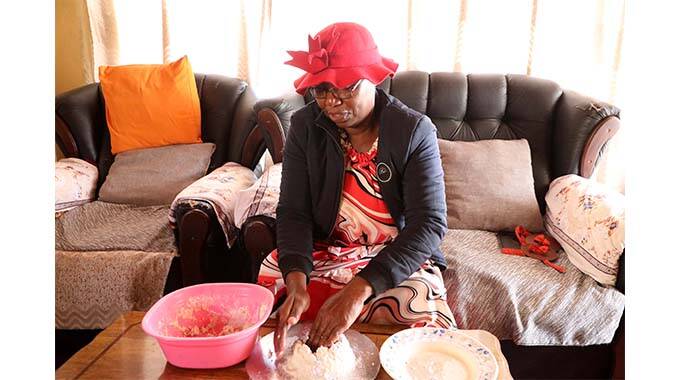
Mrs Makhetho uses waste paper from exercise books and water before mixing it with dough made from isitshwala.
“After that, I then put the mixture in a bowl or a tray to thoroughly mix them together. I have to make sure that the dough and paper are well mixed and mashed to strengthen the vase,” she said.
Mrs Makhetho said the paper was a critical component as it strengthens the mixture.
“I then mould it into any shape after which I let it dry in the sun,” she said.
Mrs Makhetho said the mixture requires a maximum of three days to dry up depending on the weather and the size of the vase.
“After drying the mixture I use tree barks to make paint and decorate my vases because I want my products to be natural,” she said.
Mrs Makhetho said waste recycling helps reduce litter while making useful products which could transform people’s lives.
“I am helping to reduce litter on the streets by recycling isitshwala and paper while at the same time making money. I have also introduced my pupils to this recycling business. My plan is to produce these vases in bulk and also share this knowledge with others,” she said. — @flora_sibanda


 Online Reporter