Online Reporter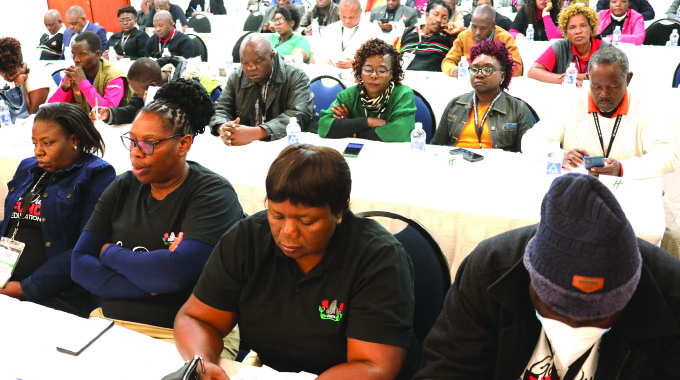
Ashley Phiri, [email protected]
TEACHERS are pressing for a significant modernisation of Zimbabwe’s education system, prioritising digitisation and the widespread adoption of Information and Communication Technology (ICT) in schools. This demand is a key focus of the Zimbabwe Teachers’ Association (Zimta) 40th Annual National Conference, which is currently taking place in Bulawayo.
The conference has drawn educators from across the country, officials from the Ministry of Primary and Secondary Education, as well as representatives from various teachers’ unions within the Southern African Development Community (SADC), including the Southern Africa Teachers’ Organisation (Sato).
Zimta Chief Executive Officer, Dr Sifiso Ndlovu, yesterday underlined the transformative potential of digitisation in education.
“Digitising the sector will improve the ease of doing business. Imagine if our district school inspectors were equipped with adequate digital tools, it would make their work far more efficient. Digital records, for instance, could significantly streamline the inspection process and be a real game-changer,” he said.

Dr Ndlovu stressed the urgent need for all schools to be equipped with ICT tools, stating that this would enhance the learning experience for pupils. He particularly emphasised the importance of including rural schools to ensure that no learner is left behind.
In addition to championing technological advancement, Zimta President Mr Kuneni Maphosa, announced plans to revise the association’s constitution. Originally adopted in 1960 and last reviewed in 2012, the document is now considered outdated in light of evolving societal norms. The proposed revisions aim to incorporate principles of gender mainstreaming and address disability inclusion, reflecting the association’s commitment to modern-day inclusivity.
“Our constitution was adopted in 1960 and only reviewed in 2012. A lot has changed since then, we now have issues around gender mainstreaming and disability. So, there is a clear need to update and modernise our constitution to align it with contemporary realities,” he said.
Dr Ndlovu also addressed concerns related to the new heritage-based curriculum and its impact on educators. He noted that the curriculum has introduced an increased workload for teachers and stressed the need to explore strategies to manage these pressures, particularly with regard to protecting teachers’ mental health.
“The heritage-based curriculum has brought with it unexpected challenges, such as a heavier workload for teachers. We need to explore solutions to help manage this, for the sake of teachers’ mental well-being. It’s essential we prioritise this, not only for our educators, but also for the quality of education we are delivering,” he said.
Sato representative from South Africa, Mr Nkosana Dilopi, reaffirmed the regional solidarity among teachers’ unions.
He noted that conferences such as these provide invaluable platforms for sharing experiences and learning from one another.
“Attending these conferences is always an opportunity to exchange ideas on how best we can improve our education systems. For example, how do we decolonise our curriculum, make it more African and move away from Eurocentric models of educating the African child? I am looking forward to exchanging ideas throughout this conference,” he said.