

 Chronicle Editor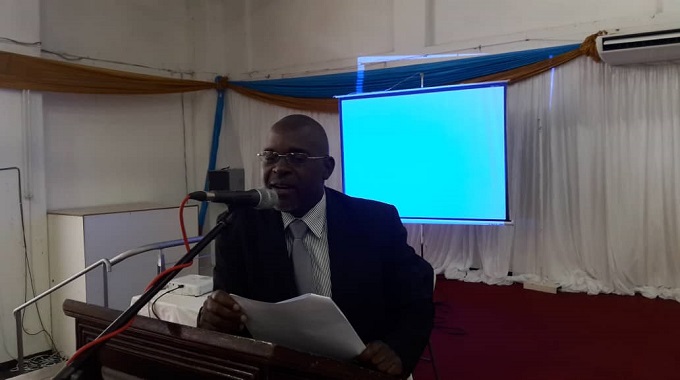
Patrick Chitumba, Midlands Bureau Chief
THERE is an urgent need to have disaster risk management and first aid plans at all primary and secondary schools to mitigate against unnecessary loss of life and infrastructure.
This was said yesterday by the Midlands Secretary for Provincial Affairs and Devolution Mr Abiot Maronge at the graduation ceremony for teachers from the Midlands province that trained in disaster risk management and first aid.
The training was jointly run by the Ministry of Primary and Secondary Education and the Zimbabwe Red Cross Society (ZRCS).
Mr Maronge said the Red Cross is a recognised training organisation and the world’s largest provider of first aid training as well as disaster risk management.
He said the Midlands province is prone to various natural disasters posing a risk to lives.
Mr Maronge said as the Civil Protection provincial head, he was appointing all the graduates as focal Civil Protection Unit persons at their schools and communities.
“These hazards pose danger to vulnerable learners and communities in general. There is an urgent need to have disaster risk management and first aid plans at all primary and secondary schools to mitigate against the unnecessary loss of life and infrastructure. It is our hope that we now have capable cadres who will be able to detect such disasters through informative risk analysis processes,” said Mr Maronge.
He said a nation’s success is in a big way determined by the health and well-being of its people and in order to achieve this, it requires innovative and community-based solutions so that communities are able to build stronger and more resilient coping mechanism on.
A hazard identified, Mr Maronge said, is cheaper to act on than to manage a disaster.
Mr Maronge said the Government through the Ministry of Primary and Secondary Education will continue to support life-saving initiatives.
He said oftentimes, the loss of lives during emergencies, accidents or disasters is not primarily due to the gravity of the mishap but because no one was available to provide basic first aid.
“As the adage goes, a stitch in time saves nine and so prevention is much cheaper than responding to disasters that require various interventions. I would like to express my gratitude to schoolheads that seconded these teachers to the intensive disaster risk management and first aid workshops held throughout the province,” said Mr Maronge.
ZRCS secretary-general Mr Elias Hwenga, in a speech read on his behalf by Mr Stambuli Kim, ZRCS communications and corporate affairs manager, said they have designed programmes in a manner that provides a holistic approach to diverse humanitarian needs of communities.
“In the same vein, we welcome the rolling out of the disaster risk management and first aid training programme for teachers which is central to the creation of a safe learning environment in our schools. First Aid is not an abstract thing but a relevant skill which is important in saving lives during emergencies,” he said.
Mr Hwenga said the ZRCS was established through an Act of Parliament in 1981 as an auxiliary to the Government’s humanitarian interventions.
“This means the Red Cross is not a non-governmental organisation. It is a civil society organisation created by law as an auxiliary to its respective public authorities. The ZRCS will continue designing other relevant programmes that are tailor-made for the school environment both for safety and the promotion of the Red Cross humanitarian mission,” he said.–@pchitumba1



 Blessing Chizhande
 Online Reporter