


 Online Reporter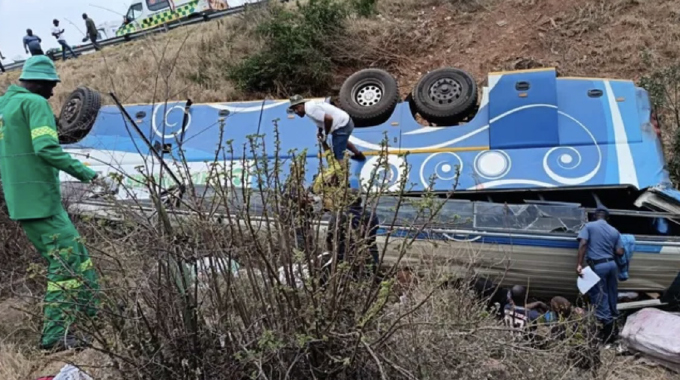
Gibson Mhaka, Senior Features Writer
THE Southern African Development Community (SADC) road network, a vital asset for regional integration and economic growth, is grappling with a severe safety record, leading to the tragic loss of thousands of lives and countless injuries annually, making its corridors effectively “death traps” by global standards.
The severity of the crisis was tragically underscored recently when 44 people died in South Africa, after a cross-border bus carrying Malawian and Zimbabwean nationals plunged off a cliff near Louis Trichardt (Makhado).
The DNC bus, travelling from Port Elizabeth to Harare with 68 adults and 14 children, veered off the road on the N1 highway, a major commercial artery linking South Africa with the rest of the SADC region.
Forty-four people perished, including seven children, with 36 being Zimbabweans and eight Malawians. The driver reportedly lost control of the bus, with overloading cited as a contributing factor. Emergency teams described the crash site as “horrific”.
The N1 highway, a major commercial road linking South Africa with cross-border travellers from Angola, Zimbabwe, Mozambique, Tanzania, the DRC and Zambia, has been described as a “treacherous death trap”, with the site near Louis Trichardt in Limpopo being the location of several fatal crashes over recent years.
On March 28, 2024, a catastrophic crash occurred near Mmamatlakala, about five kilometres west of Louis Trichardt. A passenger bus carrying 46 passengers — pilgrims travelling from Gaborone, the capital city of Botswana, to the Zion Christian Church in Moria for an Easter conference, plunged off a bridge and caught fire, resulting in 45 fatalities. An 8-year-old girl was the sole survivor.
These devastating developments have prompted renewed calls for immediate and harmonised regional action to curb the growing number of fatal cross-border crashes.
Regional call for harmonisation
Zimbabwe’s President Emmerson Mnangagwa urged regional authorities to treat the tragedy as a wake-up call to strengthen traffic enforcement and promote safer cross-border travel.
He called for the harmonisation of road traffic regulations and closer collaboration among SADC member states to ensure that vehicles, drivers and roads meet consistent, high safety standards.
“That so many lives were lost in this accident once more urges us to ensure maximum diligence in the movement of our people, regardless of borders and differences in legislation.
“Life remains precious whenever it is lost and in whatever country,” President Mnangagwa said, stressing the need for stricter regulations and enhanced co-operation.
He added that with increased cross-border movement under regional integration efforts, traffic enforcement agencies and Governments must work together and harmonise legislation governing public transport.
South Africa’s President Cyril Ramaphosa, described the crash as a painful tragedy that united three nations in grief.
“This sadness is compounded by the fact that this incident has taken place during our annual Transport Month, when we focus on the importance of safety on our roads,” said President Ramaphosa.
“Our roads are also economic networks that bring the people of our region together across our national borders. We must do everything we can as road users, as transport operators, drivers and passengers to ensure that we stay safe and that we share our roads responsibly and with care for one another.”
Border Management Authority (BMA) Commissioner Dr Michael Masiapato, echoed this sentiment, describing the deaths as a devastating development along one of the country’s busiest cross-border corridors.
“It serves as a painful reminder of the human cost of unsafe travel conditions on long-distance routes and the urgent need to strengthen the safety and security of all people who traverse our borders in search of opportunity, connection and hope,” said Dr Masiapato, adding the BMA remains committed to collaborating with regional and law enforcement partners to enhance cross-border road safety.
Moving towards a safer future
The tragic crash has starkly revealed significant road safety deficiencies across the SADC region, particularly concerning vehicle safety standards. The region’s roads are often referred to as “death traps” due to high crash rates, poor infrastructure and various contributing factors, including driver behaviour and vehicle overloading.
Economic and human cost
The failure to adopt a unified road safety approach directly undermines the region’s goals of integration, trade and sustainable development. The SADC region, like the rest of Africa, is witnessing a road safety crisis often defined by stakeholders as the global capital for road traffic deaths.
Road safety is not merely a transport issue, it is expressly included in the 2030 Agenda for Sustainable Development, yet SADC member states face growing pressure to meet the global target of reducing road traffic deaths and injuries by half by 2030, under the Decade of Action for Road Safety (2021–2030).
Sustainable road networks, which account for about 20 percent of the region’s cross-border trade, are essential to achieving goals related to food security, health, energy, infrastructure and climate change.
Safety issues directly undermine the goals of regional integration by creating an unsafe and unpredictable environment for the movement of people and goods.
The failure to harmonise standards, inconsistent policy implementation and poor enforcement across member states creates severe safety and efficiency problems for regional transport and trade. A co-ordinated, integrated approach is essential to address common issues like poor road conditions, driver behaviour, overloading and weak enforcement.
The financial toll is crippling. It is estimated that the loss of lives and limbs per year due to road traffic crashes costs low-income nations up to three percent of their Gross Domestic Product (GDP), diverting crucial resources away from development.
The financial strain is clearly evident in key SADC member states. Zimbabwe, according to the Traffic Safety Council of Zimbabwe (TSCZ), the principal agent in promoting traffic safety in the country, suffers an estimated loss of about US$406 million annually, due to road traffic injuries.
This economic hit accompanies a tragic human cost, with the country recording an average of 2 000 fatalities per year.
Meanwhile, South Africa faces an even more massive problem, with the Road Traffic Management Corporation (RTMC), the lead agency responsible for road safety in South Africa, estimating that the cost of road crashes exceeds R200 billion, highlighting the scale of the financial liability from unsafe roads.
The situation is also worsening in other parts of the region. In Botswana, police statistics reveal a persistently high death toll, with an average of 400 people killed annually on the nation’s roads.
Furthermore, the first quarter of 2025 recorded 72 road fatalities, marking an alarming 18 percent increase compared to the same period in the previous year, underscoring the urgent need for intervention across the entire SADC road network.
Policy and implementation deficiencies
A lack of harmonised standards, inconsistent policy implementation and poor enforcement across member states, creates significant safety and efficiency problems for regional transport and trade.
The tragic crash revealed significant road safety deficiencies across SADC, especially concerning vehicle safety standards.
The SADC Protocol on Transport, Communications and Meteorology (TCM) focuses on promoting regional integration through the development and maintenance of road infrastructure and regulation of road users, yet compliance and effective co-ordination remain hurdles.
In a move to address this, SADC countries have agreed to introduce uniform traffic signage to reduce crashes caused by the misinterpretation of road signs.
Zimbabwe has made significant progress in adopting new road signs and is on track to be fully harmonised with the SADC region by 2025.
It has also adopted the Road Accident Fund Bill to reduce deaths and injuries by 2030. Botswana has established road safety committees in schools and districts and partnered with researchers to develop its National Multi-Sectoral Road Safety Plan 2030.
The SADC region has also initiated a major strategic shift, championed by groups like the SADC Alliance of NGOs for Road Safety, to transform its busiest trade route, the North-South Corridor (NSC), into a dynamic Strategic Economic Corridor.
This re-imagining prioritises the harmonisation of regional regulations, including road safety, for sustained corridor efficiency, aligning with the SADC Treaty, Vision 2050, and the Regional Indicative Strategic Development Plan (RISDP) 2020-2030.
However, moving forward requires a comprehensive, multi-disciplinary approach. It is recommended that all organisations involved in road safety activities in the SADC region pool their resources to support initiatives.
This includes developing and strengthening road safety institutional frameworks and ensuring reliable statistics are collected and shared to validate official data, which is often severely under-reported.
Coordinated, integrated action is urgently needed to address road conditions, driver behaviour, vehicle overloading and weak enforcement to ensure SADC’s transport network facilitates economic growth without claiming thousands of lives each year.
Given the catastrophic loss of life and crippling economic costs highlighted by the recent bus tragedy, it is imperative for the SADC member states to enact a unified and enforced regional road safety framework.
Harmonising SADC road safety measures covering everything from driver regulations and vehicle standards to cross-border enforcement is the single most critical step required to dismantle the “death traps” that currently plague major regional corridors.
Only through this cohesive, integrated approach can member states ensure their transport networks serve as true arteries for economic growth and integration rather than continuing as avoidable causes of devastating, cross-border tragedy.


