Online Reporter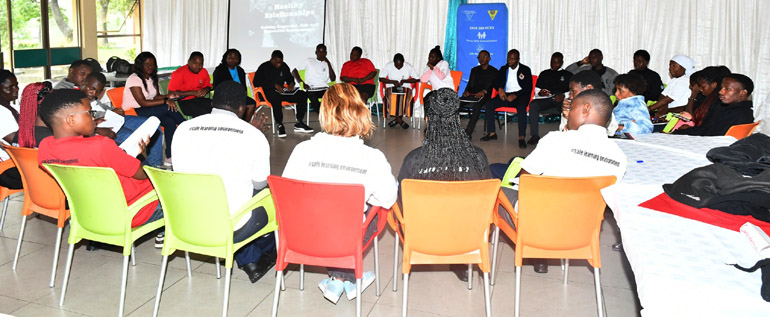
Tendai Gukutikwa
Health Reporter
A TOTAL of 23 peer educators drawn from various tertiary institutions in the province were recently trained on comprehensive sexuality education by the Zimbabwe National Family Planning Council (ZNFPC) in partnership with the United Nations Educational, Scientific and Cultural Organisation.
The training, conducted under the O3+ programme, is part of ongoing efforts to equip young people with critical life skills and accurate information on sexual and reproductive health, enabling them to make informed decisions and avoid risky behaviours.
ZNFPC provincial marketing and communications officer, Mr Daniel Maromo said the initiative targets both students and staff in tertiary institutions, with a strong emphasis on peer-led learning.
“ZNFPC in partnership with UNESCO, is running a programme in tertiary institutions where we are capacitating both staff and students. Among the students, we identify and train peer educators who then share this knowledge with their fellow students,” he said, adding that the trained peer educators will play a crucial role in promoting responsible behaviour on campuses.
“We trained 23 peer educators over a three-day period, and these students are now equipped to cascade information to their peers. The idea is to ensure that young people receive accurate and relatable information from fellow students,” he said.
The programme is designed to empower youths with comprehensive knowledge that goes beyond basic health information.
“We are equipping students with comprehensive information that enables them to make informed decisions and choices related to reproductive health issues. When young people are well-informed, they are better able to protect themselves and plan for their future,” said Mr Maromo, adding that the broad scope of the training reflects the realities faced by young people in tertiary institutions.
He said peer educators serve as an important bridge between students and formal health systems.
“Peer educators are key because students often feel more comfortable discussing sensitive issues among themselves. They are able to break down complex information in a way that is easy to understand,” he said.
The programme also seeks to transform tertiary institutions into youth-friendly environments where students can access accurate information and support services without fear or stigma, stressing the importance of collaboration between peer educators and institutional support systems.
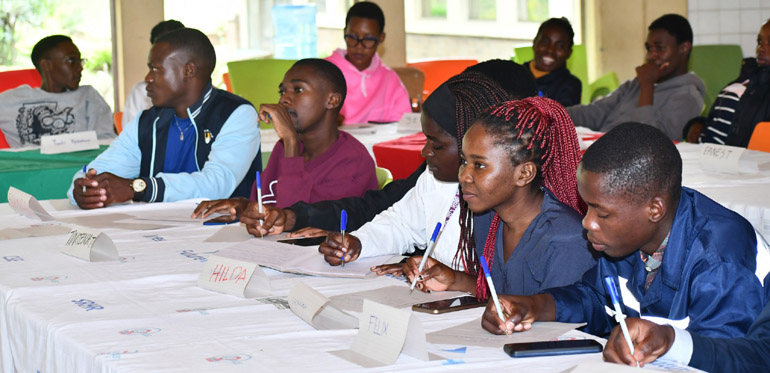
“We encourage peer educators to work closely with student affairs departments, counsellors, psychologists and health service providers so that students receive comprehensive support,” he said.
Mr Maromo said empowering young people with knowledge is critical in addressing challenges such as teenage pregnancies, HIV and AIDS, and substance abuse.
“When young people are equipped with the right information, they are able to resist peer pressure and avoid risky behaviours. They are also more likely to make decisions that safeguard their health and future,” he said, urging youths to seek guidance from reliable sources when faced with challenges.
“We encourage young people to seek guidance from trained peer educators, youth-friendly health workers, parents and other knowledgeable community members,” he said.
Mr Maromo also highlighted the importance of prioritising education and making responsible life choices.
“We emphasise what we call a four-tier ladder, education first, then career, followed by love and finally marriage. However, we have realised that young people sometimes overlap these stages, which is why it is important for them to know how to manage relationships responsibly. Through peer educators, we are able to reach more students and ensure that correct information is shared. This helps to reduce myths and misconceptions around sexual and reproductive health,” he said.
The partnership with UNESCO, he added, strengthens the programme by aligning it with global best practices.
“This programme is in line with international efforts to ensure that young people have access to accurate and age-appropriate information on sexual and reproductive health,” said Mr Maromo.
The training covered a wide range of topics, including sexual and reproductive health rights, adolescent development, contraception, menstrual hygiene and sexually transmitted infections.
“We looked at issues of health and well-being, sexual and reproductive health rights, laws and policies, as well as adolescent social and emotional development. We also covered contraception, menstrual hygiene, HIV testing services, gender issues, relationship management, mental health and drug and substance abuse,” he said.