admin
admin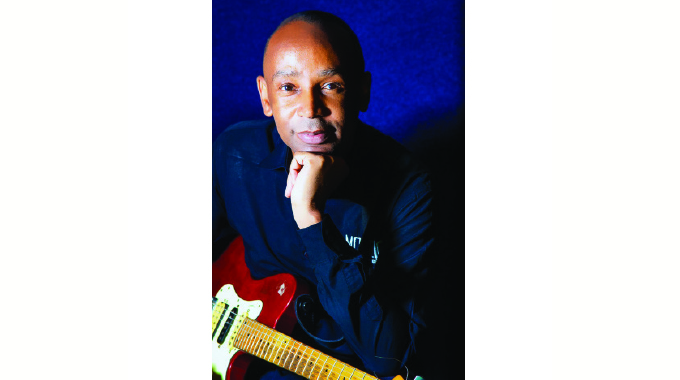
Blessings Chidakwa-Arts Reporter
There is probably only one special guitar that does wonders in Zimbabwe!
This year it turned 25 years old, albeit in the hands of the owner.
On the projects it was used, they all turned gold – talk of “Mapisarema” a hit track by Mahendere Brothers, Mafriq on “Chizevezve”, Albertina from South Africa’s “Magona Zvose” album and Pax Afro songs.
The guitar belongs to renowned music producer, composer, guitarist and author Clive “Mono” Mukundu, who worked with one of Zimbabwe’s greatest artists, the late national hero Dr Oliver Mtukudzi, apart from many other musicians.
The 25-year-old guitar was donated to Mono in March 1998 by Living Word Church International’s Apostle Samuel Manyika.
The guitar is five months older than Mono’s son Takakunda, born in August the same year, who is also strumming it like the father decades later.
It is still just as good as new, in mint condition to be precise.
Some gifts are just big, while others are small, but the ones that come from the heart are usually the best gifts of all.
In his own words, Mono said to receive the guitar was a ‘serious endorsement’ of his talent since he was fed up of borrowing guitars from other artists.
“The guitar has the biggest sentimental value on everything in the studio,” he said in an interview. “I was given it 10 years after I had learnt how to play a guitar.
“I am still using it up to now. It is actually my main one in the studio. It is one guitar which I never lend anyone and I make sure people do not play around with it.”
Mono said during the time he received the guitar, buying one was expensive and some artistes had to use makeshift home-made ones.
“I was using borrowed guitars, but the donated one I treasure it so much. It is still in mint condition. You might think it was bought yesterday,” he said. “I am using it on all recordings I am doing these days in the studio. This guitar is very precious to me.”
Mono said among the best moments he cherishes playing the guitar were on some iconic recordings like “Mapisarema” that was done by the famous Mahendere Brothers, which he described as still a hit up to now.
“The first five to eight albums of Fungisai Zvakavapano which were also hits, I used that guitar as well. It was also used on projects like Pax Afro, Mafriq on “Chizevezve” song,” he said.
“Also, I used it on concerts that were held in Harare gardens including Nguva Yakwana and Ngaavongwe as well as Elias Musakwa’s albums. It featured on many iconic Zimbabwean albums.”
Nguva Yakwana Music Concert was an important launch pad for many gospel artistes that went on to make it in the industry. Mono said his studio was now his new home and the old guitar was still working wonders.
“I am always in the studio daily as music production is now my core business,” he said. “I am working on a lot of projects and some of which may be produced even after a year.
“Currently, I am working with the likes of Hope Masike and Janet Manyowa, although I am not her producer, I am only adding my guitars on her next album. I am using that 25 year’ old guitar.”
Mono said apart from him, the guitar was also breeding upcoming guitarists, including his own son.
“Speaking of people that were taught to play the guitar, the name of my son Takakunda easily pops up. I also have some of the pictures while he was still a toddler at the age of two,” he said.
“I was given the guitar the same year he was born. I was given it in February and he was born in August.”
On his music journey, Mono said it had been fairly good judging by the Zimbabwean standards since when it came to remuneration it was usually regarded as a low paying profession compared to other countries.
“From the local standards, I am not complaining since I am managing to take care of my family,” he said. “My children are almost nearing completion of their educational studies.”
Mono said versatility was the key for emerging guitarists.
“You need to be very business minded, learning various genres both local and foreign ones such as Jazz, Sungura, Chimurenga, Mbira and Rhumba so that you become a balanced guitarist,” he said.
Mono said while the music industry was low paying, upcoming guitarists should pursue and complete educational or professional studies to secure a job while concentrating on instruments as a side hustle.
“This is simply because music in Zimbabwe pays less compared to other countries,” he said. “Also, if you are an instrumentalist your chances of making it are limited than musicians as we work behind the scenes.”
Using the popular guitar, Mono also recorded with the likes of Pfumo Kahwema, Brian Sibalo (late), Ivy Kombo and Sharon Manyika.
Mono is also an accomplished writer having penned books including “Poor and Famous” and “Following the Melody”.



 Online Reporter