Vusumuzi Dube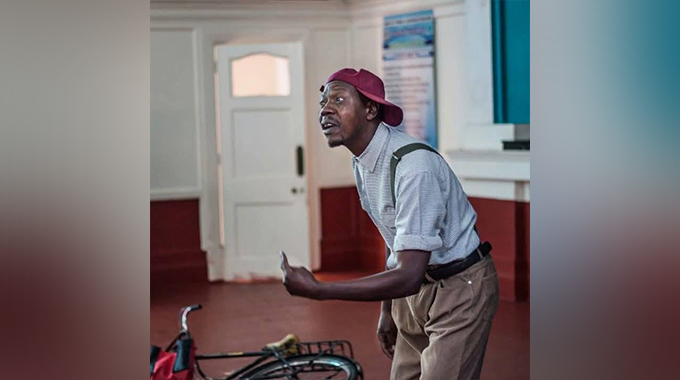
Bruce Ndlovu, Sunday Life Reporter
DURING Aleck Zulu’s funeral service at St Patrick’s Roman Catholic Church on Wednesday, a poignant moment unfolded as those among the mourners who had, at any point in their lives, performed in the church’s rendition of the Passion Play — directed by the late actor — were asked to stand.
The number of people who rose was impressive, but perhaps even more mesmerising was that their ranks spanned generations.
At St Patrick’s, the Passion Play — a theatrical rendition of Jesus Christ’s persecution, trial, death and resurrection — is a proud parish tradition that never fails to dazzle each Easter.
Although Zulu had starred in some of Zimbabwean theatre and television’s biggest productions, this Easter tradition had become his “one true love.”
Over the years, his experienced hands mentored many, turning novices into credible thespians.
Every year, congregants would eagerly attend, knowing they were about to see their Saviour judged, harangued, crucified and reborn.
The story, as it has been for centuries, remained the same — but with Zulu at the helm, it became an unmissable event for the congregation.
When he passed away last Monday, Zulu had already prepared this year’s actors for what was anticipated to be another theatrical Easter feast. The stage is set; the actors are ready and primed.
The only difference this year is that when they glance toward the director’s chair, Zulu’s encouraging eyes will be missing.
However, even in death, his presence lingers in the production he helped shape. Though he will not be in the pews this season, his fingerprints remain on every scene, every cue and every performer.
His death is yet another heavy blow to Bulawayo’s arts scene, which has sustained a flurry of punches over the last few years.
His passing, however, brings to the fore a larger-than-life character who — while famed for his work on the stage and small screen — had many strings to his bow.
The master of craft and character
To many, Aleck Zulu was first and foremost an actor, a man who lived and breathed performance.
Raisedon Baya, who worked with him for nearly three decades, said he would always remember Zulu as a gifted performer whose love for acting never dimmed.
“We started acting together a long time ago, around 1989 or 1990. From then on, we worked together on and off for nearly three decades,” he said.
“What I can say most about Aleck is that, above all, he was an actor. He loved acting and he was immensely talented.”
According to Baya, Zulu’s gift lay in his versatility, particularly his ability to straddle humour and gravity with ease.
“For me, his greatest strength was his ability to blend comedy and seriousness so effortlessly. I say this because many actors from the township often feel they can portray ‘bad’ characters better than anyone else, perhaps because they grow up around such colourful personalities.
“It becomes easy for them to say, ‘I can play a villain.’ Aleck was no exception; he enjoyed those roles, but what set him apart was the humour he brought into them. He could portray ruthless characters while still injecting a sense of humour,” Baya said.
With an expressive face and an instinctive understanding of character, Zulu brought depth to every role he inhabited.
As Godogodo on Sinjalo, he carried the role of a bigoted and divisive uncle with aplomb, and many were shocked that he was a young man in his twenties and not a cantankerous older man walking with the aid of a stick.
When he played the role of a crook on Sister Theresa, some congregants would turn away from him in disgust and fear as they believed that he was the callous gangster he portrayed on screen.
“He also had a very expressive face, one he could manipulate to make people laugh. But more than anything, what truly separated him from others was his genuine talent,” Baya added.
Often, at the highest level of showbiz and entertainment, talent alone is not enough. And beyond Zulu’s obvious talent, there was discipline.
Even after decades in the industry, Zulu remained grounded.
“He focused on specific types of characters. You would not find him trying to do everything; he stuck to what he knew and worked to perfect it. He was incredibly humble. He worked with everyone and connected with people across different age groups. He was always willing to share his knowledge with younger actors,” he said.
The churchman and theatre mentor
If the stage gave Zulu a voice, the church gave him purpose.
For him, theatre and faith were not separate worlds, but intertwined callings that found their fullest expression in the Passion Play at St Patrick’s.
His uncle and mentor, Memory Kumbota, recalled just how central that production was to Zulu’s life.
“His greatest passion was directing the Passion Play that they perform every Easter. For this year’s edition, he had left everything set. They had rehearsed and prepared, and all that was left was the performance. The Passion Play was the highlight of St Patrick’s parish. Everyone would look forward to that play.”
Even though he was an expressive and flamboyant character, Zulu’s devotion to the Roman Catholic Church remained unwavering.
“The church to him was everything. He started going to church when he was very young and he never stopped. Come rain or thunder, he would go to church and he would never miss the 6AM mass,”
Kumbota said.
Within the church, he was more than a director.
Zulu had become a mentor, a guide and a quiet builder of talent. Generations of actors passed through his hands, many taking their first tentative steps on stage under his watchful eye.
A man of the people
Away from the stage and the altar, Zulu was something else entirely.
He was a township man, rooted in community and connection.
When he sent an SOS after his home was burnt down in 2022, he was met with an outpouring of sympathy and help from people around the country, but particularly from those who lived around him in Mzilikazi.
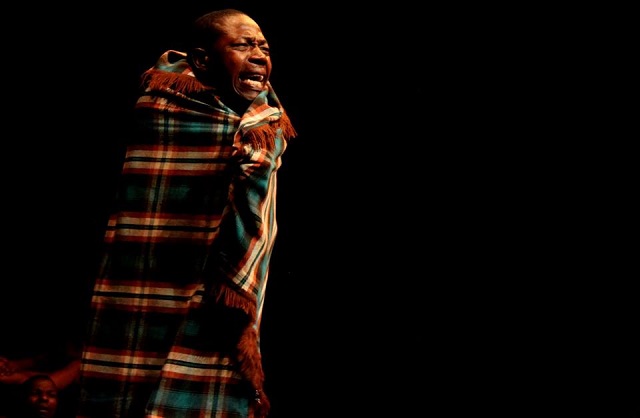
“In many ways, Aleck lived what I would describe as three lives,” Baya observed.
“The third was his private life. He had his own circle of friends, people many of us did not really know, friends from the township with whom he socialised.”
It was in this space that Zulu shed the titles of actor and director, becoming simply Aleck, a friend, a neighbour a familiar face.
Yet even here, his defining traits remained unchanged.
“He could do anything, stage management, putting up posters, organising functions, even handling security. He was an action-oriented person. I remember that whenever something needed to be done, he was often the first to step forward and say, ‘I’ll do it.’ He never waited to be asked,” Baya said.
According to Baya, this humility cut across every aspect of his life.
“He was never the type to demand special treatment as a veteran. If you needed something done, you just called his name and he would step in without complaint,” Baya said.
Kumbota, who worked with his nephew throughout his life, said family played a key role in shaping Zulu into the man he became.
“What a lot of people did not know, because we have different surnames, was that his father was my elder brother. I am his uncle,” said Kumbota.
“When his father left for Zambia, he asked me to look after him because he had taken after me in the arts. I worked a lot with him and he respected me. When I directed him, I pushed him harder than anyone else. What pains me today is that I think I have failed the task that his father gave to me, which was to look after his son. I guess that is life. We all depart at different times.”


 Online Reporter