Gibson Nyikadzino
Zimpapers Politics Hub
THERE is a general consensus among scholars of African politics and its governance systems that the continent’s political parties under the concept of multi-party democracy are contributing to the erosion of the quality of its democracy.
This phenomenon of multi-party democracy is not only peculiar to Africa, even in Europe and Asia, or America, the quality of democracy has been eroded.
In Europe, the closure of democratic space and the curtailing of freedom of speech on citizens is one particular indicator of how democracy in its liberal sense is under threat. In the United States, the use of the judiciary to persecute political opponents, the shooting of blacks and the racial profiling of people, all point to democratic erosion, fragility and regression. The erosion of democracy should not only be understood in the context of elections, but also the systems that are used to support the phenomenon.
Africa’s spoken-of fragility, real or imagined in any instance, should not only be looked at from the time the Cold War ended and when Africa introduced multi-party elections in 1990. The starting point to analyse this fragility is the stunted character of the electoral machinery that Africans inherited at independence.
Political and electoral systems inherited reflected decades of static colonial dominance and the region then shifted sharply toward representative governments from 1990. However, since 1990 to the present, in some cases, Africa’s democracy showed signs of stability, while in other cases it has shown signs of dying. Africa’s democratic journey, therefore, indicatively shows that democracy is somehow a fragile species because from its inheritance, it has somehow posed more challenges compared to problems it has solved.
Statistics by institutions such as Afrobarometer and Varieties of Democracy (V-Dem) show that in 2024, at least 18 African states held elections that had 212 million registered voters and a total 235 participating political parties. In many of these countries, results were contested, instances of political violence increased, and competition between the challengers and incumbents legitimated hate speech and hatred.
There are problems that have to be admitted when it comes to multiparty democracy in Africa as among its core challenges are ethnic polarisation and at times inadequate party financing. The other problem has been the failure by both presidential election challengers and incumbents to acknowledge they have lost, cases that discredit democratic progress made over years.
It is about the presidency
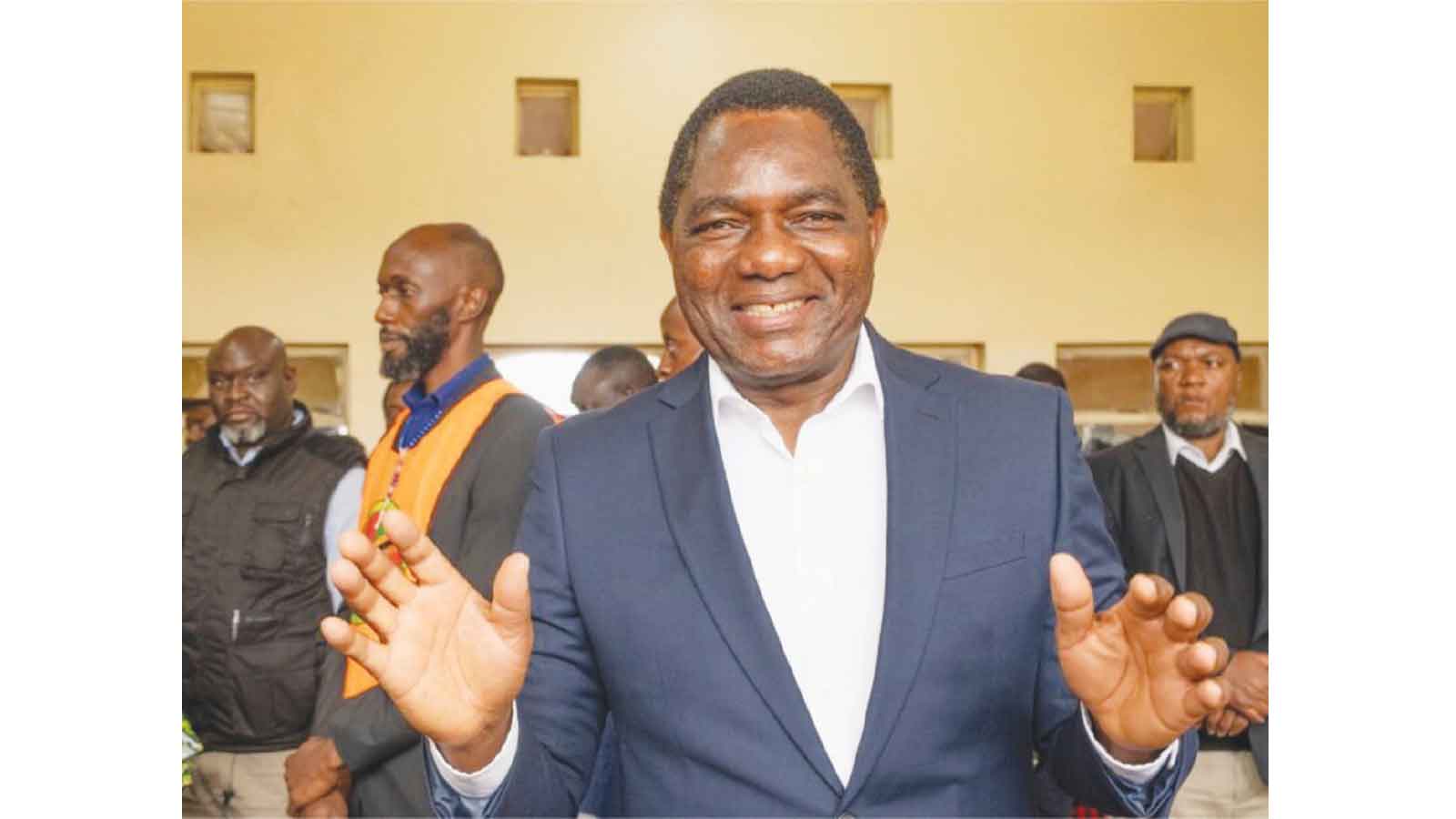
Zambia’s just-ended elections have shown inclinations on how the electorate invests loyalties in presidential candidates. Elections in Zambia produced contestations that have put a stain on African democracy. While President Hakainde Hichilema was re-elected for a second and final constitutionally mandated presidential term by 60 percent, his main challenger Brian Mundubile has challenged the credibility of the presidential election results. Cases of electoral violence and the suspension of vote counting and announcement of results by the Electoral Commission of Zambia (ECZ) have reignited the debate that Zambia’s democracy has regressed.
The first victim of electoral violence, especially one perpetrated on a large scale, is democracy itself because the oxygen it needs comes through credible elections. Electoral violence also matters for human security, regional stability, sustainable development, and post-conflict peace building. Election-related violence emanates from the lack of trust in the election process and tensions amongst political parties and their supporters.
Where electoral violence is visible, the electorate also does not participate, and voter turnout becomes low. For Zambia, the 2026 elections had 8,7 million registered voters, yet at least five million votes were cast. Factors that might have contributed to the voter turnout experienced include the fear that gripped the electorate after some opposition politicians were arrested, harassed, when polling officers were assaulted and when marked ballot papers were stolen. Other instances include reports of threats to State security and insurgency by the opposition. These incidences affect different forms of political participation during the electoral processes and cannot be discounted that might have contributed to the experienced voter participation.
Thus, the spectrum of coercive and destructive acts like intimidation and physical violence are aspects that have been used as a basis of irregularities in Zambia’s elections. Main challenger Mundubile rejected Government allegations linking him, his party and supporters to acts of insurgency, or being threat to State security. It is evident that the fear of violence in Zambia’s elections led to a mistrust of the electoral process that depressed key pre-electoral forms of participation and the deliberation of political matters by the public.
Changing the system
The biggest question that has to be answered in African electoral and governance journey is understanding the forms of Government that are associated with superior economic outcomes. Studies that have been conducted so far have shown that in systems that elect presidents in a direct election, there are less favourable economic outcomes than in parliamentary systems. Research indications are that in countries with direct presidential election systems there is slower output growth, higher and more volatile inflation and greater income inequality.
Under a presidential and parliamentary system, there are differences in outcomes and the latter system is preferable if harnessed for avoid the pitfalls of governance in sincere African context. In systems where electoral violence characterises elections, in particular for the direct election of a president, the electorate becomes dissatisfied with democracy’s performance. The electorate’s daily realities like youth unemployment, poor service delivery and lack of industrialisation need are priority.
There is need for African countries to adopt alternatives to standard majoritarian elections, with the parliamentary system being the most viable when modelled along the lines of inclusive governance systems that do not overlook traditional consensus frameworks, while moving beyond the winner-take-all fragility of multi-party system. Zimbabwe has done so. It is now constitutional in Zimbabwe to elect the President through Parliament. This model needs also to be adopted in other African countries, and Zambia should not be an exception.
Overtime, democracy the world over will grow in its own way, according to a country’s own history, culture and circumstances. Democracy will come in many different forms, shapes and sizes.