Gibson Mhaka Zimpapers Politics Hub
FOLLOWING the conclusion of South Africa’s 2026 Local Government Elections, the results have presented a moment of profound reflection for the African National Congress (ANC), one of the continent’s oldest liberation movements.
The ANC recorded a significant decline in its national vote, falling nearly 15 percentage points from 45,59 percent in 2021 to 30,76 percent.
The results exposed the party’s diminishing influence in major urban centres, where voters increasingly appear to be judging political leadership through service delivery rather than historical credentials.
The party retained a firm hold over Buffalo City, but its lead in Mangaung narrowed to just 0,5 percentage points over the Democratic Alliance (DA), which secured 24,64 percent nationally and led in five metros. Meanwhile, the uMkhonto weSizwe (MK) Party polled 9,77 percent, reshaping traditional voting patterns in former ANC strongholds such as eThekwini.
The outcome presents the ANC with an opportunity for organisational renewal ahead of the 2029 general elections.
Across the Limpopo River, its sister liberation movement, Zanu-PF, offers an instructive example of how continuous grassroots mobilisation, membership renewal and development-oriented engagement can strengthen a party’s presence in urban communities.
The two movements share a history of anti-colonial struggle and regional solidarity. However, their contemporary electoral experiences underline an important political lesson: liberation history provides a foundation, but lasting support must be earned through effective organisation and responsiveness to people’s everyday needs.
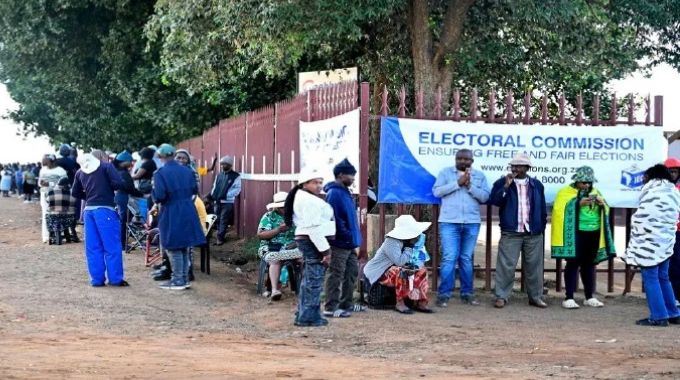
The Independent Electoral Commission figures reflect voter migration towards emerging parties and growing dissatisfaction among traditional ANC supporters, some of whom stayed away from the polls.
Responding to the outcome, ANC Secretary-General Cde Fikile Mbalula acknowledged the need for introspection, saying:
“The people of South Africa have spoken. As the ANC, we have heard the people. We recognise that many South Africans who once placed their confidence in the ANC have chosen to support other parties.
Others have withdrawn from electoral participation altogether. We recognise their concerns; we will not question their judgement or explain away their decisions.”
He also acknowledged that municipal service delivery failures had damaged public confidence, stressing that the party must demonstrate its relevance through present-day performance.
“We will confront the reasons why people who once regarded the ANC as their natural political home have become disillusioned with our movement.
“We must accept that in too many communities the local government has fallen short of expectations, and that service delivery failures have made people angry.
The ANC must earn the confidence of the people through what it does today and what it delivers tomorrow. That is the lesson of these elections. And it is a lesson we accept with humility.”
DA Federal Council Chairperson Ashor Sarupen, meanwhile, called for stable and effective administrations that prioritise residents, restore accountability and deliver services, reflecting the growing importance of performance in municipal politics.
Against this background, Zanu-PF’s approach to grassroots organisation provides a useful point of comparison.
The party has been rebuilding its presence from the cell and village levels, seeking to ensure that mobilisation does not begin and end with election campaigns.
Its 50-member cell structures provide a framework for household-level engagement, allowing local leaders to maintain contact with residents, communicate party programmes and identify community concerns.
This approach seeks to keep the party connected to people throughout the political cycle, rather than relying on mass rallies and campaign messaging alone.
A particularly important element is the Fishers of Men recruitment initiative, which seeks to expand the party’s membership and draw new supporters into its structures. Its significance lies in the recognition that urban constituencies are changing.
Young people, informal traders, professionals, first-time voters and residents who have previously remained outside organised politics require sustained engagement.
By encouraging its structures to reach beyond established membership, the initiative makes recruitment a continuous exercise.
It also gives local organisers an opportunity to explain party policies, listen to concerns and build relationships at community level.
Complementing this is the Dzokai Kumusha (Welcome Home) programme, which focuses on reaching out to former members and supporters who may have become politically inactive or drifted away from the party.
Its message is one of reconciliation, renewed participation and the restoration of relationships.
The programme recognises that strengthening a political movement is not simply about attracting new members; it also involves reconnecting with people who previously identified with it.
Together, Fishers of Men and Dzokai Kumusha provide complementary mobilisation approaches: one broadens the party’s support base, while the other seeks to recover relationships and encourage former supporters to return.
This combination of recruitment, retention and reconciliation is important in an increasingly competitive political environment.
It allows the party to renew its structures while strengthening the sense of belonging among members and supporters.
Zanu-PF National Political Commissar Cde Munyaradzi Machacha has attributed the party’s urban electoral gains to its organisational work and the Government’s development agenda.
“Our victories in these urban by-elections are a clear demonstration that the people have seen through the hollow rhetoric of opposition-led councils, which have brought nothing but decay to our cities.
“The electorate is responding directly to President Mnangagwa’s inclusive development agenda, which leaves no one and no place behind. Zanu-PF’s grassroots structures are alive, disciplined, and working continuously at cell level to address the real concerns of urban residents.”
He further highlighted the importance of combining organisational mobilisation with tangible interventions.
“Winning in these previously opposition-dominated wards proves that our party structures are functional and responsive.
“When you combine an active, well-organised commissariat machinery with tangible Government interventions — such as road rehabilitation, clean water provision and title deeds issuance — the urban voter naturally aligns with the party of liberation and development. We are not just winning elections; we are permanently reclaiming the urban political landscape.”
The party’s mobilisation has also been reinforced by President Mnangagwa’s development agenda, which places emphasis on infrastructure rehabilitation, property ownership, water provision and economic empowerment.
The Presidential Urban Title Deeds Programme addresses property insecurity by facilitating the issuance of title deeds to residents in qualifying informal and high-density settlements. For beneficiaries, secure ownership provides greater certainty and an opportunity to formalise their investments.
The Emergency Road Rehabilitation Programme has channelled resources towards repairing and upgrading roads, improving connectivity and addressing infrastructure deterioration.
The Presidential Borehole Drilling Scheme has also sought to improve water access in high-density communities, including through solar-powered facilities, particularly where municipal supplies remain unreliable.
Youth and women’s empowerment initiatives, including financing opportunities, enterprise development and market infrastructure, further seek to integrate communities into economic activity.
These interventions connect the party’s mobilisation message to issues residents encounter daily.
For Zanu-PF, active structures provide channels through which Government programmes can be communicated and community concerns relayed.
Development projects, in turn, give the party tangible issues around which to engage residents. The relationship between mobilisation and delivery is therefore central to its urban strategy.
The party’s by-election record illustrates its organisational capacity, although such contests should not be treated as a guaranteed predictor of general election performance.
Cde Machacha previously reported that Zanu-PF won 26 of 27 local authority by-elections in 2025, as well as all three parliamentary by-elections held that year.
For the ANC, the lesson is not necessarily to copy Zanu-PF’s structures wholesale, but to appreciate the importance of a continuously active grassroots network. Rebuilding trust will require more than post-election introspection.
It demands local structures that listen, respond and remain present between elections.
The shared history of the two liberation movements remains significant, but contemporary voters expect practical results.
By strengthening community engagement, reconnecting with disaffected supporters and improving municipal services, the ANC can begin rebuilding its urban support.
Most importantly, political support cannot be taken for granted. It must be organised, nurtured and sustained through constant engagement with the people.