Londile Moyo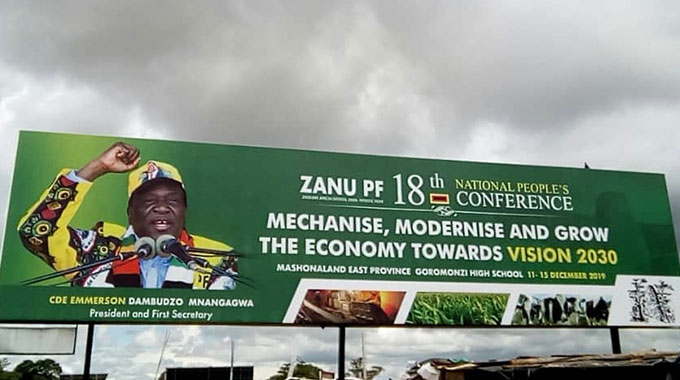
Gibson Mhaka
AS Zimbabwe continues its steady push towards becoming an upper-middle-income economy by 2030, the legislative foundation needed to support that ambition is undergoing a careful and deliberate reshaping.
The Constitution Amendment (No. 3) Bill, which is set to be formally tabled before Parliament on May 18, stands as a key part of that process. It represents a defining moment in the Second Republic’s efforts to refine the country’s governance systems so that they respond more effectively to local realities while supporting long-term development goals.
Following the successful conclusion of nationwide public hearings — conducted in line with Section 141 of the Constitution, which requires Parliament to ensure public participation in law-making — the Bill has largely been well received and is now ready for detailed Parliamentary consideration.
This marks another important step in Zimbabwe’s evolving political and developmental path.
Arriving at a time when the country is building on gains made under the Second Republic, the Bill seeks to align governance structures with the goals set out under Vision 2030, focusing on stability, efficiency and sustainable growth.
However, much of the public discussion around the Bill has been clouded by political debate. There remains a clear divide between the actual content of its 23 clauses and how it is sometimes portrayed in public discourse.
Some critics appear not to fully understand the details of the Bill, at times arguing against interpretations that do not accurately reflect what is contained in the document. Yet when examined closely, the Bill presents a forward-looking and structured set of reforms.
Its intention is to move Zimbabwe away from short-term political cycles dominated by constant campaigning, and towards a more stable system that prioritises development, strong institutions and policy continuity.
At the centre of the discussion is a package of 23 clauses aimed at strengthening institutions, improving governance and creating a framework that supports peace, economic growth and long-term progress.
Rather than being isolated changes, Amendment Bill No. 3 offers what some analysts have described as an “architecture of peace” — an effort to address long-standing weaknesses that have slowed down national development.
Looking at the clauses in detail shows a clear pattern of targeted reforms. Clause 2 proposes transferring voter registration to the Registrar-General, bringing national identity records and voter registration under one system to improve the accuracy and credibility of the voters’ roll. This change would allow the Zimbabwe Electoral Commission (ZEC) to concentrate on running elections.
Clause 3 introduces a system where Parliament elects the President through a joint sitting of both Houses, a model already used in countries such as Botswana and South Africa, which is intended to reduce contestation and improve political stability.
At the same time, Clauses 4 and 9 extend the terms of the President and Parliament from five to seven years, a move designed to reduce the frequency of elections and give more time for policies and development projects to be fully implemented.
Clause 5 resolves long-standing questions around the position of Vice Presidents by confirming their equal status in the Constitution, while Clause 6 sets out clear procedures for situations where a vacancy occurs before a President-elect takes office, reducing the risk of uncertainty.
Further strengthening of institutions is seen in Clause 7, which raises the qualifications required for the Attorney-General to match those of a Supreme Court judge, ensuring a higher standard in one of the country’s most important legal roles.
Clause 8 expands the Senate through the appointment of additional members with specialised skills, bringing technical expertise into the law-making process.
On electoral matters, Clause 10 adjusts the electoral calendar to match the extended seven-year term, creating a more predictable political cycle.
Clauses 11 to 13 establish a separate Zimbabwe Electoral Delimitation Commission, removing the responsibility of drawing constituency boundaries from ZEC in order to improve transparency and professionalism.
Judicial reforms are also a key part of the Bill. Clause 14 broadens the jurisdiction of the Constitutional Court, allowing it to handle matters of wider public importance, while Clause 15 simplifies the process of appointing judges without removing necessary checks and balances.
In the security sector, Clause 16 confirms that the Defence Forces operate strictly within constitutional limits, reinforcing civilian oversight.
Clause 17 further clarifies the roles of ZEC, the Registrar-General and the new Delimitation Commission, reducing overlap and improving efficiency.
On human rights, Clauses 18 and 19 propose merging the Gender Commission into the Zimbabwe Human Rights Commission, strengthening the overall capacity of rights institutions.
Clause 20 seeks to further protect the independence of the Prosecutor-General by refining the appointment process to avoid conflicts of interest.
Traditional leadership is also addressed in Clause 21, restoring certain political rights while maintaining accountability through legislation.
Clause 22 formally concludes the work of the National Peace and Reconciliation Commission after it reaches the end of its constitutional mandate, allowing resources to be redirected elsewhere.
Taken together, these reforms point to a clear shift towards long-term planning, institutional clarity and political stability — all essential for achieving Vision 2030.
Despite this, public debate has not always captured the full picture. Some commentary has focused narrowly on individual clauses, without considering how the provisions work together as part of a broader system. Analysts warn that this approach risks missing the main purpose of the reforms.
“The Bill must be understood in its entirety,” one governance expert said. “It is not about isolated clauses, but about how all provisions work together to create a stable, predictable and development-oriented governance system.”
The emphasis on longer electoral cycles, clearer institutional roles and stronger legal frameworks shows a direct effort to create a more stable environment for investment and economic growth.
By addressing weaknesses in areas such as voter registration, judicial processes and institutional coordination, Amendment Bill No. 3 aims to improve the overall effectiveness of government.
This is closely tied to the goals of Vision 2030, which depend on consistent policies, strong institutions and political stability.
As the Bill moves to Parliament, it will be subject to debate and scrutiny.
But beyond the legislative process, it represents an opportunity for Zimbabwe to reshape its governance system in ways that respond to current challenges while preparing for the future.
In that sense, Amendment Bill No. 3 is more than a legal reform — it is a plan for continuity, stability and national progress.
And as discussions continue, there is an increasing call for people to engage with the Bill from an informed position.
Because in building a stable and prosperous future, understanding the details is just as important as the policies themselves.



 Online Reporter