Online Reporter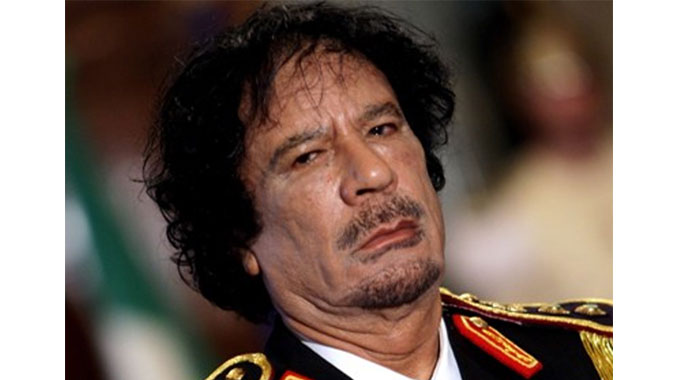
Mustafa Fetouri
For decades, the demand for colonial reparations in Africa was treated by Western capitals as a rhetorical exercise — a radical plea from the fringes that could be safely ignored or pacified with vague “expressions of regret.”
By the end of 2025, however, that era of Western comfort officially ended in Algiers.
With the adoption of the Algiers Declaration, the African Union (AU) has moved from moral grievance to a structured legal offensive.
The Declaration, born from the International Conference on the Crimes of Colonialism (30 November – 1 December), provides the first concrete roadmap for the AU’s 2025 theme: Justice through Reparations. It demands the codification of colonialism as a crime against humanity in international law, the restitution of plundered wealth, and an audit of the “ecological debt.”
The ink on the Declaration was barely dry before Algeria, the conference host and historic “Mecca of Revolutionaries,” took the first sovereign step.
On 24 December, the Algerian National Assembly voted overwhelmingly to criminalise French colonial rule (1830–1962).
In a session described by Parliamentary Speaker Brahim Boughali as a “day written in letters of gold,” the Assembly unanimously passed a landmark law formally criminalising 132 years of French colonial rule.
This statute categorises 27 specific types of crimes — ranging from mass summary executions to the “ecological genocide” of Saharan nuclear testing.
By turning the spirit of the Algiers Declaration into domestic law, Algiers is signalling to Brussels and Paris that the “Decade of Reparations” is not a suggestion — it is an ultimatum.
As Africa increasingly leverages its role in a shifting global order, the question is no longer whether Europe owes a debt, but how much longer it can afford the cost of denial.
The true significance of the Algiers gathering lies in its transition towards institutionalising justice. For decades, the Western-dominated legal order treated colonial atrocities as “unfortunate historical episodes” falling outside modern jurisdiction.
The Algiers Declaration systematically dismantles this defence. By positioning the AU as a unified legal front, the conference has reclassified colonialism as a continuous, structured crime against humanity, with no statute of limitations.
This is a deliberate attempt to pull the reparations debate out of the hands of powerless NGOs and place it firmly within the halls of state-to-state diplomacy and international tribunals.
It signals that Africa is no longer asking for charity; it is demanding the settlement of a multi-century debt, backed by a developing framework of continental law.
The strength of the Algiers Declaration lies in its refusal to treat colonialism as a singular historical injury; instead, it frames it as a multi-dimensional assault requiring a multi-pronged recovery.
The document outlines a framework that includes four critical pillars of accountability:
— Codification of colonial crimes within international legal instruments, calling on the International Court of Justice (ICJ) and the African Court on Human and Peoples’ Rights to recognise these acts as crimes against humanity with no statute of limitations.
— Ecological reparations, specifically highlighting the long-term environmental devastation caused by resource extractivism and unconventional weapon testing — most notably the French nuclear trials in the Algerian Sahara.
— Unconditional restitution of Africa’s cultural and tangible heritage, ensuring that stolen history is returned to its rightful soil.
— A continental economic audit to calculate the staggering cost of centuries of resource plunder.
By unifying these disparate issues into a single diplomatic platform, the AU signals that justice will no longer be negotiated on European terms, but calculated based on the full scope of the African experience.
The Declaration also proposes the creation of a permanent Pan-African Committee on Memory and Historical Truth, envisioned as a central clearing house tasked with harmonising historical curricula across the continent and overseeing the collection of colonial archives.
Furthermore, it demands a continent-wide economic audit of colonial plunder, intended to move the reparations conversation from abstract numbers into a data-driven accounting of stolen resources, human capital, and unjust economic systems inherited from the colonial era.
By proposing a dedicated African Reparations Fund, the AU is building its own infrastructure to support this claim, ensuring that the push for accountability is not a fleeting diplomatic moment but a well-resourced fixture of African governance.
This unified African stance stands in stark contrast to Europe’s fragmented posture.
While the European Parliament adopted a resolution in 2019 acknowledging colonial crimes, nearly six years have passed with no concrete action.
By failing to translate rhetoric into policy, the EU has left a vacuum that the Algiers Declaration now fills.
Under the patronage of Algerian President Abdelmadjid Tebboune, this movement has transformed into a platform for “Memorial Sovereignty.”
Tebboune has consistently affirmed that Africa’s dignity is non-negotiable.
The Algiers Declaration is the institutional fulfilment of a crusade long championed by the continent’s most defiant voices.
Foremost among these was the late Libyan leader Muammar Gaddafi, who became the first African statesman to translate the moral grievance of colonialism into a specific financial ledger.
Addressing the UN General Assembly in 2009, Gaddafi famously quantified colonial theft, demanding US$7,77 trillion in reparations for the ravages of colonialism, framing it not as a request for aid but as a mandatory settlement of a multi-century “blood debt.”
This was rooted in the historic 2008 Italy-Libya Friendship Treaty, where Rome formally apologised for its colonial-era crimes and committed to a US$5 billion reparation package — the only treaty of its kind ever signed between a former colony and its occupier.
By codifying these demands in 2025, the AU is moving from the unilateral defiance of the Gaddafi era to a multilateral mandate.
The Algiers Declaration represents a calculated rebellion against the Western-centric narrative that has long dominated the history of the colonial era.
For decades, Africa’s past was filtered through a Western lens, often sanitising the brutality of occupation as a “civilising mission.”
The Declaration marks a determination for the entire Global South to shatter this monopoly on truth. It provides a blueprint for other regions — from the Caribbean to Southeast Asia — to move beyond the North-South hierarchy. — RussiaToday
Mustafa Fetouri is a Libyan academic, award-winning journalist and analyst.