Online Reporter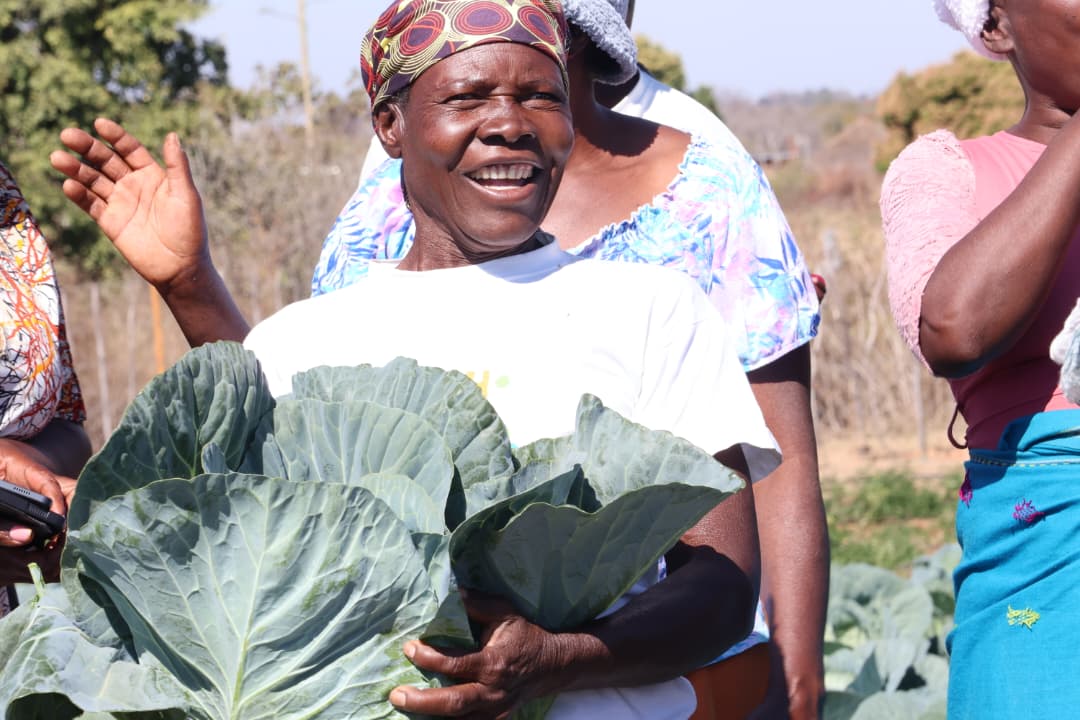
Theseus Mauruki Shambare in Chivi
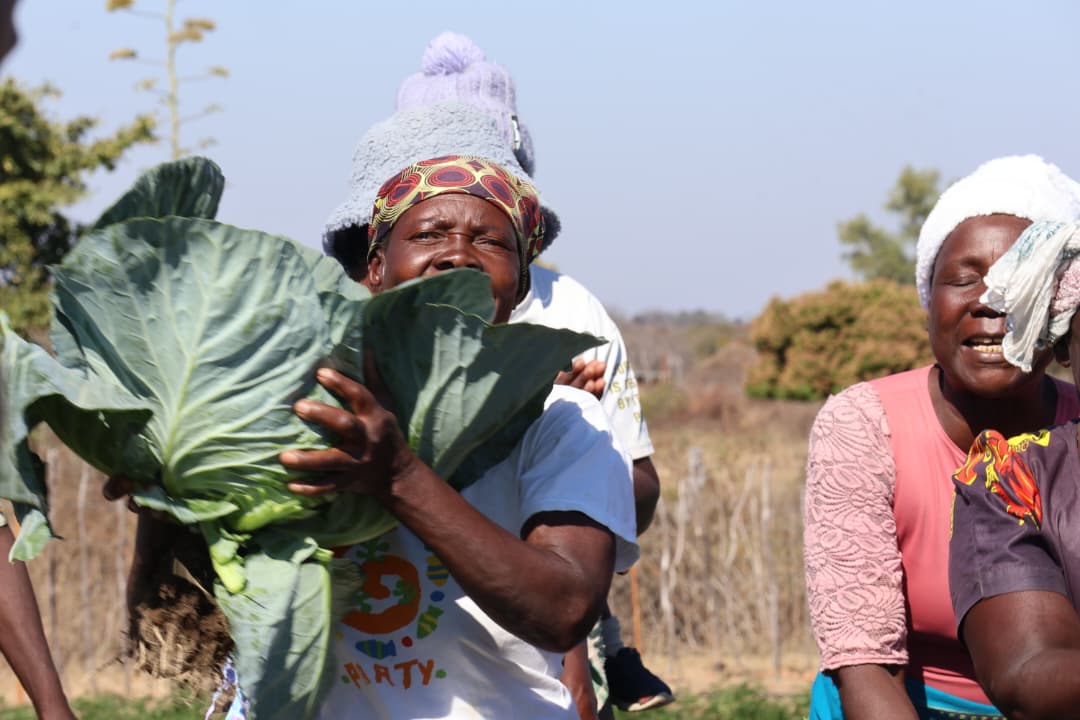
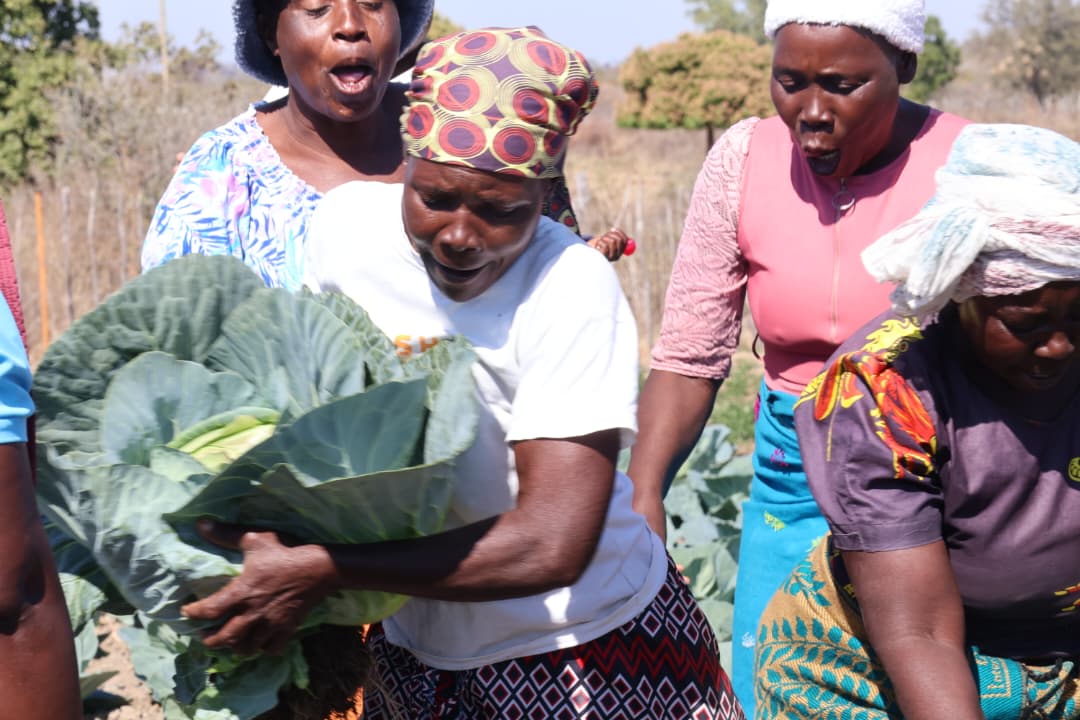
Mrs Nyaradzo Dzawanda raised a freshly harvested cabbage above her head and smiled.
For a woman who remembers when vegetables had to be bought from distant towns, the moment was more than a harvest.
It was a declaration.
“We want to thank the Government. Our lives are no longer the same,” she said.
Pictures: Nyasha Simbisai
“We no longer travel long distances to access water. We no longer have to travel to Masvingo or Zvishavane to buy vegetables. We have been selling green mealies since 2024 when the Village Business Unit (VBU) was established.”
Around her, cabbages, tomatoes and green mealies stretched across the irrigated fields of Virira Village Business Unit in Ward 11, Chivi District.
The crops are growing where rainfall once dictated what villagers could plant, when they could plant it and, ultimately, whether they would harvest anything at all.
But the most powerful evidence of the change is not in the field.
It is at the home of 49-year-old Mrs Rosewitta Mateveke.
A television set stands in her house.
A solar system provides electricity.
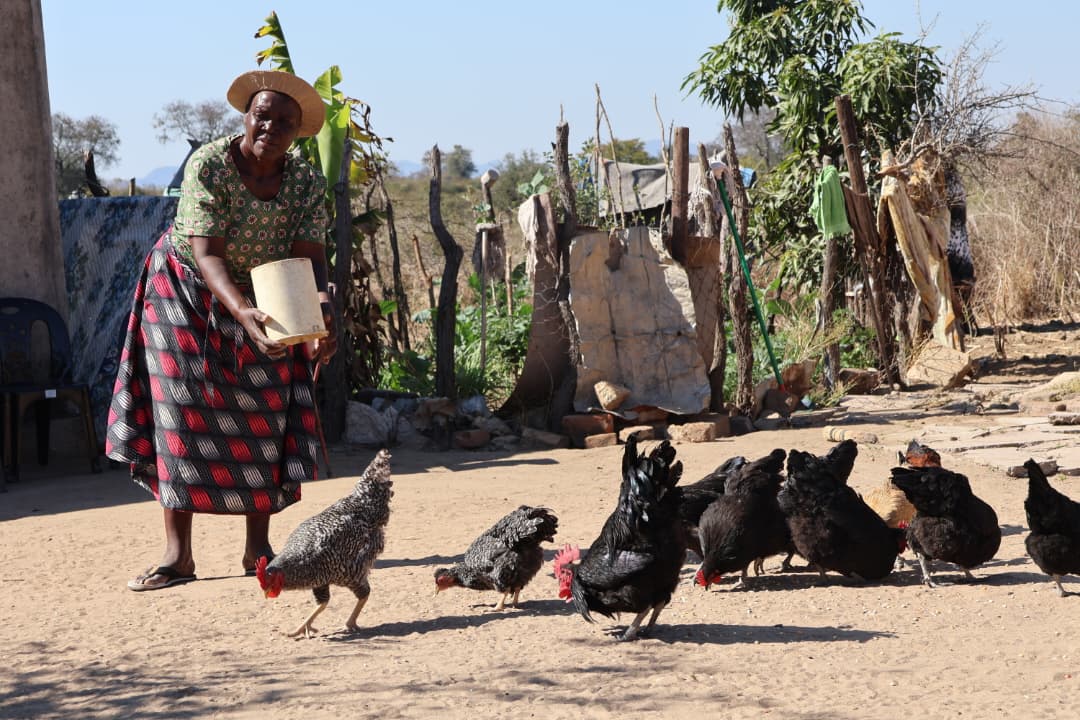
Road-runner chickens move around the homestead while goats represent another growing household asset.
Her houses have been renovated.
The widow has made these improvements from proceeds generated through the Village Business Unit.
For Mrs Mateveke, the story began in 2006 when her husband died, leaving her with four children to raise.
She turned to farming.
Small grains and small livestock became her survival strategy, with sales helping her pay school fees and provide for the family.
It was never easy.
Chivi’s harsh climatic conditions made rain-fed agriculture a gamble, but she persisted.
Her children are now adults and have pursued different professions.
She now has eight grandchildren.
The farming system that had carried her family through widowhood was however becoming increasingly difficult to sustain.
Rainfall patterns were changing.
Droughts were becoming more punishing.
Repeated El Niño conditions were adding further pressure to communities dependent on rain-fed agriculture.
The old strategy of planting and waiting for the rains was becoming less reliable.
Then, in 2024, water came.
A 100-metre-deep borehole was drilled at the VBU and a drip irrigation system installed across one hectare.
For the farmers, it changed the equation.
They could now produce without depending entirely on rainfall.
Cabbages, tomatoes and green mealies are being grown on the irrigated plot.
The members operate through a block system, with each farmer allocated a portion of every crop.
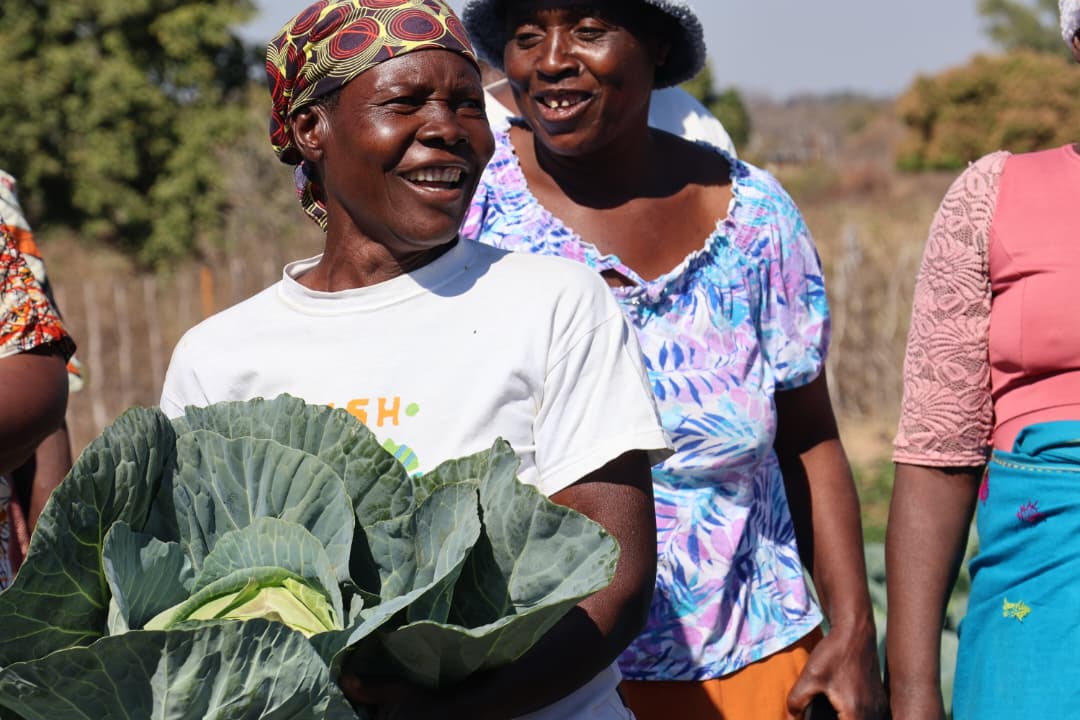
The produce is marketed collectively as a company, with profits shared equally.
The result is a community agricultural enterprise whose returns are already visible in household assets.
For Mrs Mateveke, the television, solar system, chickens, goats and renovated houses have become a physical record of what irrigation and organised farming can deliver.
Her home tells a story that statistics cannot fully capture.
It shows what climate adaptation looks like when it reaches the household.
It can mean electricity, livestock, improved housing and the ability to invest rather than simply survive.
During a tour of Government’s VBUs in the district recently, Agricultural Planning and Development Director Mr Leonard Munamati said economic transformation is particularly significant for women.
“Village Business Units also empower women. Already, we know that in this country, women are the majority. So, when we empower women, we have actually empowered the whole community, be it at village level, at ward level, or as a country,” he said.
“If we empower women, we have empowered the whole nation.”
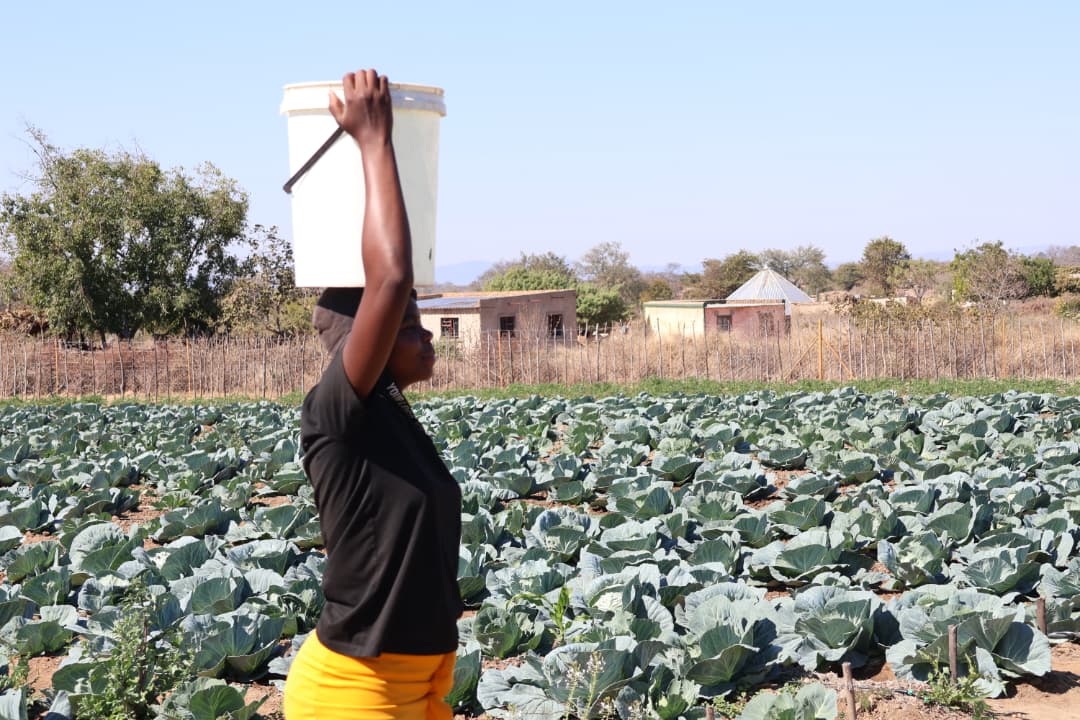
At Virira, women dominate the project.
Of the 37 members, only seven are men.
Mr Munamati said the income generated by the projects was giving women greater control over their own livelihoods.
“In this Village Business Unit, we have seen that almost the whole committee is made up of women. These women now can get their own money without waiting for money coming from the father or their husbands. They can also get their money and be able to support their own families,” he said.
The experience reflects a much older reality in Chivi.
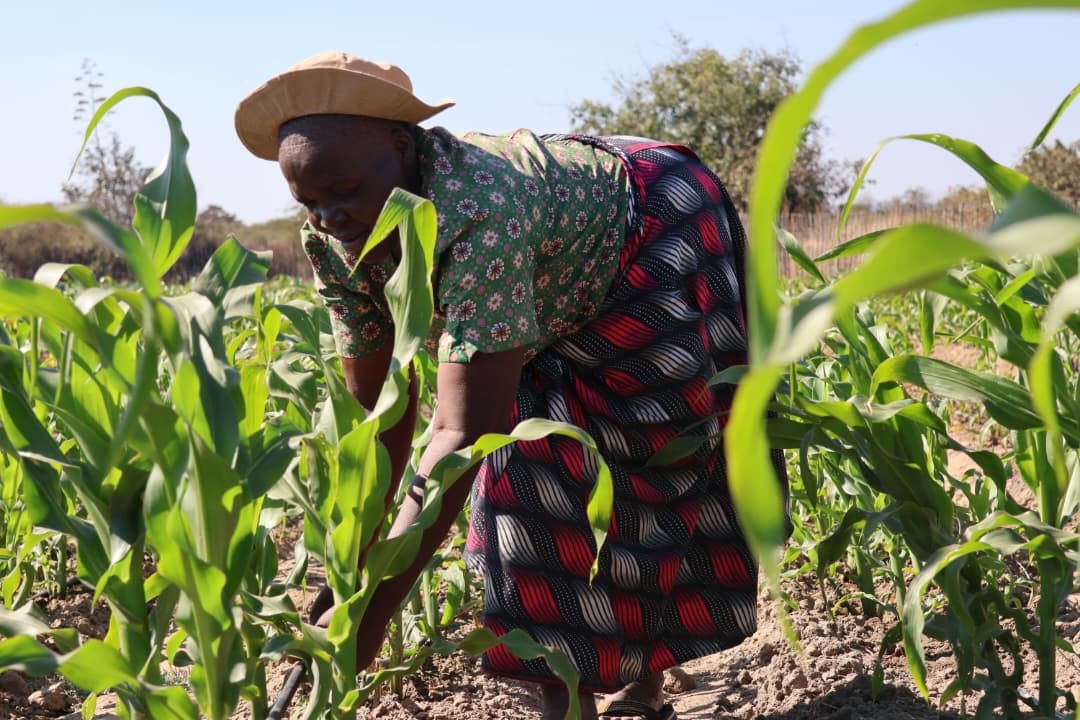
Pictures: Theseus Mauruki Shambare
A 2006 Food and Agriculture Organisation retrospective study of the Chivi Food Security Project found water scarcity for fields and vegetable gardens to be one of the community’s primary challenges.
Compiled by Absolom Masendeke of the then Intermediate Technology Development Group Zimbabwe, now Practical Action, the study described Chivi as a drought-prone district receiving approximately 530 millimetres of rainfall annually.
Droughts occurred frequently.
Women bore a disproportionate share of the burden.
The study found that women accounted for about 90 percent of membership in garden groups and documented how gardens improved household nutrition, reduced expenditure on vegetables and strengthened women’s participation in community affairs.
But access to water remained a major physical burden.
Eighteen-year-old Nothando Zulu knows that burden personally.
Carrying a bucket on her head, she remembers a time when visiting her aunt in Virira was something she dreaded.
“I used to refuse to come and visit my aunt here because I knew that I would have to walk a long distance to fetch water,” she said.
“We used to walk about five kilometres to look for water, and sometimes the water we found was dirty. Carrying a bucket over such a long distance was tiring, especially for young girls.”
Today, the situation is different.
The community tap is about 20 metres from her aunt’s home.
“I still carry my bucket on my head, but I no longer feel tired or afraid because the distance is very short,” she said.
The significance goes beyond the bucket.
Nothando said the shorter distance has made it easier for her to visit her aunt.
“In our culture, an aunt is very important to a young girl because she is someone who can guide you as you grow up and teach you about life, relationships and becoming a responsible woman,” she said.
“Before, the distance and the water problem would keep me away from her. Now I can visit her more often, and that guidance is important to me.”
In many African communities, aunts traditionally play an important role in guiding girls as they mature.
Chief Jimson Madyangove said water scarcity was affecting social relationships as well as agriculture.
“Before the borehole, our children were spending a lot of time looking for water. Young girls would spend hours away from home, and this was affecting the guidance they were supposed to receive from their aunts and elders,” he said.
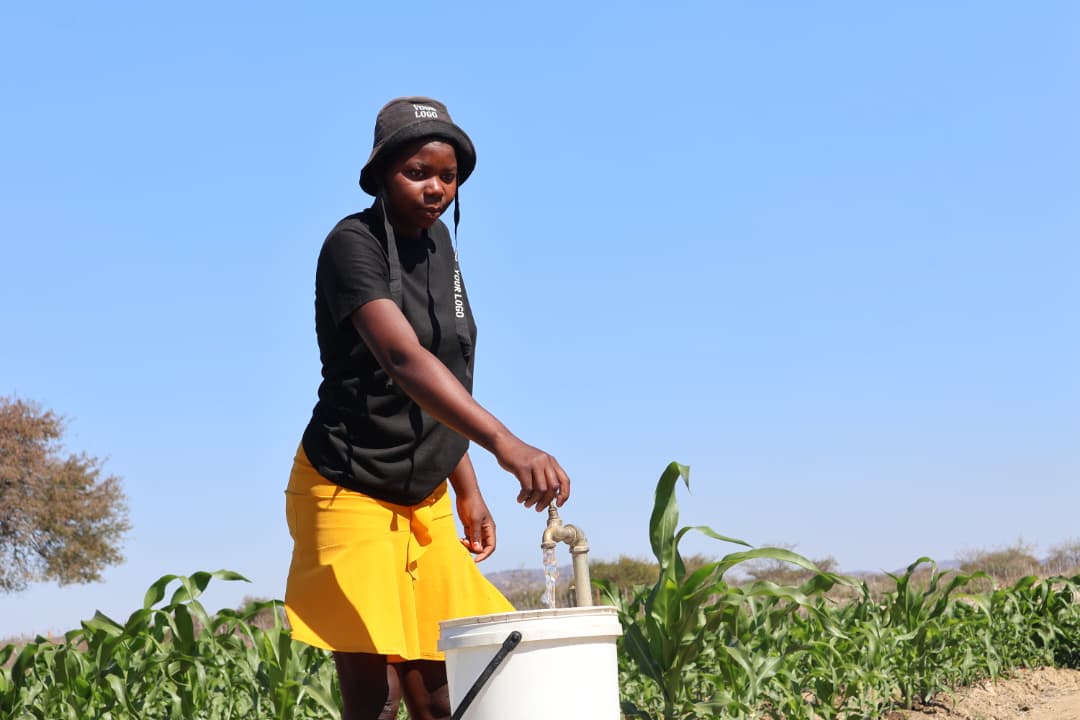
“When young people do not have that support and are also unemployed, we begin to see other problems. We have seen unwanted pregnancies, broken relationships and young men getting involved in drugs.”
The traditional leader’s concerns extend to the economic choices facing young men.
“Some of our young people have started going into gold panning and other mining activities because they have nothing else to do,” he said.
“They learnt some of these activities from Mashava and brought them here. As traditional leaders, we are trying to stop this, but it is difficult when young people have no jobs.”
Chief Madyangove believes the answer cannot simply be to prohibit destructive activities.
“Young people need livelihoods,” he said.
“That is why I believe Village Business Units can be part of the solution. If these projects are expanded, young people can be given land, water, training and an opportunity to make money through agriculture.”
His argument brings the story back to the land beneath the cabbage fields.
“If we can establish more Village Business Units, expand irrigation and bring young people into agricultural businesses, we can create employment while protecting our land and water,” he said.
“We should not only tell young people to stop illegal mining. We must give them something better to do.”
That challenge is becoming increasingly important in a district endowed with mineral resources.
Chivi has gold, diamonds and other minerals.
Mining can bring economic opportunities, but poorly controlled extraction can also damage the land and water upon which rural communities depend.
Illegal riverbed and alluvial mining can disturb waterways, increase sedimentation and threaten water quality.
Government has prohibited riverbed and alluvial mining, but enforcement remains critical.
A community cannot be expected to adapt to climate change by investing in irrigation while its water sources are simultaneously threatened by environmental degradation.
The question is therefore no longer only how Zimbabwe extracts its mineral wealth.
It is also about what happens to the communities that provide that wealth.
That concern comes as ActionAid Zimbabwe prepares to participate in the Global Week of Climate Action, a mid-September mobilisation bringing citizens, particularly young people and women, together to demand climate justice and stronger accountability.
For communities such as Virira, climate justice is not an abstract global campaign.
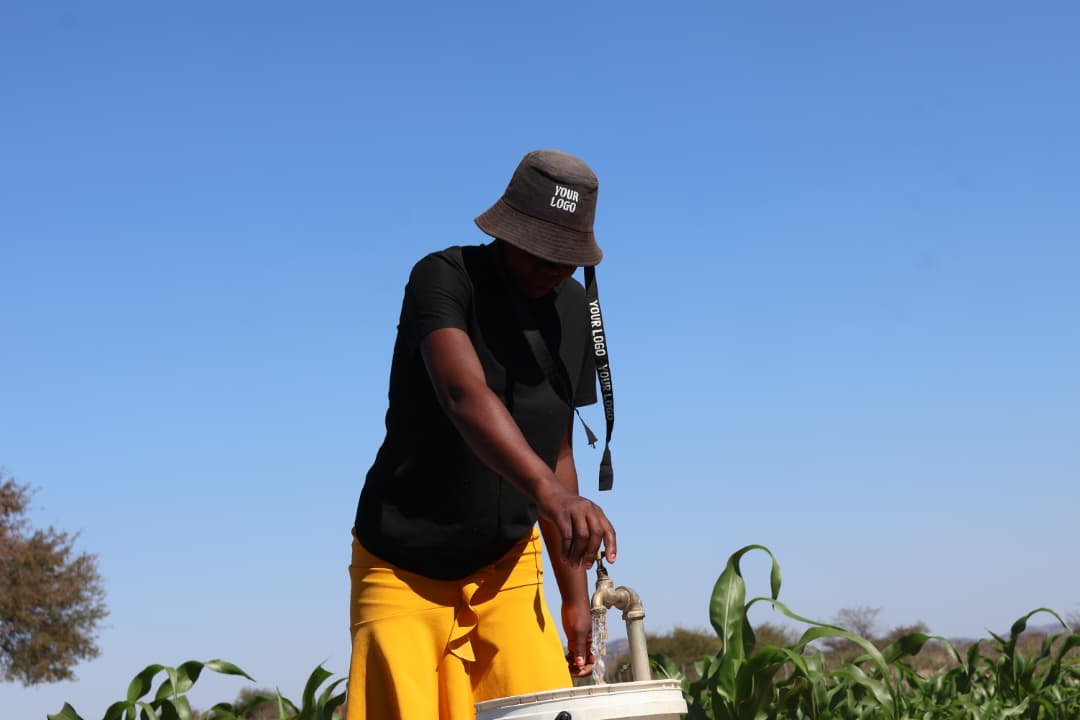
It is a five-kilometre walk reduced to 20 metres.
It is a rain-fed field becoming an irrigated enterprise.
It is a woman turning agricultural income into household assets.
It is a young person being offered farming as an alternative to destructive economic activities.
ActionAid Zimbabwe Country Director Dr Selina Pasirayi said the organisation’s #PayTheHarm campaign challenges the assumption that minerals associated with the green transition are automatically clean.
“The #PayTheHarm campaign challenges the notion that green minerals are automatically ‘clean’ simply because they support electric vehicles, renewable energy and low-carbon technologies,” she said.
“A transition cannot be considered ‘clean’ or just unless companies and governments prevent harm, repair environmental damage and compensate affected communities.”
For ActionAid, the issue is not simply whether mining should take place.
It is whether the environmental and social costs of extraction are fairly borne.
The organisation is calling for stronger implementation of the polluter-pays principle, community participation, environmental restoration and compensation for affected communities.
“Polluter pays must mean ‘polluter restores and repairs’,” Dr Pasirayi said.
The demand is particularly relevant in communities where agriculture and mining increasingly compete for the same land and water resources.
Parliamentary Portfolio Committee on Mines chairperson Remigio Matangira said communities could no longer remain on the margins.
“Mining must not be an extractive exercise that leaves communities worse off,” he said.
Meanwhile at Virira, farmers are already planning the next phase.
They want to establish fishponds,expand small-livestock production and diversify food and income sources.
The VBU has a dedicated business adviser, a qualified agronomist employed by the Ministry of Agriculture, Mechanisation and Water Resources Development, who provides technical guidance to the farmers.The objective is to build a diversified rural enterprise rather than simply maintain a vegetable garden.
Ward 11 councillor Danmore Jaka said the benefits are already reaching households.
“We would like to thank the Government for coming up with this community-led initiative as we see our people leading the projects in line with their needs,” he said.
“For years, people have been struggling to access water for drinking and irrigation, but with Village Business Units, our lives have been transformed. We are now seeing parents being able to pay school fees for their children through proceeds from this VBU.”
The transformation is visible in Mrs Mateveke’s home.
The widow who once depended on unpredictable rainfall, small grains and livestock to educate her children is now using irrigated agriculture to build assets.Her television is there.
Her solar system is there.
Her goats and chickens are there.
Her renovated houses are there.
And the fields that generated the money are still producing.
That is perhaps the most important part of the story.
The VBU has not removed Chivi’s climate vulnerability.
It has given one community a tool with which to confront it.
Virira, however, also exposes a larger national challenge.
Climate adaptation cannot be separated from water management.
Water management cannot be separated from environmental protection.
Environmental protection cannot be separated from mining governance.
And none of these can be separated from the question of rural employment.
Mrs Mateveke’s journey shows what happens when a farmer gets water.
Mrs Dzawanda’s cabbage shows what that water can produce.
Nothando’s shortened journey shows what it can return to a family.
Chief Madyangove’s concerns show what can happen when young people do not have productive alternatives.
And the mining debate asks whether the country can pursue mineral wealth without undermining the very communities whose resilience it needs to build.
At Virira, the answer is beginning in a field one hectare wide.
A cabbage is harvested.
A tomato is sold.
A green mealie reaches the market.
A woman earns.
A household improves.
A young person sees agriculture as a possible livelihood.
A community protects its water.
The challenge now is whether that one-hectare success can turn into larger rural transformation before climate change and environmental degradation narrow the choices available to communities such as Chivi.