Online Reporter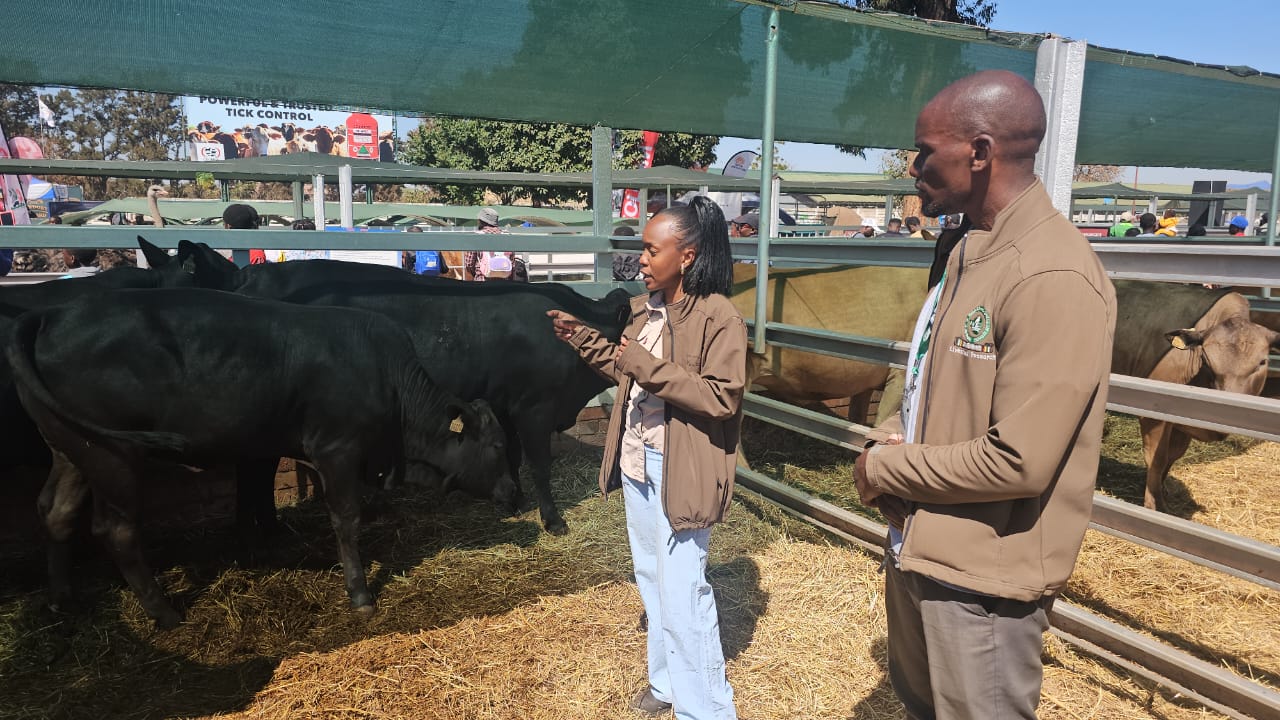
Theseus Mauruki Shambare [email protected]
THE cattle did not know a drought was coming. A month ago, they stood calmly in the livestock exhibition pens at the Zimbabwe Agricultural Show, displaying the traits of breeds that have spent generations adapting to Zimbabwe’s harsh and often unforgiving climate.
Those traits are becoming increasingly important as farmers confront the realities of climate change.
Zimbabwe has warmed considerably over recent decades, with the World Bank’s Climate Change Knowledge Portal recording an average temperature increase of about 0,29 degrees Celsius per decade since 1970.
Rainfall patterns are also becoming more erratic, with climate assessments pointing to more frequent below-normal rainfall, prolonged mid-season dry spells and recurring droughts.
The country is therefore facing a livestock question that can no longer be ignored: what type of cattle should Zimbabwe be breeding for a hotter and less predictable future?
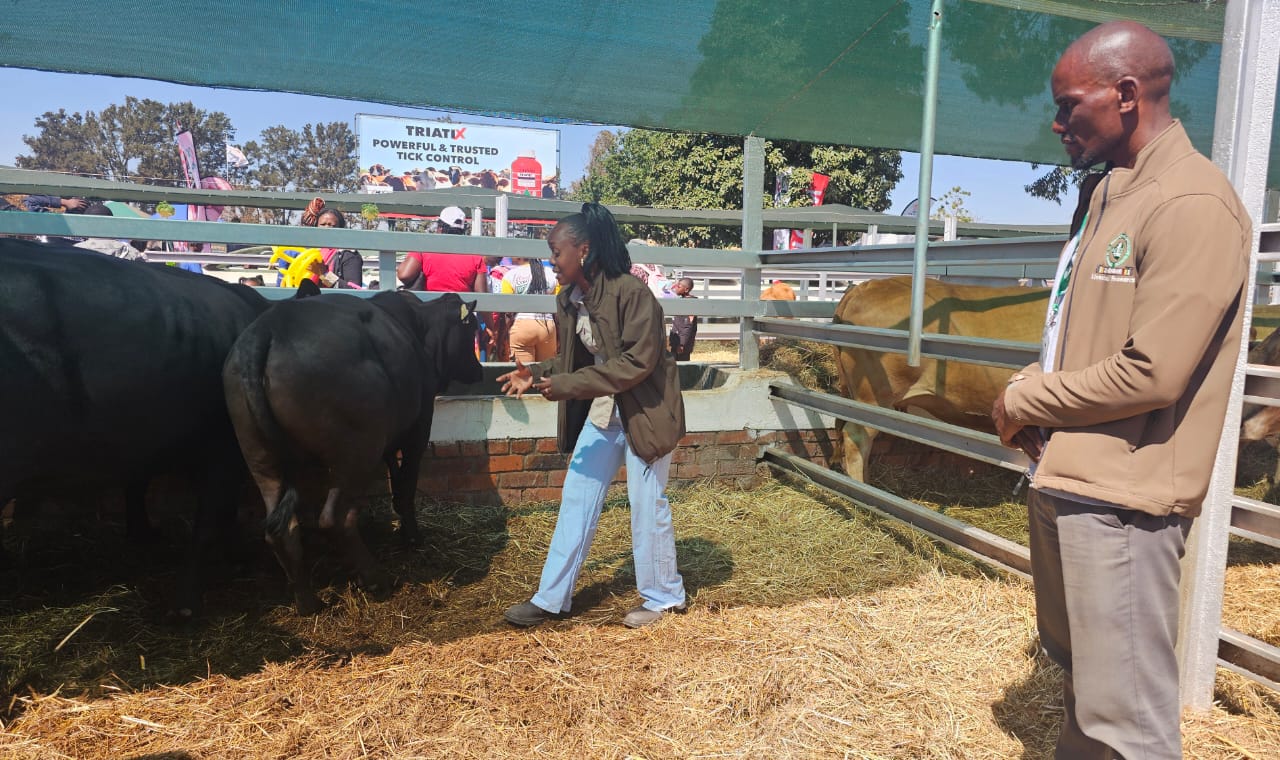
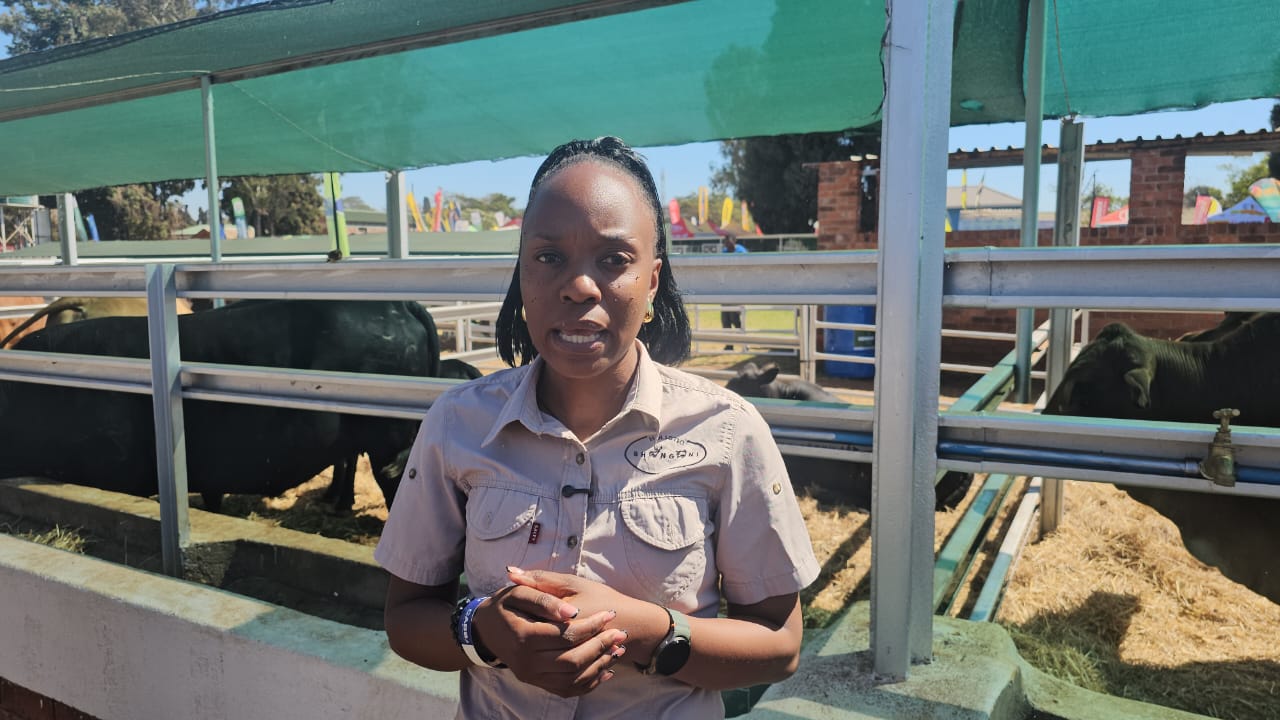
For farmer Ms Thabile Ndlovu, part of the answer may lie in Zimbabwe’s indigenous breeds.
At Shangani Holistic, a 65 000-hectare conservation and cattle ranch where she has worked with indigenous cattle for nearly 15 years, Ms Ndlovu has watched her animals endure conditions that often expose the limitations of livestock heavily dependent on supplementary feed.
“At Shangani Holistic we have been focusing entirely on the Nkone indigenous breed of Zimbabwe.
The Nkone came into Zimbabwe around the 1830s and upon their arrival, or upon their journey to Zimbabwe, they faced quite a lot of challenges. We had Rift Valley, we had East Coast fever, and this caused these animals to be more adapted to the environment,” she said.
Ms Ndlovu believes generations of exposure to Zimbabwe’s environmental conditions have endowed the breed with attributes that could become increasingly valuable as climate pressures intensify.
“This makes them able to fight off diseases, to be drought-tolerant, because there have been quite a couple of droughts that these animals have been exposed to,” she said.
At Shangani Holistic, the recent drought provided a practical test of that resilience.
“We did not offer any supplementation to our stud herd, but we saw an improvement in the body condition of our animals,” she said.
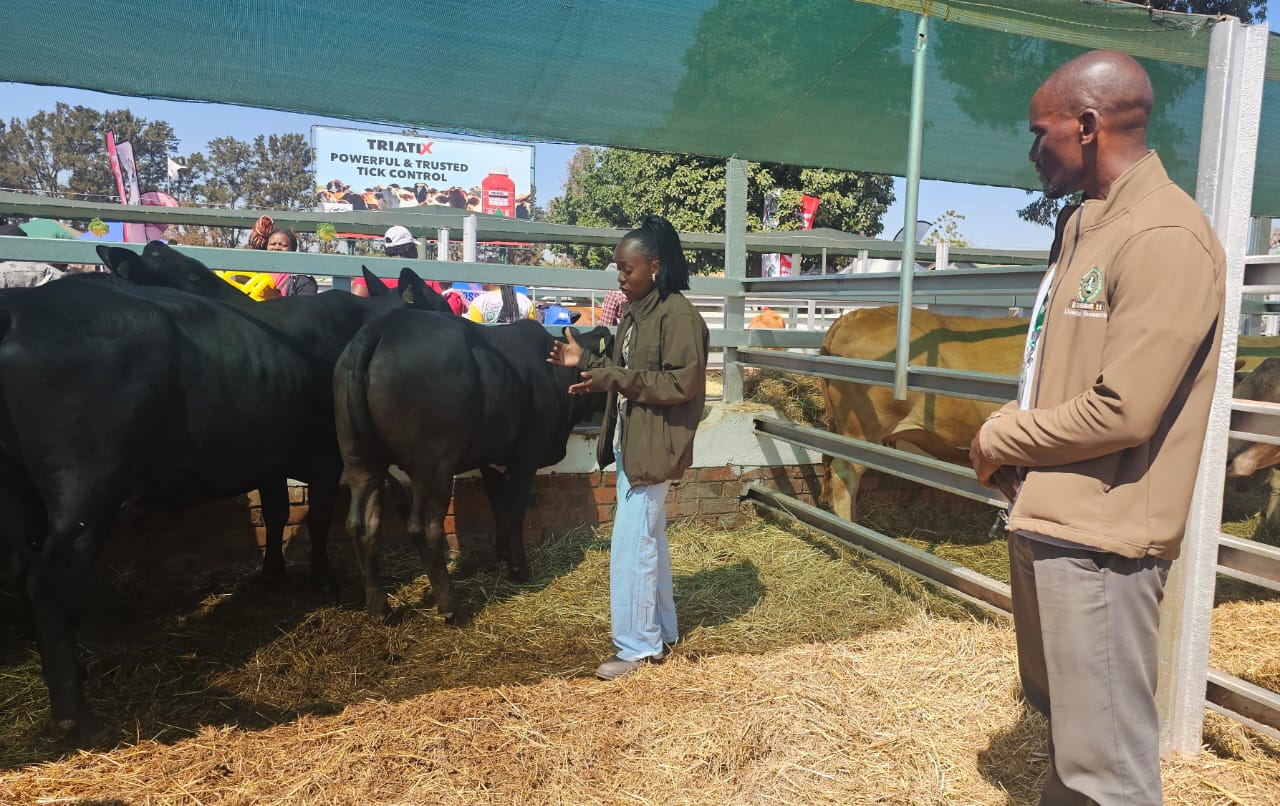
While neighbouring herds lost condition and required supplementary feeding, Ms Ndlovu said the indigenous cattle remained healthy and productive.
“It is adapted to Shangani Holistic. It is adapted to our environment,” she said.
University of Zimbabwe lecturer and climate expert Dr Walter Svinurai said livestock genetics must form a key pillar of Zimbabwe’s climate adaptation strategy.
“From a greenhouse gas inventory and climate adaptation perspective, we cannot treat livestock genetic resources as an afterthought,” he said.
Dr Svinurai said indigenous breeds such as Nkone and Mashona should be viewed not only as part of Zimbabwe’s heritage, but also as strategic biological assets.
“When an animal can maintain body condition on natural veld during a drought without requiring heavy supplementary feeding, it represents a much lower carbon and economic footprint,” he said.
Yet Zimbabwe faces a worrying contradiction.
The cattle that could become increasingly important in a changing climate are themselves under threat.
A 2025 study by Calisto Gwatirisa and colleagues, published in the Bulgarian Journal of Animal Husbandry under the title Risk Status of Semi-Arid Zimbabwean Indigenous Cattle Populations Under Conservation Programs, analysed pedigree records for 59 477 Tuli, Mashona and Nkone cattle.
The study found an effective population size of just 135 for the Nkone breed, while pedigree completeness at the sixth generation stood at only 23,2 percent. Researchers classified both the Nkone and Mashona breeds as endangered and in need of active conservation.
As climate conditions become more challenging, Zimbabwe may need indigenous cattle more than ever. Yet the genetic resources that could help farmers adapt are steadily shrinking.
“The findings from the 2025 study on effective population sizes, with an effective population size of 135 for Nkone, are a major red flag for national climate policy. You cannot build a climate-resilient livestock sector on a collapsing genetic foundation,” Dr Svinurai said.
He said commercial markets have often rewarded fast growth rates and heavier carcasses, especially in favourable production environments.
“The Nkone and Mashona are endangered not because they failed the climate test, but because our agricultural market systems failed to reward their resilience,” he said.
While crossbreeding can introduce beneficial traits, Dr Svinurai warned that unstructured breeding programmes and poor record-keeping can accelerate the erosion of indigenous genetics.
“If we lose pedigree integrity and allow genetic erosion to continue through unmonitored crossbreeding, we lose the exact adaptive traits — like heat tolerance and tick resistance — that our national adaptation plans rely on,” Dr Svinurai said.
For a country increasingly exposed to drought, the conservation of indigenous livestock genetics is becoming more than a heritage issue.
It is a climate adaptation investment.
At Shangani Holistic, Ms Ndlovu is already making that investment.
The ranch established its stud breeding herd in 2021 with about 200 breeding cows. That number has since doubled to around 400, while the broader operation now carries approximately 8 000 cattle, including both indigenous and crossbred exotic animals.
“We managed to see that we had improved weaning weights from our calves,” she said.
The issue is no longer simply about preserving indigenous breeds. It is about protecting resilience before it becomes too expensive to replace.
Meanwhile, Government is preparing for another potentially difficult agricultural season.
Fisheries and Livestock Production Director Mr Milton Makumbe said drought mitigation committees had already been established to coordinate the response to the El Niño threat.
“We have set up drought mitigation committees to look into issues to deal with El Niño,” he said.
Government has also rolled out a hay-baling programme, deploying machinery to provinces to help farmers preserve feed for livestock.
While these measures provide a critical safety net, Dr Svinurai said long-term resilience requires more than emergency interventions.
“We must move beyond emergency measures like hay-baling. We need robust, science-backed national breeding frameworks, integrated MRV systems for livestock emissions, and strong incentives for farmers who conserve these endangered breeds,” he said.
Agriculture, Mechanisation and Water Resources Development Deputy Minister Davis Marapira has similarly urged farmers to reconsider their reliance on exotic cattle breeds.
“These are our local breeds, which survived from the droughts hundred years ago. So, let us focus more on our indigenous breeds,” he said.
The challenge now lies in converting that growing recognition into an economic system that rewards farmers for conserving the genetics Zimbabwe may increasingly depend on.
Perhaps the greatest value of the Nkone breed is becoming most visible during the dry years.
Climate change is forcing farmers to rethink assumptions that once seemed obvious. Greater production does not always mean greater resilience. A larger animal is not necessarily a better animal.
The most resilient cattle system may ultimately be one that continues producing when rainfall declines, grazing deteriorates and household incomes come under pressure.
That is why the future of the Nkone should concern more than livestock breeders.
Zimbabwe may be spending millions helping farmers survive each drought while underinvesting in the biological resources that could reduce the cost of surviving the next one.
The contradiction is clear.
The country needs livestock capable of withstanding a harsher climate, yet some of the genetics best suited to that future remain endangered.
What remains is a national conversation on whether climate resilience itself should become part of the value attached to livestock.
Because the most valuable cow during Zimbabwe’s next drought may not be the one that grows fastest.
It may be the one that still has enough body condition to reproduce when the grass has turned brown, requires less supplementary feed when farmers can least afford it and carries genetic traits that future generations will depend upon.
“Protecting indigenous cattle genetics is not an act of nostalgia — it is a vital, non-negotiable climate adaptation strategy for Zimbabwe,” Dr Svinurai said.