Online Reporter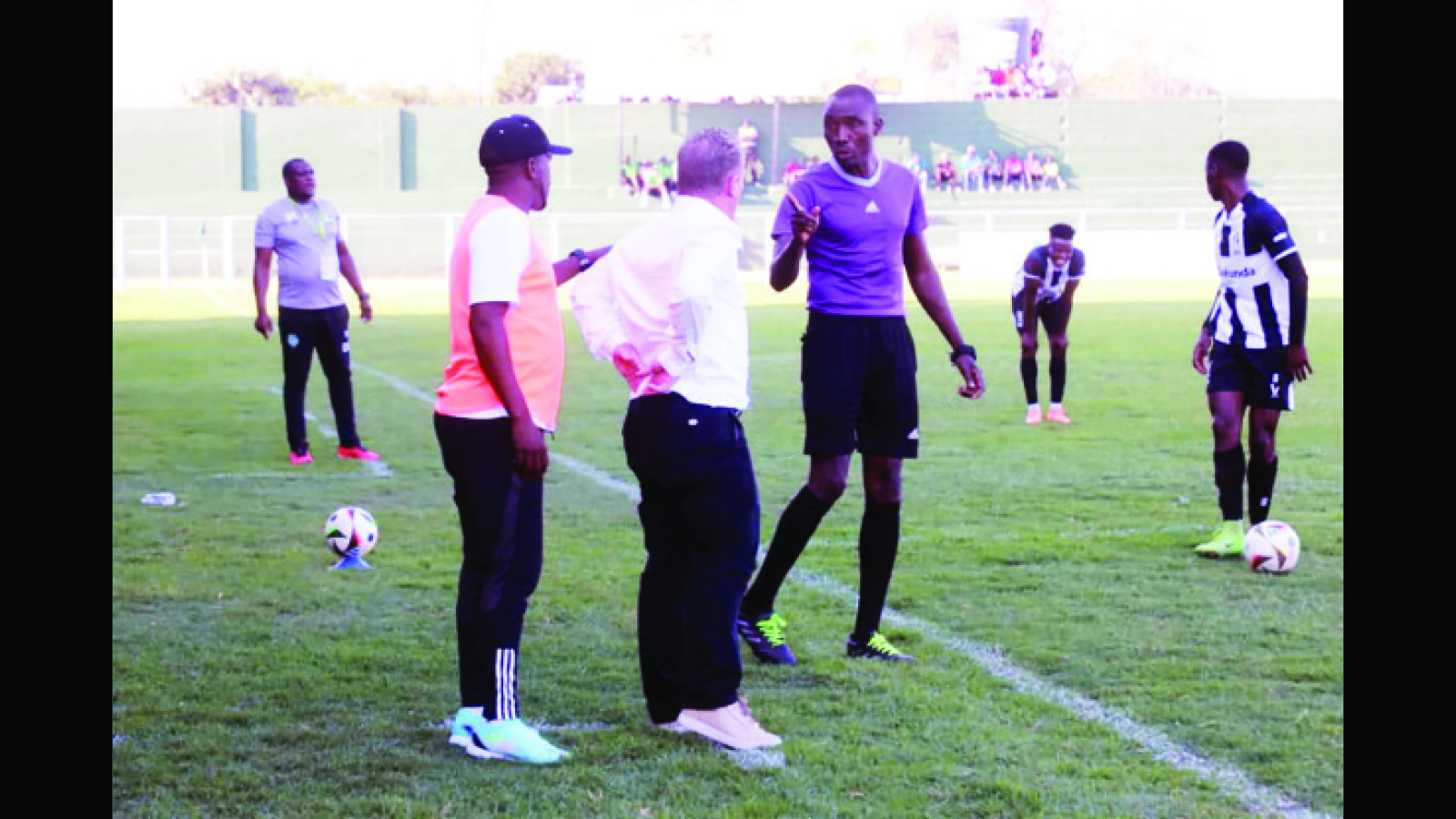
Howard Musonza
Taking over this Saturday column from Robson Sharuko feels like borrowing a guitar from Oliver Mtukudzi. You strum it, but you know it will never sound quite the same. Sharuko is not just a sports-writer. He’s a movement. His pen has carried the pulse of the game, from the backstreets of Mbare to the boardrooms of FIFA, with that rare blend of heart, humour and heavyweight analysis. Many of us grew up on his metaphors and stayed for his fearlessness.
So while the big brother takes a breather, I’ll do my best to honour the tradition, and call things as they are.
And right now, things aren’t pretty.
Because what we’re watching at Highlanders isn’t just a football story. It’s a personality show gone wrong, Pieter de Jongh’s show. The Dutchman’s temper, his theatrics, and his self-styled “Champ” persona have once again dragged Bosso into chaos. And it’s time to ask; are we witnessing passion or plain poison?
A Career Built on Chaos
Zimbabwe finished last month on a strange high. The Warriors let go of Michael Nees after a World Cup qualifying run that yielded more questions than answers. His football shrank our courage. We stopped pressing with conviction. We sat deep. We shuffled the ball and hoped something fell our way.
That was the same Nees whose homeland produced Jurgen Klopp and Thomas Tuchel and a generation that treats the ball like an ally, not a bomb. If he were coaching in Germany, he’d have been gone months earlier. We defended mediocrity as if it lived in our blood.
Even local coaches had enough. Lloyd Chitembwe called Nees “a clown” after one of those messy player-release rows. It stung because it felt true.
The system bends for outsiders and breaks for locals, and Nees became the poster boy for that imbalance.
That brings me to Highlanders and a different storm. Hendrik Pieter de Jongh.
A man with many jobs and a restless suitcase. He was born on December 8, 1970. He started at RKC Waalwijk in the early 1990s, then joined the KNVB’s youth structures, then moved through VV VRC, Heerjansdam, De Zuidvogels, RKSV Schijndel, a stint as assistant at FC Dordrecht, and time with Vitesse Delft and SC Woerden.
He touched AZ’s youth structures too. After that the passport stamps piled up.
There was ASV Dronten and SDC Putten. He moved to Moldova’s Olympic setup. He ran the academy at Budapest Honved. He coached AFC Leopards in Kenya.
There were stops in South Africa with FC Cape Town, in Mongolia with Ulaanbaatar City, with the Eswatini national team and then in Zimbabwe with Highlanders and FC Platinum.
He took charge of Somalia in 2022, went to Malawi’s Silver Strikers in 2023, then to Botswana’s Jwaneng Galaxy in 2025, and later this year came back to Bulawayo.
Where did he stay long enough
to build?
Three places stand out. Four years at RKC Waalwijk’s youth. Three at the KNVB. Three at De Zuidvogels. The rest were one-year sprints or shorter. Caretaker gigs. Quick exits. Brief honeymoons that ended before the cake went stale.
He first came to Zimbabwe in 2019 and made a quick imprint at Bosso. He beat Dynamos in his first game. That alone will make you a prince in Bulawayo.
He beat Chicken Inn three days later. The terrace verdict wrote itself. Bosso had found a man.
The run got even better. One loss in 16 matches and the Chibuku Super Cup in the bag. Then came the turn. He left for FC Platinum after Highlanders thought they had a long-term deal brewing.
At FC Platinum he ran into a rulebook. CAF barred him from the Champions League bench because he didn’t hold a CAF A or a Pro Licence. The club had to make a change. The side note was pure De Jongh. There were social media jabs at Highlanders.
There were shots at ZIFA and the Warriors’ plans. There was the Lizwe Sweswe subplot. It always felt noisy.
His year in Malawi delivered more of the same. Confrontations with referees. Touchline drama. Snipes at opponents. The “Champ” brand had a megaphone, and he kept pressing the volume button.
So when he re-appeared at Highlanders in July 2025, it felt on brand that he arrived at a training session before the paperwork was done. He introduced himself to the squad while the club scrambled behind the scenes. The entrance said as much as any press conference could.
Fined, Then Flaunting It
This week the story flared again. The PSL fined De Jongh US$1 250 under the Standing Order Fines Schedule for implying bias and questioning the integrity of the league and its partners after Bosso’s Chibuku Super Cup semi-final defeat to Dynamos at Rufaro.
His post-match words were pure De Jongh. “It’s always difficult to play against 12 players,” he said. “The first goal was a big shame. There is no fair play.” Highlanders lost 5-3 on penalties after a 1-1 draw, and his flash of anger kept burning long after the bus left the stadium.
The league chose a spot fine. That tool exists to handle touchline flashpoints and reckless media comments without assembling a full disciplinary hearing. It is meant to cool things down. Instead, it became a spark.
The fine itself wasn’t the real story, it was what came next.
After being hit with a US$1 250 spot fine, most coaches would have reflected, maybe even apologised. De Jongh doubled down.
In the early hours of yesterday morning, he posted a photo on his X account, his face half covered by a mask, finger pressed to his lips. The caption read, “They can fine me, but they can’t silence The Champ.”
Then came the hashtags, #TheChamp, #Fearless, #Unstoppable, #TruthHurts. It wasn’t contrition. It was theatre.
What should have been a quiet disciplinary note became another performance.
A coach punished for misconduct turned the spotlight back on himself, converting reprimand into self-promotion.
This wasn’t passion. It was vanity dressed as defiance. Highlanders were still fighting for survival, yet their coach was more interested in playing the martyr online than in fixing what went wrong on the field.
Inside Bosso, patience is wearing thin.
Some see him as fighting for the badge. Others see a man addicted to chaos. Every tantrum, every social media stunt, chips away at the club’s dignity. The team becomes a backdrop, De Jongh the headline.
Whether it’s his constant run-ins with referees, his conspiracies about fixtures, or his touchline explosions, De Jongh has made controversy part of his brand. When he isn’t shouting at officials, he’s suggesting the league favours Dynamos or complaining about match schedules. The noise never ends, and the football suffers for it.
When Ego Replaces Leadership
Results matter. So does conduct. The Standing Order Fines Schedule is not a stage prop.
It exists to keep order so that football can be decided by players, not press conferences.
When a coach answers a fine with “They can fine me, but they can’t silence The Champ” and a string of #TheChamp #Fearless #Unstoppable #TruthHurts, it doesn’t project strength.
It paints contempt. The sport does not need that energy. It needs humility when the whistle goes the other way. It needs accountability when the plan fails. It needs coaches who turn frustration into solutions, not slogans.
There is a football debate to be heard about that semi-final. Dynamos took a quick free kick.
Emmanuel Jalai’s strike caught Highlanders cold. You can question concentration.
You can talk about defensive shape. You can ask why your keeper was surprised from range. Those are coaching questions.
Those are fixable. Screaming at the fourth official won’t change them. Turning fixtures into a conspiracy won’t fix your set-piece rest defence.
There is also a wider lesson for our clubs. When a coach’s personality is the loudest thing in the room, it bleeds into the team.
The dugout mood sets the player mood. The referee becomes the focus. The headlines become about theatre.
Players freeze. Young ones copy what they see. You lose a match, then lose a week to noise.
Bosso know all this. Highlanders are one of our game’s great institutions. They have survived slumps, bounced back from fines, and raised trophies with men who spoke softly and worked loudly.
The badge does not need a hero complex.
It needs a coach who builds a structure that players trust, who takes anger into the planning and training sessions, who saves the hottest words for the team talk not the cameras.
Is De Jongh capable of that reset?
He says he stands for fair play and respect. “Football must always be about fair play and respect,” he wrote.
“My comments were never meant to disrespect the PSL, referees or Dynamos. I spoke out of passion for the game and the values I stand for.” Good. Let the next three matches show it. Simba Bhora, Manica Diamonds and Chicken Inn.
And what about the league?
The PSL have signalled they are watching. They will review the match reports and act if necessary. The rules must feel real to coaches and players. Not heavy-handed.
Just firm enough that the line stays visible.
Leaders learn. The best admit errors in public, protect players in public and fix issues in private.
They don’t hunt for enemies in every fixture list. They don’t make referees the centre of their brand.
They don’t ask the league to be a foil for their next post.
Football always humbles those who try to shout past it. The game will call you back to the basics.
Before we close, a word on Bulawayo’s biggest love. Highlanders deserve calm.
They deserve a coach who makes the team the headline. They deserve a week where the loudest sound at Barbourfields is the roar after a rehearsed move works on a Sunday afternoon.
Adios.