Sikhonzile Faith Malinga
GROWING up in the high-density suburbs, the locations or ghettos, as we often called them, the school holidays transformed the neighbourhood. Children and teenagers poured into the streets, yards and dusty open spaces. We came from different schools, but in the community those differences did not initially matter very much. Some were day scholars at local government schools.
Others returned from boarding schools. Some attended Group A schools, while a small number came home from private schools. There were differences in uniforms, accents and experiences, but they were not yet elaborate enough to separate us. During the holidays, we were simply children from the same neighbourhood.
We played together, borrowed from one another and knew one another’s families. Adults corrected children who were not their own. An aunt, uncle, neighbour, older sibling or respected community member could intervene when a young person was going astray. There was an informal network of supervision, belonging and accountability. Our lives appeared to begin from roughly the same place, even though opportunities were never truly equal.
Then we grew older and the neighbourhood began to release us into very different futures. Some left for university. Some found employment and moved to quieter suburbs. Others migrated and eventually left Zimbabwe altogether. News about former playmates began to arrive in fragments: this one had fallen pregnant; another had married; one was at university; another had secured a job abroad. The differences that had once seemed minor became increasingly visible.
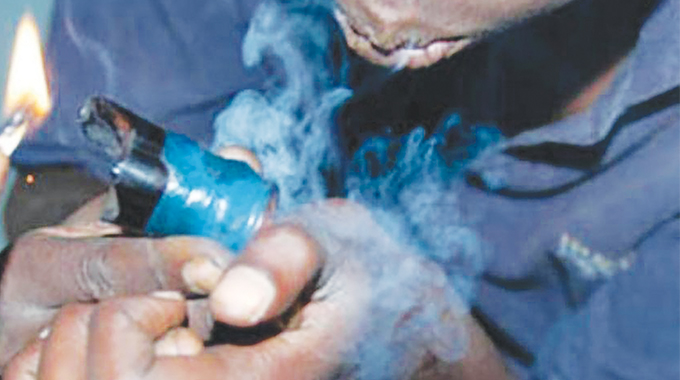
But there were also those who seemed to remain behind not only geographically, but socially and psychologically. They became the young men sitting on drainage edges, near gates, at bridges or familiar street corners. They drank or smoked for much of the day. Some survived through occasional work: gardening, clearing weeds, loading goods, washing cars or helping passers-by carry heavy items. Others became associated with theft and increasingly serious crime. In time, rumours circulated that some could assault or even kill.
The community’s response became a complicated mixture of compassion, disappointment, discomfort and fear. People remembered the children these young men had once been, yet they were also afraid of the adults they appeared to have become. A person stepping out of a kombi after dark might initially feel relieved to see familiar faces still sitting outside. Their presence could mean that someone was watching the road. But that relief could quickly become anxiety: Were they protecting the neighbourhood, or were they the people from whom one needed protection? Would they help carry a heavy bag, ask for money, or rob the passenger who had just arrived?
This contradiction is at the centre of Zimbabwe’s drug and substance-use crisis. The people now feared at street corners did not arrive in the community as strangers. Many were once children who played beside us, sat in the same classrooms, attended the same churches and carried dreams that looked remarkably similar to ours. Their present behaviour may be dangerous and must not be romanticised. Families and communities have genuine reasons to fear theft, violence and instability. Yet psychology requires us to ask a question that fear alone cannot answer: what happened between the child we knew and the adult we now avoid?
Perhaps there were early signs that no one understood. Perhaps there was trauma, family conflict, academic failure, unemployment, peer pressure, untreated mental illness or the slow loss of hope.
Perhaps substance use initially offered temporary confidence, belonging or relief. None of these possibilities excuses crime or removes personal responsibility. They do, however, remind us that punishment alone cannot reconstruct a life that has unravelled.
A necessary response — but not a complete one
Zimbabwe’s intensified response to drug and substance abuse is necessary. Drug bases are being dismantled, illicit substances are being seized, suppliers are being prosecuted and rehabilitation facilities are increasing.
Recent reports indicate that 19,632 people were arrested for drug-related offences during 2025, with young people below the age of 35 constituting a large proportion of those apprehended. These figures demonstrate both the scale of the crisis and the determination of the authorities to respond.
Law enforcement is essential for disrupting supply networks and protecting communities from those who profit from addiction. Nevertheless, the person who has developed a substance-use disorder requires more than removal from the street.
That person may require medical treatment, psychological intervention, family counselling, education, employment support and a realistic pathway back into society.
Substance dependence is more than bad behaviour
Substance use may begin as experimentation, social conformity or an attempt to escape emotional pain. With continued use, psychological and physiological dependence may develop. The individual’s capacity to make sound decisions, fulfil responsibilities and regulate behaviour may progressively deteriorate. This does not remove responsibility; it explains why punishment, shame and repeated instructions to “just stop” are often insufficient.
The World Health Organisation and United Nations Office on Drugs and Crime describe drug-use disorders as health conditions that should be addressed through evidence-based and ethical treatment. Their international standards recommend systems that include outreach, screening, treatment, rehabilitation, recovery management and social reintegration (WHO & UNODC, 2020).
Psychological treatment must address not only the substance but also the purpose it has come to serve. Drugs may temporarily silence traumatic memories, create belonging, increase confidence, induce sleep or offer relief from hopelessness. Unless these functions are understood and healthier alternatives developed, removing the substance may leave the person with the same pain and no safer way of managing it.
Rehabilitation is not the end of recovery
A person may leave rehabilitation motivated to change but return to the same environment in which substance use developed. The individual may encounter drug availability, unemployed peers, unresolved family conflict, community rejection and few opportunities for education or employment. Some return to families that no longer trust them. Others discover that their place at school, university or work has disappeared.
A systematic review of treatment outcomes across Africa reported an average treatment-completion rate of approximately 71%, but relapse rates across the included studies ranged from 23% to 92%.
Low recovery capital and poor social support were among the factors associated with relapse (Treatment outcomes for substance-use disorders across the African continent, 2025).
Recovery capital refers to the personal, family, social, cultural and community resources that help a person initiate and sustain recovery. These resources may include stable housing, supportive relationships, education, employment, spirituality, cultural identity, treatment access and a sense of purpose.
A person may therefore leave rehabilitation drug-free while still possessing very little recovery capital.
Relapse should not automatically be interpreted as stubbornness, moral weakness or ingratitude. It may indicate that treatment addressed substance use without adequately addressing the environment to which the person returned. Recovery begins with reducing or stopping harmful substance use, but it becomes sustainable through reintegration.
Global and Regional Lessons
Portugal: separating personal drug use from a permanent criminal identity
Portugal redirected possession and personal consumption of small quantities of drugs away from conventional criminal prosecution and towards administrative panels within a health-oriented framework. This was not wholesale legalisation, and trafficking remained a criminal offence. The psychological value of the approach lies in distinguishing the person experiencing a drug problem from a permanent criminal identity. Research has associated the broader Portuguese strategy with reductions in some health and social costs, although scholars appropriately caution against attributing every change to decriminalisation alone (Moury, 2023).
Scotland: building recovery capital
Recovery-oriented work in Scotland has looked beyond clinical treatment to peer networks, housing, employment and community assets. Research from Glasgow found that people understood recovery as more than abstinence: it involved rebuilding identity, forming supportive relationships and establishing a meaningful life. Peer support was repeatedly identified as important (Best et al., 2011).
Ghana and the African region: reconnecting people to ordinary life
A Ghanaian study found that non-governmental organisations supported recovery through psychotherapy, family reconnection, advocacy, return to employment and assistance with small businesses. These efforts were constrained by shortages of qualified professionals and inadequate government support. Across the continent, the evidence points towards comprehensive, culturally responsive and resource-adapted interventions rather than treatment in isolation.
Culture Can Become Recovery Capital
Zimbabwe is not culturally uniform. Shona, Ndebele, Shangani or Tsonga, Nambya, Kalanga, Venda and other communities possess distinct languages, histories and practices. It would be inaccurate to assume that every member of a cultural group believes or behaves in the same way. Urbanisation,
Christianity, migration, education, intermarriage and generational change have transformed cultural practices.
Nevertheless, several southern African traditions understand personhood as relational. A person exists within networks of family, kinship, community, spirituality and social responsibility. Among the Shona, this relational ethic is often expressed through hunhu or unhu; among the Ndebele it is associated with ubuntu; related philosophies include bunhu among Tsonga or Shangani communities and vhuthu among Venda communities. These concepts are not identical, but they share emphases on dignity, mutual care and responsibility.
Culture should not be romanticised as a cure, nor should spiritual explanations be allowed to delay essential medical or psychological care. Cultural resources are most helpful when they expand dignity, belonging, accountability and access to treatment.
Stigma can become a second sentence
People recovering from substance-use disorders frequently carry labels such as “drug addict,” “thief,” “failure” or “lost cause.” These labels may remain long after treatment. A systematic review found that stigma negatively affects treatment, whereas perceived social support improves engagement. Negative comments from close relatives may also contribute to relapse (Shahid & Asmat, 2023).
When people believe society will never accept them again, they may question whether recovery is worth sustaining. Rejection can push them back towards peer groups and environments associated with substance use because those may be the only places where they still experience belonging.
Recovery does not mean ignoring theft, violence, deception or other harm caused during active substance use. It means creating structured opportunities to acknowledge harm, make appropriate amends, rebuild trust and demonstrate change. A person should be held accountable without being permanently denied the possibility of becoming someone different.
Families also require support
Families may have experienced theft, manipulation, aggression, financial loss and repeated failed attempts to help. Simply instructing them to forgive and support the recovering person is inadequate.
A systematic review and meta-analysis of psychosocial interventions for families affected by another person’s substance use reported improvements in distress, coping and family functioning (Rushton et al., 2023). A separate systematic review found that family interventions for young people were associated with reductions in substance use and behavioural difficulties and with improved family
functioning (Binumon et al, 2024).
Families need counselling, psychoeducation and guidance on healthy boundaries. They must understand the difference between support and enabling, recognise warning signs and protect vulnerable household members. Cultural expectations of collective responsibility should not mean that one exhausted mother, wife, sister or grandmother becomes the entire rehabilitation system.
Schools and universities must protect the future
Educational institutions have an especially important role. Suspension or exclusion may sometimes be necessary to protect safety, but removal should not be the only response. Schools, colleges and universities need pathways for early identification, confidential counselling, risk assessment, treatment referral, academic accommodation and supported return following rehabilitation.
A student returning from treatment may require a reintegration plan, regular counselling, academic
monitoring, relapse-prevention support and carefully coordinated family involvement with informed consent and appropriate confidentiality safeguards. The goal should not merely be to remove a troubled student. It should be to prevent a temporary crisis from becoming permanent educational and social exclusion.