admin
admin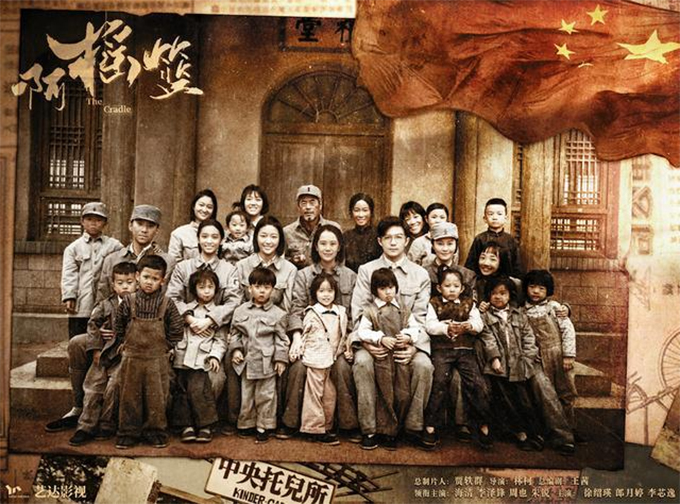
Yeukai H
In May President Mnangagwa unveiled the statue of 19th Century warrior woman and anti-colonialist, Mbuya Nehanda. The heroine of the First Chimurenga War reminded me of females’ roles in revolution. When it comes to war and revolution, muscularity came first, but it cannot be denied that females also contributed in different ways for the common objective, which is seen in both Zimbabwe’s and China’s revolutionary struggles.
At the juncture when the Communist Party of China (CPC) is celebrating its 100th birthday, the TV series The Cradle aired on several platforms in China and abroad, telling the CPC’s stories during its struggles for independence from a female perspective. For many foreigners as well as Chinese young generation, that part of history is so distant. As most of the TV works shoot scenes in the torrid battlefields, The Cradle, instead, tells stories on the backstage.
“Let my service be the service of the leaves”
Adapted from a real story in the 1940s during China’s War against Japanese Fascist Aggression and China’s War of Liberation, the TV series focuses on revolutionary care workers’ endeavor to protect the descendants of China’s revolutionary army in a nursery in Yan’an, a backward northwestern town where the CPC Central was seated.
In 1940, Chou Zigang, the protagonist, a progressive female who joined the CPC for revolution, was suddenly appointed by the CPC Central to establish the Yan’an Central Nursery. By that time, the orphans of the martyrs, the descendants of the soldiers, and the children of revolutionary leaders such as Mao Zedong and Liu Bocheng had been left to the rural villagers’ care who were not well-educated nor capable to keep children safe.
Chou protested, “I didn’t come to Yan’an to be the king of children.” For her, she had always been wishing to fight in the battlefields or at least went to the Anti-Japanses Aggression University so as to be a female general in the army.
But her husband, Zhang, who was also a Party member, quoted a poem by Debendranath Tagore to persuade her to stay—-“The service of the fruit is precious, the service of the flower is sweet, but let my service be the service of the leaves in its shade of humble devotion.” Taking into consideration the necessity to ensure the safety and health of those children, Chou finally made her mind to start the Yan’an Central Nursery.
Hard years in wartime Yan’an
The nursery started from almost nothing, just a team consisting of several girls, and 6 renovated caves in the mountain, a common dwelling in the backward northwestern China.
However difficult the situation was, the CPC central leaders who attached great importance to the growth of the next generation, supported Chou to recruit more care workers.
Life in Yan’an was tough. Besides life threat from the enemy, there were no tap water, flush toilet or enough sanitizing facilitation. There was not enough food. Locals only ate millet while white buns, rice, sugar, dates, milk and honey were pretty precious and very hard to get. Chou and other care workers led an extremely austere life, while they did as much as they could to meet children’s needs. Meanwhile, the Party also tried their best to advocate overseas Chinese to raise donations for the children. When donations arrived, children and care workers even had no idea how to make powdered milk since they had never seen milk powder before. With assistance coming to their aid, though now much, the life in the nursery became a little bit easier.
They were faced with the challenge of communicable diseases. At that time bordetella pertussis was a deadly disease that could easily claim people’s life. When the epidemic erupted at the nursery, Chou and her colleagues set up quarantine regulations to isolate the sick and worked with doctors to find a cure. Though lacking necessary modern equipment, Chou had a sharp mind looking for alternative methods. With no sterilizing equipment, Chou asked her colleagues to sanitize contaminated items by putting them in boiling water. With no tap water, they invented a simple device to make sure that children could use clean running water.
But children never found their life hard. They called Chou Zigang “Mama Chou” and regarded all care workers as their dearest families. They were loved and protected. They never worried about food or safety. Though they were all in ill-fitting clothes and hardly got what they preferred to eat, no candies or peanuts, they were optimistic. Just like any children at their age, they were naughty and sometimes caused trouble. They played and learned to read and write so that should their parents return from the frontiers they could get their praise and make them happy. But as they grew up, they began to realize the cruelty of war and why some of their parents never came back.
Cradles on horse backs
Tremendous challenge came in 1947, when Chang Kai-shek’s Kuomintang attacked Yan’an. The CPC army was at a huge disadvantage to the Kuomintang in terms of weapons, so the CPC decided to retreat to a safer place.
To ensure that no toddlers would be left behind, the care workers made from osier into big baskets as cradles and use horses and mules (mostly mules, because horses were very precious and rare) to carry more than 90 kids. Together they trudged with the army on the rugged mountain path.
It took around 3 years before its final destination to Beijing in 1949. Numerous lofty mountains and high ranges made the route steep and dangerous. The only ferry on the Yellow River became the zone of fire. Enemy’s machine gun blazing and warplanes’ bombing also added to the difficulty. Many soldiers were attacked and numerous shelters were bombed.
And the children, who were on horse backs, had to go through the thick clouds of gunsmoke. Some of the kids, when they grew up, recalled the nursery rhyme taught by their care workers: “when planes come, down to the ground. When planes lay eggs, keep still till they’re gone. When planes fart, don’t panic but calm down. A handkerchief wet with urine is the face-mask to keep us safe and sound.”
Warplanes hovering over their route, bombing(lay eggs), emitting toxic gases(fart), the troop had to take shelter and protect children. That’s why care workers wrote such a rhyme to let kids know how to protect themselves in a much easier way to understand.
Finally, at a great cost, Chou and her comrades escorting the children arrived in Beijing. They witnessed the birth of the People’s Republic of China. Born amide fires of war, this generation hated aggressors and wars from the very beginning of their memory. After the victory, they grew up to be the firm defender of peace and devoted themselves into the cause of the country’s construction.
She-Power still resonating today
In history, females were jeopardized and regarded inferior to males. They had little chance to fulfill their personal ideals. The revolution not only awakened the Chinese to fight for liberation but also called on all females to be themselves instead of living with the title of someone’s wife or someone’s mother.
The CPC believes that revolutionary work has no distinction between positions and all comrades, male or female, young or old, are equal. Chairman Mao Zedong used to say that women can support half of the sky and women is a decisive force leading to the victory of the revolution.
Years of war have transformed all characters. Actually, not all of the care workers had professional training, and most of them were only teenage girls. Some were students who wished to do something for the war, some were local villagers that wanted to show gratitude to the Party, and some were like Chou, wishing to fight the enemy in the battlefields but couldn’t get the chance. A young lady escaped her arranged marriage and joined them for self-fulfillment. A nurse, who got professional training in the Peking Union Medical College found her role in the nursery putting her knowledge into use. There was also a city girl from Shanghai who was arrogant and impatient but later grew into a backbone of the nursery.
Though Chou Zigang never fought in the battlefields, she devoted all her life into the nursery. In the end, Chou admitted that she realized the original aspiration when she joined the CPC, that is, no matter what she was doing, it was for the common pursuit of the revolution. What is the revolution for? It is for the victory of the Chinese nation, and also for children in the coming generations.
The spirit will pass on
The more one knows about the history, the more one cherishes the life he lives today. Celebrating the 100th anniversary of its founding, the CPC, from a few dozens of progressive youths develops into the world’s biggest political party consisting of over 90mil members. Numerous Party members together with hundreds of millions of the Chinese people worked together for the same goal to found a new China where people are the masters of the country. And for such a grand dream, they were not claiming credit but always making sure to contribute their share to the success of the cause.
At the end of each episode, there is a mini interview with several care workers who used to work in Yan’an. For some it is unimaginable to learn that people could be so selfless and so steadfast in the belief of the revolution, for nothing of one’s private gains.
As a Chinese saying goes, everything is for children and for children’s everything. It is a tradition in the blood of the Chinese nation. Chairman Mao used to say to the youths that “the world is yours, and is also ours, but eventually, the world belongs to you”. Generations of CPC members strive for the happiness of all Chinese people. Who is the Chinese people? Who will carry on the lofty cause after our generation? It is the youths, the children in the cradle, the next generation—-they are the hope of a nation.
China and Zimbabwe went hand in hand from years of revolutionary struggles. In the war, men and women and even children all made great sacrifices. They were all convinced of the great triumph of at whatever expenses. We know better of the hardships than anyone, and thus we treasure our friendship and cherish the hard-won peace and stability. Today when the CPC is 100 years old, let’s go back to Yan’an Central Nursery and salute to the heroines who endeavored for the birth of the People’s Republic of China as depicted in The Cradle.
The Chinese TV series The Cradle is now available on Youtube China Zone channel with automatic subtitles in English and Shona.



 Online Reporter