shloboe boe
Bruce Ndlovu, Zimpapers Writer
WHEN the convoy carrying Babongile Sikhonjwa’s casket left his Richmond home and finally arrived at Red Café — the watering hole he cherished — it was his father, Nicholas Sikhonjwa, who led the crowd in song. With the Soul Brothers’ Bazobuya blaring from the speakers, Nicholas, dressed in black, appeared to be the life of the gathering. At a glance, he seemed to have the moves for the moment. He jumped, clapped, and twisted his knees with the flair of a seasoned mbaqanga dancer.
Under the glare of the September sun, he looked more like a man in celebration than one in mourning. To outsiders, it may have seemed like an old man masking his grief with dance outside a pub his son had loved. But for those who truly understood, it was a father bidding farewell in a way he knew his son would have wanted — joyfully, with music and movement.
Seven years ago, this reporter had the privilege of spending a day with the two Sikhonjwas — father and son. Babongile had just been crowned Best Artist at the Bulawayo Arts Awards. True to his word, he had promised to slaughter a beast if he triumphed against “real artistes” who dismissed him as merely a comedian and radio host. For him, the win was vindication. He travelled to his family’s farm in Filabusi, slaughtered a cow, and brought the feast back to Bulawayo.
Babongile was always something of an enigma in Bulawayo. When he spoke in English, he did so with a polished accent and the confidence of someone raised in the city’s so-called “leafy suburbs.” He was eloquent and poised, sounding like he belonged in a corporate boardroom. Yet, when he switched to vernacular, he transformed — equally at home among the raucous crowd at Barbourfields’ Soweto stand.
That day revealed that to truly understand Babongile, one had to first understand his father. From the moment we left Bulawayo early in the morning, the two operated like a comedic tag team, seemingly hired to break my ribs with laughter. They kept each other sharp, trading jibes and playful insults throughout the journey.
Just a few kilometres from his farm, the elder Sikhonjwa stopped his car in front of a group of road workers.
Lowering the passenger window, where his son sat, he shouted, “Please vote for me,” before speeding off. The workers never saw who had asked for their votes. That, of course, was the point. As he and his sidekick burst into laughter, he confessed he wasn’t running for any office.
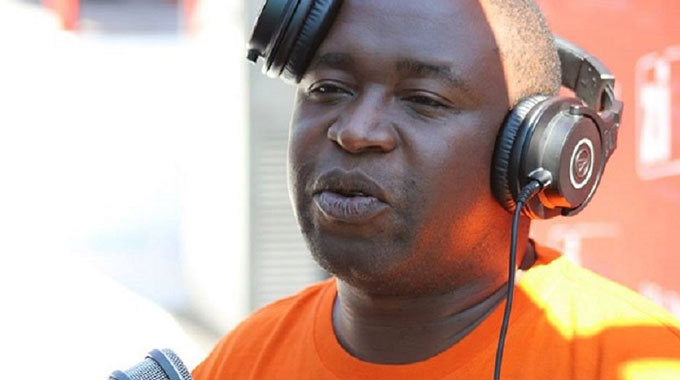
Moments later, it was Babongile’s turn. Spotting a few workers relieving themselves in the bush, he quipped, “We’ve got tissue,” before his father accelerated again. That journey was the first time I saw Babongile matched — and perhaps outclassed — by another funny man. It became clear where he had inherited his wit and charm. Babongile wasn’t a comedian by profession; he was simply a naturally funny man. Humour wasn’t his job — it was his essence.
And in that sense, the apple hadn’t fallen far from the tree.
That trip also revealed why, despite his rockstar lifestyle, Babongile remained grounded and relatable. When we arrived at the farm, the right beast was chosen, and without hesitation, his father handed him a rifle. If he wanted a beast for his celebration, he would have to slaughter it himself.
Having only known Babongile in urban settings, I feared he might botch the kill and betray the trust his father had placed in him. My doubts were misplaced. With a single shot to the head, he brought the beast down. Then, with surprising skill and speed, he began skinning it. He was just as adept with a knife as he was with a microphone.
“We’ve been doing this since we were kids,” he said, wiping sweat from his brow. It was a striking image — this urbane entertainer, now covered in sweat, tossing choice cuts of meat onto a fire while his father cracked jokes that had farm workers in stitches.
As a young African man raised to believe that fathers and sons should love each other from a respectful distance, their bond was eye-opening. Their closeness explained much about who Babongile was. As he grew older, he became less a child and more his father’s exuberant sidekick — a reflection of the man who raised him.
As the day drew to a close and we left the farm with a truckload of meat, Babongile shared the story behind his nickname — the Ndebele Rock Star. He explained that the name had little to do with the party-at-all-costs lifestyle that many associated with him. Much of his life, he said, was wrapped in myth, and the rock star label was one of them.
“There was this guy in the UK called Terrence Mundey, a rock guitarist. He taught me everything I know about music,” he said. “One time, I went to record a traditional Ndebele song in his studio. After laying down the vocals, he suggested we add an electric guitar to the instrumental. When we finished, he shouted that I was a Ndebele Rock Star. From then on, whenever I came on stage at his shows, he introduced me as that.”
Another myth, he told me, was his reputation as a man who partied endlessly. He was no longer a nocturnal figure haunting the city’s streets. Life had changed after the birth of his son. “My life used to be my own. But first the birth of my son, and then my radio listeners, forced me to tone down some of the wildness. I have responsibilities now — people who depend on me,” he said.
That was Babongile Sikhonjwa — myth and man, rock star and farmer’s son, joker and thinker. In his father’s dance outside Red Café, just as on that long-ago day in Filabusi, the truth was clear: the Sikhonjwas were always two halves of the same laughter-filled whole.



 Online Reporter