


 Online Reporter
Bruce Ndlovu, Sunday Life Reporter
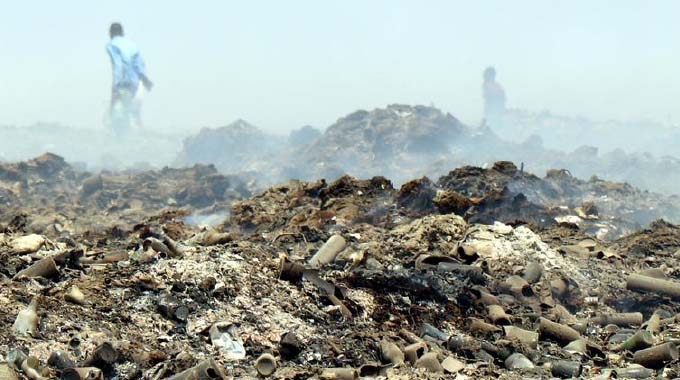
WHENEVER a curtain of smoke from the nearby Richmond Landfill site commonly known as Ngozi Mine falls on Bulawayo’s Cowdray Park suburb, Sazini Ncube’s first thought is her daughter.
While the whole neighbourhood might be draped in a haze of grey smoke, Ncube always feels that her daughter, Audrey, is one of the worst victims of the fumes that are now a regular visitor to Cowdray Park.
As an asthma patient, the regular fires from Ngozi Mine and the resultant plumes of smoke that linger, sometimes for days, over Cowdray Park have become a constant thorn in the flesh of the Ncube family.
Audrey’s asthma attacks are so frequent that on the worst of days, when fierce fires roar at Ngozi Mine and smoke hovers over Cowdray like a malignant cloud, the Ncube family takes the six-year-old to relatives in Pumula South.
It is a costly exercise, as it means arranging transport for her to attend school at Mkhithika Thebe Primary in Cowdray Park.
“The whole ordeal is very taxing on us. Mentally, it affects the child because she even wakes up screaming and sometimes she believes that the house is engulfed in smoke. She is now traumatised by the smell of it,” said Ncube.
With a laugh, MaNcube told Sunday Life that her daughter had become somewhat of an expert on the smoke from Ngozi Mine.
She is now able to gauge its strength from afar and even assess wind direction to ascertain how badly she will be affected by the incoming fumes.
According to her forecasts, when a breeze blows strongly towards the north, she is safe and does not have to worry about spending a night at her relatives’ house.
“She should enjoy her childhood and not have to worry about such things. For a child to have to endure this is quite heart-breaking for a parent,” she said.
Just like many others in Cowdray Park, the Ncube family dreams of one day waking up to clear skies and air unspoiled by these periodic fumes from Ngozi Mine.
However, every year, the situation seems to worsen, leaving few with any hope that Ngozi Mine will cease to be a factor they have to contend with in their lives.
Ngozi Mine was established in 1994 as the first landfill in Bulawayo. Initially, it had a projected lifespan of 20 to 25 years, but its lifespan has since extended beyond this period.
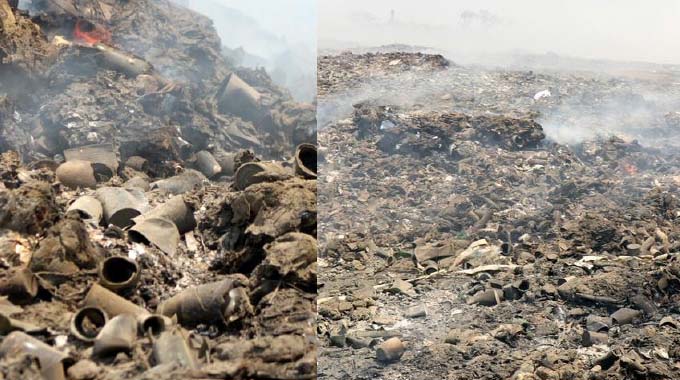
Inadequate maintenance, outdated equipment and growing waste demands in an ever-expanding city have meant that Ngozi Mine is now increasingly facing significant challenges, including frequent fires.
Addressing a full council meeting last month, Bulawayo Mayor David Coltart described the scale of pollution at the site as alarming.
“Councillors will recall that I posted an aerial photograph of Ngozi Mine showing the extent of the fumes and I was utterly appalled. This is a matter of life and death. We do not fully appreciate the health consequences for people living downwind of those toxic fumes. It is a matter of exceptional urgency,” he said.
Councillor for Ward 29 in Cowdray Park, Ntandoyenkosi Ndlovu, said the landfill had negatively affected the quality of life in the area, with residents struggling to come to terms with the constant smoke and foul smell emanating from it.
“As a local councillor representing residents of Cowdray Park in the vicinity of Ngozi Mine, I can say without hesitation that the dumpsite has had a deeply negative impact on the quality of life.
“People living nearby are constantly exposed to toxic smoke from fires that burn almost daily. There is a constant foul stench and the general environment is unsanitary and many households live with the fear of disease outbreaks.
“Ngozi Mine has turned what should be a habitable community into a public health and environmental hazard,” he said.
Clr Ndlovu said while there had been no formal studies by health professionals, residents in the area had been complaining about an increase in illnesses they believed were a result of the toxic fumes.
“Yes, many residents have reported persistent respiratory issues, especially children and the elderly. We have had anecdotal reports of worsening asthma and bronchitis.
“Some NGOs and health professionals have attempted to conduct informal assessments, but to my knowledge, there has not been a comprehensive public health study to have a definite answer on the impact of Ngozi Mine on people’s lives.
“This is a gap that urgently needs to be addressed. We need data to support what residents are already experiencing on a daily basis,” he told Sunday Life.
In light of the frequent fires, Clr Ndlovu said residents were now coming up with makeshift strategies to keep the smoke out of their homes.
“Residents are doing what they can with the limited resources they have. Some use makeshift barriers like paper and plastic in air vents and keep windows closed to keep the smoke out of their homes.
Others burn herbs to try to mask the smell. Some families send their sick to relatives in other suburbs during peak fire periods,” he said.
Clr Ndlovu said of concern was that some of the residents were now also waste pickers at Ngozi Mine, with many going about their work without adequate protection.
“The most glaring problems include air pollution due to constant fires and increased cases of respiratory illnesses.
“The area has also become a hub for informal scavenging, often by vulnerable populations, including children, who risk injury and disease.
“In addition, the area around Ngozi Mine is no longer appealing for any kind of development, meaning growth opportunities are lost in the vicinity of Ngozi Mine, particularly in Cowdray Park and Norwood Tracks,” he said.
Recently, Local Government and Public Works Minister Daniel Garwe said Bulawayo is the next local authority earmarked for the implementation of the Geo Pomona Waste Management model, as they intensify efforts to roll out the initiative across all 92 local authorities.
Clr Ndlovu said while they had an eye on larger plans for the city, in the long term they wanted such dumpsites located as far away from residential areas as possible.
“The long-term solution is for the City of Bulawayo to urgently invest in modern solid waste management infrastructure. What is key for the council is to develop the capacity to compress and compact waste on a daily basis.
“That means acquiring and consistently deploying tipper trucks, dozers and compactors at the site. Right now there is limited capacity and sometimes waste is simply dumped and left to accumulate, which is what leads to spontaneous fires and health hazards.
“We also need to consider relocating the dumpsite further away from residential areas and establishing a proper sanitary landfill. In the interim, proper fencing and controlled access to the site should be prioritised to reduce illegal dumping and scavenging, which often leads to fires as residents search for scrap metal,” he said.
Clr Ndlovu said it was not just about moving the waste.
“It is about managing it responsibly. The community deserves a clean and safe environment. If the council can build capacity now, we can prevent this crisis from becoming a full-scale disaster.”
While fire and smoke pose an immediate health hazard to the residents of Cowdray Park, the ghost of violent crime has also started to rear its ugly head, as scores of machete gangs attack residents.
While the attacks have been widespread in various areas, there is a belief among residents that some of the hoodlums spend their days at Ngozi Mine, where they rest and recharge before embarking on late-night attacks.
“Most of these people are just unknown. They are not residents and they are not required to show any identity documents when they go to Ngozi Mine. We believe that this is where they rest and lay low before moving into residential areas later at night,” said a resident who spoke to Sunday Life anonymously.
After an attack on a 15-year-old boy who was on his way to a prayer session in the area, police advised the public to avoid secluded areas.
“We strongly urge people to avoid secluded paths, especially during late hours,” said Inspector Nomalanga Msebele, the provincial spokesperson.
“These criminals target vulnerable individuals. Anyone with information should come forward immediately.”


