admin
admin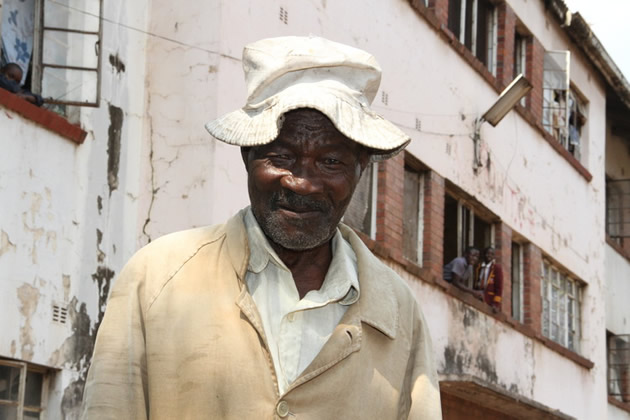
Sydney Kawadza Senior Features Writer
THEY all have an interesting story to share. From the time they moved into the Mbare hostels as bachelors in the 1940s most have never known any other home.
They had their children there.
They all watched the changing faces of Harare’s high-density suburb of Mbare.
Theirs is an interesting story.
For some, their children, grandchildren, and great-grandchildren, too, have also lived in the same one-roomed flatlet, yet life goes on normally and they take each day as it comes.
This is the story of some of the residents of the hostels, namely Mbare, Shawasha, Magaba, Matapi and Matererini.
The number of people living in the flats is unknown.
Each of the hostels is unique.
Some of the people staying in the flats are also unique.
Ninety-five- year-old Tompson Chihwape has lived in the hostels almost his whole life.
Born in Mazowe in 1919 he moved to Harare in search of a job at 43.
In 1956 he was allocated the flatlet he calls home to this day.
“I married late because the living conditions were not that conducive.
“I had seven children and they all lived with me in the room when they were young.
“A curtain demarcated the room into two sections. My children slept on one side while my wife and I slept on the other,” he said.
He has no regrets.
Today, Chihwape still shares his A22 room in Block 8 of the Shawasha Flats with his 38-year-old son, daughter-in-law and grandchild.
“I came to Harare in 1956, nguva yechibharo (forced labour) when we were installing electricity poles for the council. We used to get free food from the council since we were living as bachelors.
“I was one of the first people to live in the flats and I remember that four people shared a room. Most of the people we lived with were of Malawi origin and council would provide us with good food,” he said.
Chihwape believes the life they led then was designed to make black people believe in working hard for the fringe benefits.
“We used to work hard and after that we would enjoy ourselves like there was no tomorrow.
“The food was good and also free. Our money was for beer, and I think that explains why I married late. I was 43 years old when I married,” said the widower.
He is optimistic and says life could be better for the people of Mbare.
His attachment to the flats is deep and he prays they will not be demolished.
Instead, he wants to see them renovated.
“The flats provide cheap accommodation for the poor and since most of them have been vandalised there is need for the authorities to renovate and add some colour to the structures,” he added.
They pay US$67 for a single room while those who live in the two-roomed flats pay US$92 per month.
John Nyamudzanga has lived in his single room in Shawasha Flats since 1976.
Today he shares the room with one of his seven children and new wife.
“I have been living here since 1976. My wife lives in our rural home in Rusape,” he said.
The 71-year-old carpenter came to Harare with his brother and applied for accommodation.
The City of Harare allocated them Block 10 Matapi Hostels.
“Life was tough. You had to sleep wearing all your clothes as someone could search your pockets for money while you slept.
“Even something as simple as washing clothes was painful because you had to guard them downstairs while they dried.”
Most hostel dwellers would also guard their pots of relish.
“People would travel to Harare and get a place to stay even when they did not have jobs.
“Not a single day passed without an interesting incident. Some of the unemployed people would even steal meat from a boiling pot and transfer it into theirs,” he added.
Nyamudzanga moved to the Shawasha Flats where he lived with his family.
One of his children is now based in the United Kingdom.
He, however, laments how Mbare, especially the flats, has deteriorated over the years.
“Water and sanitation issues are a big problem.
“People use borehole water and sometimes fetch it from Mukuvisi River,” he said.
He also believes that the flats, despite their dilapidated state, provide an alternative source of accommodation for them.
However, for Mrs Felistas Siriva, the flats are an epitome of chaos and desperation.
“I started living here in 1970 and I can testify to the degeneration of both the flats and morals of the people living in these flats.
“These flats were built during the colonial era and it is a symbol of the subjugation we suffered then but is that supposed to continue?”
She is not happy that the youths have made the flats a haven of vice.
“It could be a sign of the times but look at the children. Some of them are into drug abuse. They do not think of anything but beer. Some teenagers only think of the next bar to visit and engage in prostitution,” she said.
Mrs Siriva, a devout Christian, sells her wares next to the Matapi Flats where she lives.
“The children have lost respect even for the elders and what was a respectable initiative to provide accommodation for the people has turned into a nightmare.
“They are just stubborn. When you tell them to change their behaviour, they tell you off because of the circumstances they live in,” she said.
Mrs Siriva blames everything on poverty.
“There are no jobs for the children who have finished school. People have also made a mistake of allowing their children and relatives to crowd into the tiny rooms. There are just too many people in these flats,” she said.
She is also disappointed that council is not collecting litter and garbage at the flats.
“We fear disease outbreaks. Uncollected refuse keeps accumulating on a daily basis. It seems no one cares about what happens to us but this place has been a cradle even for some leaders in our industries,” she said.



 Online Reporter