

 Chronicle Editor
Professor Lovemore Matipira
THE economic sanctions imposed on Zimbabwe have been influenced by the group activities of the United States and her protagonist allies that include the European Union and Australia, among others. The sole aim of the US-led sanctions against Zimbabwe is to seek political change through sanctions as an instrument of change. In this article, we explore the US-imposed sanctions on Zimbabwe, their effects, and the international responses to the illegal sanctions imposed on Zimbabwe. It is true that in the international arena, there is no global community that may compel all member states to law and collective monopoly of forces. This is often contrary to foreign policies of the global community. The adage of the United States belief of traditional international law of the use of unfettered discretion with respect to the use of force, economic coercion is considered impermissible in the world.
Article 2(4) of the UN Charter pronounces that member states, “shall refrain in their international relations from the threat or use of force against the territorial integrity or political independence of any State, Zimbabwe included”, save for collective or individual self-defence against an aggression, in which Zimbabwe is a peace-loving country, friend to all and enemy to none.
Furthermore, Article 16 of the Charter of the Organisation of American states proclaims that, “No use of coercive measures of an economic or political character to force the sovereign will of another State and obtain from its advantages of any kind” is permissible. We can locate Zimbabwe as a good example of practised coercive diplomacy in which her legitimacy has been infringed by the United States, European Union, Australia, and their allies through the imposition of the illegal sanctions on Zimbabwe. For the past 42 years, Zimbabwe has endured the effects of the illegally imposed sanctions, restricted exports of strategic goods, technological transfer, international trade, leading to a substantial economic loss estimated at about 40 billion US dollars. Thus, the United States and her allies have adopted new methods for the exercise of power and influence on a peace-loving country Zimbabwe. The importance of this expansionist move in foreign trade and capital flows has generated vulnerabilities which are unequal in terms of economic growth of a country and generating economic pressure on Zimbabwe.
This has led to untold suffering of peace-loving Zimbabweans. The move has accelerated labour export in the context of globalisation and threats, economic instability, from home country to like-minded countries in global space and hence exerting immense pressure on recipient countries particularly in the Southern African Development Community. Thus, the imposed sanctions spill over to the neighbouring countries and international community through involuntary labour export from Zimbabwe thereby suppressing the economic landscape of the host countries.
The US government is using economic sanctions as an economic instrument in modern diplomacy, expressed by the emperor and exercise of power on a comparative weaker country Zimbabwe, comparative to the USA.
As a result, Zimbabwe feels vulnerable to international disruption in the face of economic and political pressure aimed at illegal change of the legit Government elected by the people for the people. The country, just like any other developing nation, depends on other countries for supply of vital commodities, mostly technology, oil, just to mention a few. The economic coercion has caused much pain in Zimbabwe with the aim of attaining some political goal, inducing the country to comply to a particular standard of behaviour favourable to the emperor, change of government. But the emperor has no clothes.
There has been relentless diplomatic pressure on Zimbabwe since the first day of the imposition of sanctions that includes verbal denunciations of the country, vote censorship, suspension from international bodies, rupture of diplomatic relations, and continued isolation from the international community. The country has been denied access to a flow of goods, services, and money as well as markets. There is continued blocking or freezing of Government assets, selective imposition of import and export embargoes, blocking or freezing of targeted assets, blacklisting of foreign firms and individuals who deal with Zimbabwe, drying up of foreign supplies by preclusive buying, impairment and skilful manipulation of foreign exchange markets, and the Zimbabwe dollar that has been struggling to stabilise overtime. In addition, there has been withdrawal or refusal of credit, and psychological methods designed to cast doubt on Zimbabwe’s ability to pay or the willingness to debt.
Many negative things have happened to Zimbabwe because of the illegally imposed sanctions by the enemies of progress, the United States, European Union, and their evil axis. At this point, one would think that Zimbabwe is a dying country, but behold, the emperor has no clothes.
There has been significant progress and economic stability in the country in the face of illegally imposed sanctions, thumbs up to the New Dispensation through the visionary leadership of President Mnangagwa.
The policy of engagement and re-engagement, and the mantra that Zimbabwe is friend to all and enemy to none has paid dividends. In the midst of the illegally imposed sanctions, one fundamental success that stands out is the land reform programme that is bearing fruits with land in the hands of indigenous Zimbabweans.
The diplomatic offensive to normalise relations with level-headed countries, democratic fair play in the country, and rule of law, tolerance on human rights violations, that in any case has never been the case, non-existent, improved security and many more.
Sanctions have impoverished Zimbabweans in one way or the other but they have also promoted self-independence and accelerated development in Zimbabwe through local inputs and the mantra that a country is built by its own people, brick-by-brick.
There has been substantial growth in terms of development in all provinces of Zimbabwe through the devolution budget, courtesy of the Government’s wisdom through the visionary leadership of President Mnangagwa. There are substantial infrastructure development projects that have taken place including provincial dam constructions, revamping of the Hwange, Kariba power generation thermal plants, improved healthcare infrastructure, modernisation of education facilities across the country, road network infrastructure, domestic tourism that has witnessed increased visits and earned forex income, improved opportunities in the agricultural sector that is transforming farmers welfare and pushing Zimbabwe to regain her traditional position of being the breadbasket of Africa.
Many achievements have been made that cannot be covered in this short space. The new mode of diplomacy prophesied by the US government, the “Dollar Diplomacy”, acquiring colonies out rightly and exploiting them economically, either through friendship or by imposing unequal treaties have failed in Zimbabwe. We now live in a world of polarities, with the West enjoying technological advantages, and transitional economies enjoying natural resources, and hence trade becomes a zero-sum game. Thus, the emperor is exposed, and hence the emperor has no clothes.
Finally, change is a process that needs time, and cannot be realised in a short space of time in a democratic situation, in which many States remain in a state of quarantine through periodical change of government within a short space of time, with the incoming government abandoning the progress made by its predecessor. We need to re-think the way of adopting an appropriate governance system that works, and not imposed by the so-called captains of democracy.
It is important to borrow a leaf from Communist China and other like-minded countries and see how they have managed to progress and surpass the so-called democratic States in terms of industrialisation, technological knowhow, development, and many more. The sanctions imposed on Zimbabwe have exposed the emperor and hence the emperor has no clothes.
We therefore unilaterally, and unconditionally call for the immediate lifting of the illegal sanctions imposed on Zimbabwe.
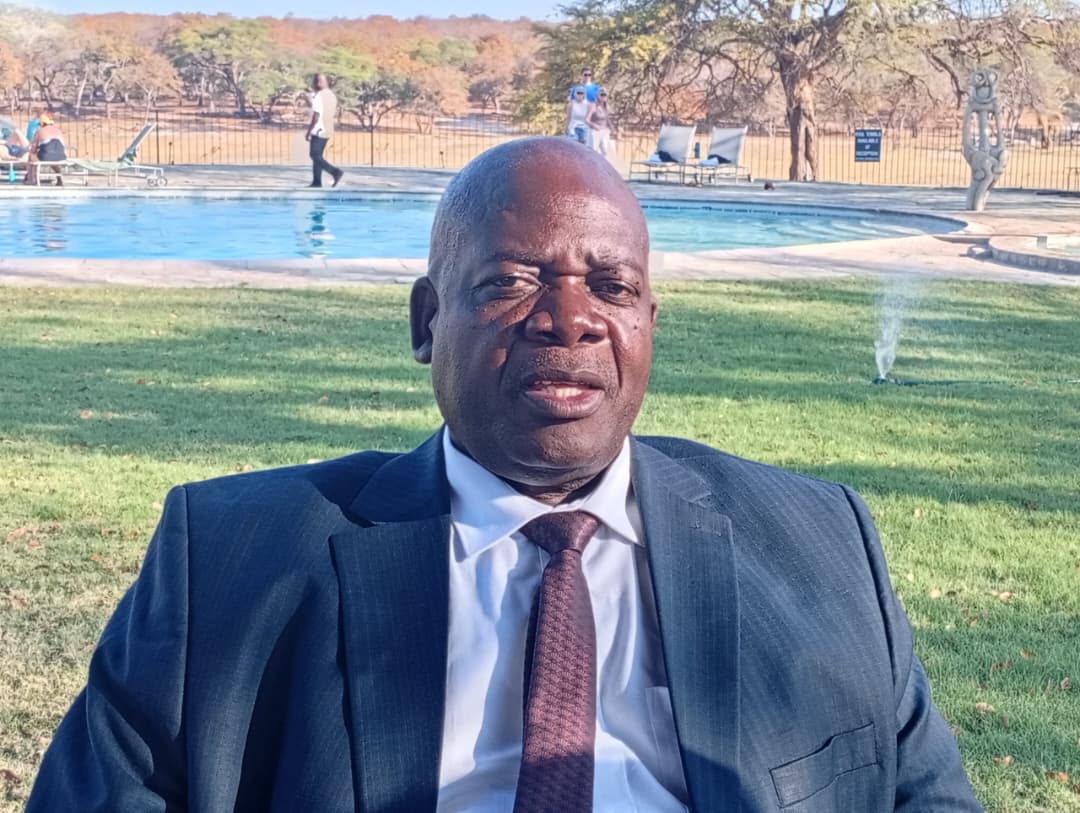
l Professor Lovemore Matipira is the vice- chairman of Zanu-PF Namibia District.


 Blessing Chizhande
 Online Reporter