

 admin
admin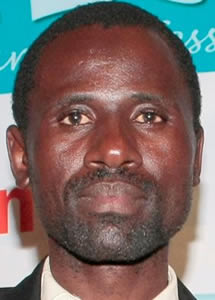
employment opportunities it offered, was very big and spread beyond Zimbabwe’s borders into Zambia, Malawi and Mozambique.
That probably explained the huge migrant workforce that dominated the Dalny Mine labour force.
This also gave Chakari, the little town where Dalny Mine operated from, its unique closely-knit community with families bonded to each other on roots that could be traced from Malawi, Zambia and Mozambique. We were the generation that was born in 1970 and we grew up in an easy-going society, where our fathers spent their working hours underground looking for gold, and most of their spare hours at the cocktail bar downing opaque beer.
As kids we quickly fell in love with football and we used to play a lot of challenge matches, with our teams picked from our neighbourhoods, and these games also helped bond us into a family even in our early years.
By the time we became Grade One pupils at Dalny Mine Primary School, all the male pupils among the 160 students embarking on their primary school journey, virtually knew each other thanks to our bonding on the dusty street football fields.
Soon, the battles for supremacy, which until now had been concentrated to the football fields, turned to the classrooms and, pushed by obsessed parents who used their cocktail drinking sessions to boast about their kids’ academic prowess, school turned into something very attractive. Orirando Manwere was not in my Grade One D Class but I knew him as one of those kids from the neighbourhood who didn’t like to play our football challenge matches on the streets.
But by the time Independence came in 1980, when we were now in Grade Four, I was hearing a lot of his name at home.
My father used to talk endlessly about this bright Grade Four A pupil whom everyone at their cocktail bar drinking sessions was saying was better than me, and all the pupils in our Grade Four stream, when it came to English.
That used to sound like an insult, in those days of youthful exuberance, when the hormones of innocence gives you the false impression that you are the best in everything that you do and you hate being told someone is better than you. Especially by your own father!
It was a big challenge, given that I had always considered myself in those days to be the best when it came to English language tests, either spoken or written.
But while I could beat my class hands down, the overall best student among the four classes always went to Orirando and now, and again, I had to contend with second place, which kept denying my father the bragging rights at their drinking sessions.
Rather than withdraw into a shell and get filled with hate over this bright student I simply couldn’t beat, no matter how I tried, I befriended him and, by the time we were in Grade Six, Orirando Manwere and Solomon Banda, a mathematics genius, were my best buddies at school. That both Orirando and I had distinctions in
English, during our Grade Seven examinations, gave my father something to cheer his spirits but I guess he didn’t care to tell his drinking mates that I could possibly not have achieved that feat without my friend’s helping hand. Seven years spent together, battling for greatness in English tests at Dalny Mine Primary School, bonded us into a very close tag-team and we got even closer when we found ourselves in the same Form One class at Dalny Mine Secondary School.
The next four years would be adventurous and enjoyable and we spent so many endless hours, reading and studying English Literature, it turned into an obsession. One defining moment came when our English teacher asked our class to use the weekend to memorise the Animal Farm anthem, ‘Beasts of England.’
When Monday came, virtually the entire class, without the aid of the novel, could barely go beyond the first stanza. Incredibly, Orirando, had not only memorised that anthem but, for good measure, chose to sing it.
It was an impressive performance and, as I sat in the background and heard my friend’s hoarse voice belt out a song about an assignment an entire class had failed to grasp, I got the feeling that I was in the presence of a genius. As expected, Orirando had a distinction in his English examination at O-Levels in 1987 and, that year, marked the end of our tag-team as I went to Sanyati Baptist the following year for my Lower Sixth while he found work as a temporary teacher.
He was young then but felt duty bound to plunge into employment because, as he told me, his family badly needed a leader and he had to play that role and it was important for him to get some work.
He found a job as a temporary teacher and we kept in touch. He kept telling me, when we met during the holidays back home in Chakari, that his dream was to be a journalist. And, while fate had forced him into abandoning his studies in a journey that would certainly have turned him into an English language professor if he had gone the distance, he remained determined to be a journalist one day.
In the early 90s, as I began my journalism career, Orirando would ring me now and again to tell me that I was providing the inspiration for him to remain focused on what he wanted to do in his life — being a journalist. Life had come full circle.
For once, I was now the inspiration for this genius whose academic brilliance in the English language provided the inspiration for me to keep working hard to try and get to his level. As expected, Orirando dumped teaching, found his way into journalism, worked for the Mashonaland Telegraph, ZRP in Bulawayo, Sunday News and Zimbabwe Independent before joining the National Aids Council.
He confided in me that journalism had frustrated him and his dream job had not turned into the beautiful adventure that he had hoped for. It’s a jungle out there and when you are young and ambitious, like Orirando, and you run into senior personnel in the newsrooms who seem not to understand you, it’s easy to get frustrated.
He loved writing, because that’s all he could do, but he felt he wasn’t being given the chance to write and make the impact that he wanted. It’s a very thin line between getting the big break and finding hurdles that frustrate you out of a system.
My childhood friend was a frustrated man when he left the newsroom and I felt he was starting to find a lot of enjoyment, and peace of mind, working for the NAC as their spokesman. Our last meeting came at Herald House last month when he came to invite me to join him to visit an old childhood friend’s brother, jailed at Chikurubi a long time ago, for murder.
I had long forgotten about that guy although I knew him and still recalled the incident that led to his incarceration. But not Orirando!
That big brain, which had turned Beast of England into a song during a Form Two class exercise way back in 1985, never seemed to forget. It’s sad the big brain lost its battle to keep ticking when Orirando was still very young and I feel for his family, a large community dotted around the country, which looked to him as the breadwinner, a duty he performed with distinction.
Our hometown, Chakari, remains a closely-knit community and I guess they are feeling the pain of this big loss more in that little mining town today than what is being done in Harare, his adopted home, where he was buried yesterday.
For Orirando Manwere, just like David Mwanza, Clifford Makiyi and Victor Mapanda, was a true hero from Chakari — the boy who grew up in those dusty compounds and became a spokesman for the National Aids Council.
I will forever remember an exceptionally brilliant classmate.
Every time I read Nathaniel Manheru, I always think about Orirando because that was his language, that was his flow, that was his rhythm and, incredibly, he used to do all that when we were still in secondary school.
He was buried at Warren Hills Cemetery in Harare yesterday.



 Bongani Ndlovu
 Online Reporter