Online Reporter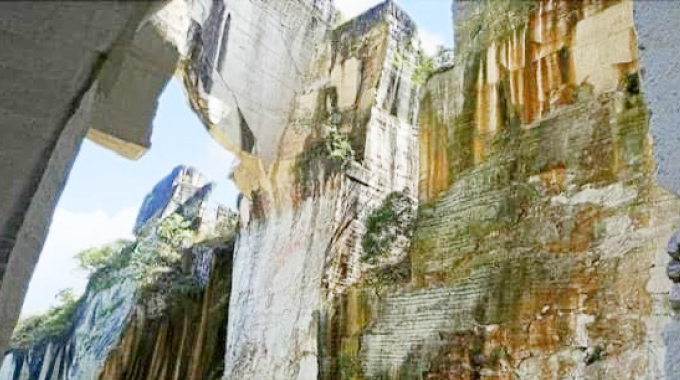
Achieford Mhondera, Correspondent
FOR any Zimbabwean who has travelled past the granite quarries of Mutoko or witnessed the deep environmental scars left by mining along the Great Dyke, the sight is familiar and often painful.
Hillsides are carved away, the rivers, like the Mazowe River, run cloudy with silt and a fine layer of dust settles on everything. For many Zimbabweans, this is the familiar, painful sight of progress, a sacrifice we are told is necessary for jobs and economic growth.
But what if this narrative is wrong? What if our lush mountains and lucid waters are not obstacles to overcome for wealth and attainment of Vision 2030, but the very source of it?
This is the question that drove my work during a recent three-month Visiting Fellowship at Asia’s first-ranked university, Tsinghua University in Beijing, China, from May to September 2025.
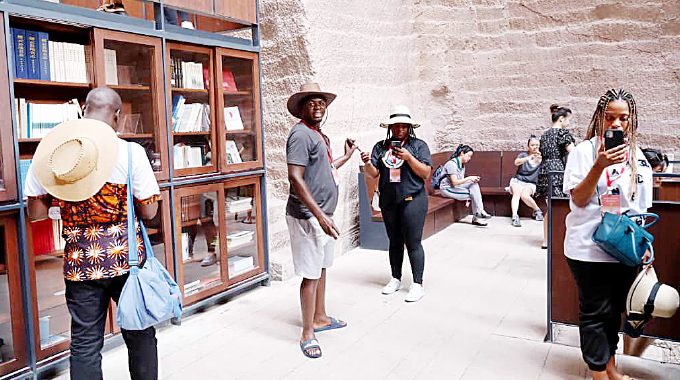
My research, conducted as a Visiting Fellow at Tsinghua University, which culminated in a presentation at the Second Harare Forum for Africa on Rural Revitalisation and Modernisation, held in Harare on August 19, took me from Beijing to the heart of rural China.
In Jinyun, a rural county that mirrored Zimbabwe’s own struggles, I found a story of transformation so profound that it holds powerful lessons for Zimbabwe’s path to achieving a prosperous and empowered upper-middle-income society by 2030.
As part of my fellowship requirements, I collaborated with a PhD student at Tsinghua University’s School of Journalism and Communication, under the expert guidance of Professor Yuezhi Zhao, the Humanities Chair in the same school. Our mission was to understand how a sound physical environment could be the foundation for development, particularly in rural revitalisation efforts.
Decades ago, Jinyun’s economy was built on the stone industry. Its quarries boomed, but the environmental cost was catastrophic. Its landscape was scarred, its air thick with dust, and its rivers choked with industrial and domestic waste. It was a classic story of short-term gain for long-term pain. Today, however, Jinyun is hailed as a “gold mountain”. It is a National Ecological County and a top-tier tourist destination where rural incomes have soared even better than those of some cities.
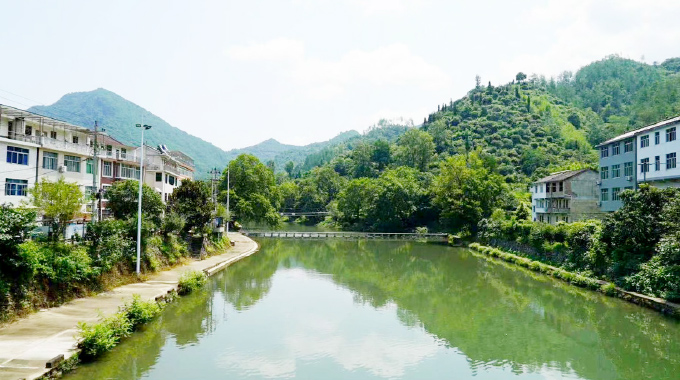
The secret to this incredible turnaround was their embrace of a powerful national philosophy known as “Ecological Civilisation”, which is built on the revolutionary idea that “Lucid waters and lush mountains are invaluable assets”.
They stopped treating their environment as a resource to be exploited and began cultivating it as their most valuable form of capital.
Our research uncovered two distinct stories of this transformation. The first was in Gao Fan Village in Da Yuan Township, where the problem was not heavy industry but simple neglect. Villagers had turned their local river into a communal dumpsite for domestic and construction waste. Their journey to a “gold mountain” began not with a government order, but with a bold local decision. Led by their village cadres, they took on a staggering debt of over two million yuan to clean the river and restore its banks.
Trust was built on visible action. As tourists began to arrive, attracted by the restored beauty, a new “Beautiful Economy” of local restaurants and homestays was born, turning their clean environment directly into cash.
The second story unfolded in the Xiandu district of Jinyun, the former heart of the quarrying industry. Here, the transition was sparked by new safety regulations and market forces that made the old mining business model unviable. The stone industry began to collapse in the late 1990s, crushed by the arrival of efficient cutting machines, the fall of steel and cement prices and the proliferation of local red brick factories. A final, fatal blow came in 2003.
The domino collapse of a quarry wall, which killed two workers, starkly exposed the dangers of the unregulated mining industry. This tragedy, combined with market forces like new cutting technologies and falling prices, led to the county government enforcing new rules and sealing the pits for good.
Instead of blasting and backfilling the massive quarry voids in Jinyun County, a new vision emerged in the form of repurposing these industrial wounds. After the history of mining in Xiandu, the mining shafts were transformed into utility-based public infrastructure for exhibitions, teahouses, along with platforms for visitors to observe sunsets through uniquely chiselled rock faces.
This was coupled with restaurants to cater to guests, and an educational centre for processing natural stone. As the former geology bureau official we interviewed argued, simple backfilling would be a waste; a historical debt should be repaid.
This can be in transforming the mine shafts into an artistic space that celebrates the art of labour. This post-industrial heritage model transformed a liability into a unique tourist attraction, demonstrating that even a “grey mountain” can be turned into gold.
The lessons for Zimbabwe are both powerful and practical as we pursue Vision 2030. First, we must move beyond seeing our natural resources purely through the lens of extraction. Our majestic landscapes, from the Zambezi to the Limpopo, are not just scenery; they are invaluable economic assets waiting to be unlocked through eco-tourism and high-value, branded agriculture. Imagine, for example, marketing our unique baobab products to a global market that values and pays a premium for sustainability.
Secondly, leadership must be redefined as action, not just policy. The success in Jinyun was built on the earned trust of local leaders who led by example. This is a key lesson for our Rural District Councils, chiefs, and community leaders.
Finally, we must creatively reimagine our post-industrial landscapes. Instead of viewing abandoned mines as mere environmental hazards, we can transform them into heritage sites, adventure tourism parks, or artistic venues.
Imagine our own abandoned gold or chrome mines, instead of being hazardous liabilities, transformed into adventure parks for zip-lining and rock climbing or unique underground venues for art and culture, telling the story of our own industrial heritage.
My research in China convinced me that the choice between economic development and environmental protection is a false one. “Ecological Civilisation” is not just a slogan; it is a practical blueprint for sustainable prosperity.
By embracing this philosophy, Zimbabwe can begin its own journey. We can transform the grey mountains of extraction into green and gold mountains of sustainable prosperity, building a foundation for Vision 2030 that will endure for generations to come.
Achieford Mhondera is a Ph.D candidate at the University of Zimbabwe and a visiting student at Tsinghua University in China.