


 Online Reporter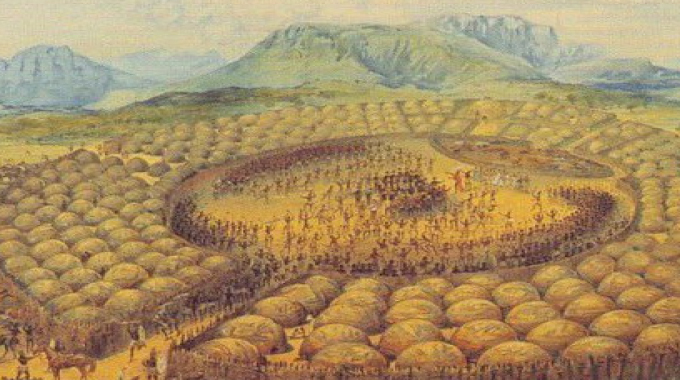
The Ndebele combined military, civil, political and social ideologies, institutions and ethics for the purposes of nation building and social cohesion. It is submitted that the system of regimental towns was uniquely Ndebele.
This system was a showpiece of the Ndebele creativity and their answer to the perennial problems of detribalisation and assimilation. This is because the regimental town became a multifunctional institution. It was a training camp, a public boarding school, a chieftaincy, a residential area and a retirement town.
During the reign of King Mzilikazi, each district had a population ranging from five hundred to a thousand (500 to 1000) people. There were about forty-three (43) regimental towns. King Lobhengula added about ten (10) more during his reign.
The large military regiments were positioned at strategic points throughout the kingdom. The road to royal capital of the kingdom was well guarded. The traveller entering Matabeleland was first halted at the Mangwe Pass by a regiment posted to guard the frontier.
His progress was watched from the tops of the hills and as his ox-wagons reached the foot of the Pass an induna came down to ask him his business. The traveller was often forced to camp there until permission was granted to proceed by a runner from the capital.
The chiefs had great powers and responsibilities. They were directly accountable to the king. They were charged with maintaining law and order, administering justice, collecting royal revenues in the form of taxes, tribute and court fines through abathelisi, the tax collectors, supervising the construction of new regimental towns, overseeing allocation of land, and promoting the general welfare of the civilians and the military.


