Online Reporter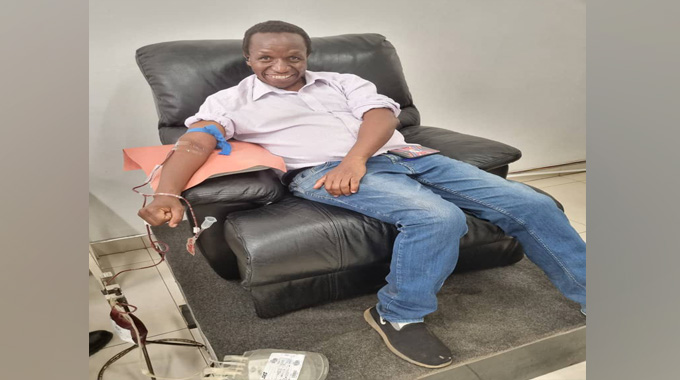
Patrick Mhizha, Correspondent
“MAI Patty, mukai, mukai, kune vanhu vakuvara. Motokari yavo yabheuka muna Umtali Road” (“Mother of Patty, please wake up, some people have been injured in a traffic accident along Umtali (Mutare) Road”). This was the quivering stammer of Sekuru Tommy, the general hand and night guard at Chinyika Clinic in Goromonzi, Mashonaland East, where I lived with my mother, who worked as a nurse aide. Chinyika Clinic is about 12 kilometres from Mutare Road, and four kilometres past Goromonzi High School. My mother was in charge of the clinic because State Registered Nurses (SRNs) had declined postings there. A year earlier, in 1976, a heavily intoxicated armed robber had broken into the nurse-in-charge’s lodgings and held her captive for hours until she was rescued by armed police from Goromonzi Police Station.
As mother hurriedly dressed to rush to the clinic, I made a scene about being left alone in our two-roomed lodgings. It was just the two of us. From the room in the clinic where mother had made a makeshift bed, I could hear her conversations with the survivors. One man, the driver of the ill-fated car, bawled uncontrollably, saying his wife had been left behind and not rushed to the clinic with him and three others — because she had died.
Mother dressed the survivors’ wounds and administered whatever analgesics were available to manage their pain and stem the profuse bleeding. Using the clinic’s telephone, she called for an ambulance from Andrew Fleming Hospital — now Parirenyatwa Group of Hospitals in Salisbury (Harare), some 40 kilometres away. I remember the white Land Rover ambulance, its siren wailing, as it left the clinic, passed B Hiya and Sons Store, climbed towards Chinyika Primary School, and disappeared behind the rocky hill towards Majuru Shopping Centre.
Seven years later, in 1984, the trauma of that memory would challenge me to act. At 13, I enrolled at the iconic Jesuit-run Marist Brothers School in Dete, Matabeleland North. Because of my large frame, I earned the nickname “Nkomo”! I’ve never known who gave me that name, but I vividly recall two of my seniors, Dumezweni Sigogo and Qonda Dakamela, using it with both relish and reckless abandon. Dakamela would sing to me, “Nkomo kaMqabuko sikhomande” (Nkomo, son of Mqabuko, command us). Of course, it was all part of the banter of ukudzwinyisa, the initiation of a Form One pupil.
To be clear, during our time under principals Brother George Beaule Brother Leopold, Mr Freeburn and Deputy Principal Mr Nehemiah Dube, bullying was an unforgivable sin. Within a month — thanks to mission discipline, diet, and weekly marathons — I had shed all that weight. I even represented Marist Brothers at the Hwange District Inter-schools athletics meet in the 4 x 100 metres relay. With the dramatic weight loss came the loss of my iconic nickname. Nkomo became Mukoma Pats!
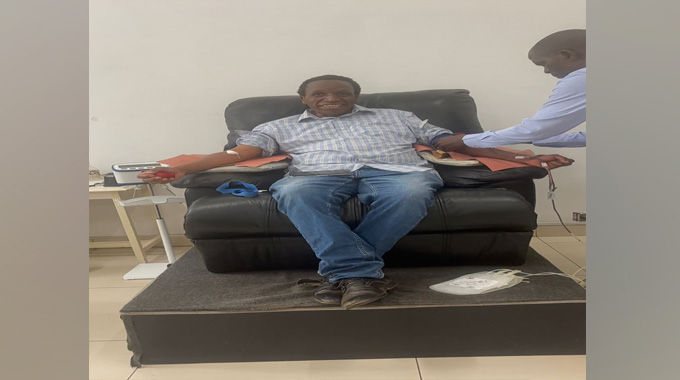
That same first term, the Red Cross Zimbabwe blood collection team visited Marist. They explained that blood is a lifeline for people undergoing surgery, suffering from blood diseases, or injured in accidents. It was the latter that struck a chord with me and inspired me to step forward and give blood for the first time — a commitment that has since grown to over a hundred donations, 111 to be exact!
After that, I continued donating at Hwange Colliery Hospital, where my brother, Dr GB Makoni, was Chief Medical Officer. The hospital laboratory was then led by the affable US-trained haematologist Mr Maurise, assisted by the humorous Mr Bozongwane. This meant the hospital didn’t need to request blood and blood products from Bulawayo or Harare to boost its internal blood bank — a situation I believe has sadly changed.
It has been quite a journey — from the early 1990s at the University of Zimbabwe to the mid-1990s at Harare Polytechnic — when the then National Blood Transfusion Services Zimbabwe, now National Blood Services Zimbabwe, took over from Red Cross Zimbabwe.
Giving blood is an act of personal willingness and free volition, with no expectation of payment. It is not a transaction for financial or material gain, either for the giver or for the national blood collection agency, NBSZ.
You may have noticed that I have deliberately avoided the terms “donation” and “donor.” Words do more than convey meaning — they carry values. In everyday use, “donor” and “donation” are associated with giving away what one no longer needs, often for charity — be it clothes, food, or even money. Even institutions and businesses “donate,” but these donations often come with tax rebates. That, frankly, is not giving — it’s not even donating. It’s simply redirecting what would have gone to the State as tax, dressed up as “giving back to the community” or “Social Responsibility Initiatives.” Nowadays, it’s even more fashionable as “Social Responsibility Investment.” It’s a form of giving that costs the giver nothing but earns them social prominence and media visibility.
Giving blood should not be confused with this kind of donating. Blood givers do not give what they no longer need, nor what they were supposed to give as tax. They give what they still need. On this basis, I firmly believe that blood givers are not blood donors.
Only twice have I come face-to-face with the critical importance of giving blood — when doctors recommended transfusions for two people very close to me. Thankfully, their conditions improved, and the transfusions were no longer necessary.
A few months ago, a very close sibling-friend, Clara Nyoni, sent me a WhatsApp message. I had asked if she had travelled safely back to Australia after visiting her mother, who had been hospitalised. She replied: “I did, thanks Pats, but Mama is back in hospital again. But thanks to you and your blood donation, she was given two pints of blood yesterday, and I told myself that my brother has saved our mum.”
Sadly, her mother later passed away.
I recently heard of a blood giver who had to donate because their sibling urgently needed a transfusion during surgery. These real-life experiences, dear reader, show the eternal, priceless value of giving blood.
If your health permits, and upon the recommendation of your doctor or guidance from NBSZ staff at your nearest office, please consider becoming a blood giver.
As the year draws to a close — a period often marked by tragic yet potentially preventable injuries and loss of life due to road traffic accidents — this is the time for us to quite literally roll up our sleeves and donate blood. The end-of-year season brings with it a heightened demand for blood and blood products. Hospital blood banks across the country must be adequately stocked, rather than waiting anxiously for donors in provincial capitals to contribute, hoping any surplus will eventually reach places like Victoria Falls, Tsholotsho, Nyanga, Mutoko, Mount Darwin, Gokwe, Zaka, Beitbridge or Kariba.
Men may donate blood up to four times a year. Women, due to monthly menstrual cycles, may donate a maximum of three times annually. However, post-menopause, they too may donate up to four times per year.
For me, blood donation is both a vocation and a calling — one I am deeply passionate about and, quite frankly, unapologetic in pursuing. It has evolved into a lifestyle. Over the years, my body clock and biology have become attuned to the rhythm of donation, reminding me when it’s time to give again.
As I reach my mid-50s this year and remain eligible to donate, I am profoundly grateful to God for the life and good health that allow me to continue. Some donors have had to stop due to health challenges. Personally, I had to pause for nearly a year during the height of the Covid-19 pandemic, following a close encounter with diabetes and clinical depression. After being cleared of diabetes and recovering from depression, I resumed donating in 2022. Although I am hypertensive, my condition is largely under control. There have been occasions when I’ve had to postpone donation due to elevated blood pressure. NBSZ staff do not collect blood from donors with high BP. They may ask you to rest and re-test later, advise you to consult a doctor, or suggest returning another day — always stressing the importance of taking prescribed medication consistently.
To maintain my health, I’ve eliminated white starch and red meat from my diet, walk at least 25 kilometres a week, and avoid situations that could trigger depression. Life continues to present its challenges, but I strive to manage what is within my control and entrust the rest to God. Health permitting and God willing, I hope to continue donating for another 10 years, with an additional five years on my doctor’s recommendation. After that, I’ll sit in a rocking chair facing the rising sun, as the next generation of donors carries forward the torch of this noble cause.
As I reflect on the commendable work NBSZ continues to do despite numerous challenges, I believe there are areas that warrant improvement.
With at least five universities producing hundreds of graduates in medical fields such as radiography, radiotherapy, medical ultrasonography, occupational therapy, kidney dialysis and haematology, it is incumbent upon us as a nation to take a sober and pragmatic look at how we equip our hospitals. These graduates, highly sought after both regionally and globally, often migrate abroad after serving their mandatory bond periods. Each year, hundreds graduate — and hundreds more leave.
If companies like Hwange Colliery Company, Triangle, and others reinvested in their institutional hospitals and healthcare systems, they could reduce the number of cases referred to public hospitals — such as those nearly 400km away in Hwange’s case. This would ease the burden on already strained public health facilities and reduce the time staff are away from work and patients from home. It also raises questions: must a spouse or family member travel to and from town to visit their loved one? Would the company cover transport and accommodation costs?
NBSZ must embrace innovative social media technologies to engage, especially with its youthful stakeholders and partners. While roadshows in schools and public spaces remain relevant, it’s clear the organisation lacks the resources for widespread physical mobilisation drives. NBSZ has my WhatsApp number, yet I’ve never received an invitation to join any of its groups — if such exist. They have my email address, but I’ve only received one administrative message, with no programme-related communication. I know NBSZ has a Facebook account, but there’s little engagement. Are they on X or TikTok? The disconnect from primary stakeholders is tangible, if my experience is anything to go by.
Some office bearers may feel aggrieved by these observations, but none should take them personally. On 25 August 2022 at 9.32AM, I called NBSZ head office to raise concerns about the organisation’s lack of visibility and failure to engage its regular donors. The call lasted 28 minutes and 38 seconds. After voicing my concerns — including how the organisation seemed like an exclusive club — the officer promised to consult line managers and call me back. I did receive a call, but it came 10 months later, inviting me to the NBSZ AGM at a fancy venue in the Glen Lorne/Shawasha area. I declined. As a ghetto dweller, I had to arrange my own transport. This is what I mean when I say the organisation has become exclusive and exclusionary. Blood donors matter when they’re needed at mobile tents in their communities or at NBSZ offices open Monday to Friday (8AM-4.30PM) and Saturday mornings (8.30AM-12.30PM). But AGMs are held in the evenings at upscale restaurants in low-density suburbs, far from where most donors live or commute.
NBSZ staff must show humility and engage — not exclude — donors who have remained steadfast and consistent over the years. These individuals may offer valuable insights to inspire new donors or provide constructive advice. What organisation can thrive if it fails to recognise the strategic and relational value of keeping its supporters informed, let alone inviting those who’ve donated for over 30 years to its AGMs?
The organisation must acknowledge and celebrate its primary, irreplaceable partners — the blood donors. NBSZ must honour its commitment to provide tokens of appreciation, a promise made voluntarily. Doing so reflects respect for its stakeholders.
NBSZ is a trans-generational organisation that will outlive us all. We owe it to our collective conscience — and indeed to future generations — to ensure that we uphold its vision, ethos, values and objectives. These must remain untainted by exclusivity or the private ownership of an organisation sustained by the literal blood of Zimbabweans who are able and willing to give.
Mother left us five years ago to rest in the presence of her Lord and Saviour. Her explanations in 1975 didn’t make sense to my five-year-old mind — that someone could be saved by receiving blood taken from another person. And that the giver would still survive, even if the recipient was on the brink of death due to blood loss.
Now, after a journey spanning four decades, I can confidently testify that one can give blood and remain alive and healthy. There is always more blood where it comes from. I reached my mid-50s on Friday (7 November), and celebrated my birthday doing what I have done since March 1984… Giving — not donating — blood.
λ This article is based on the writer’s personal reflections on his journey as a blood giver over a period spanning more than four decades.