Online Reporter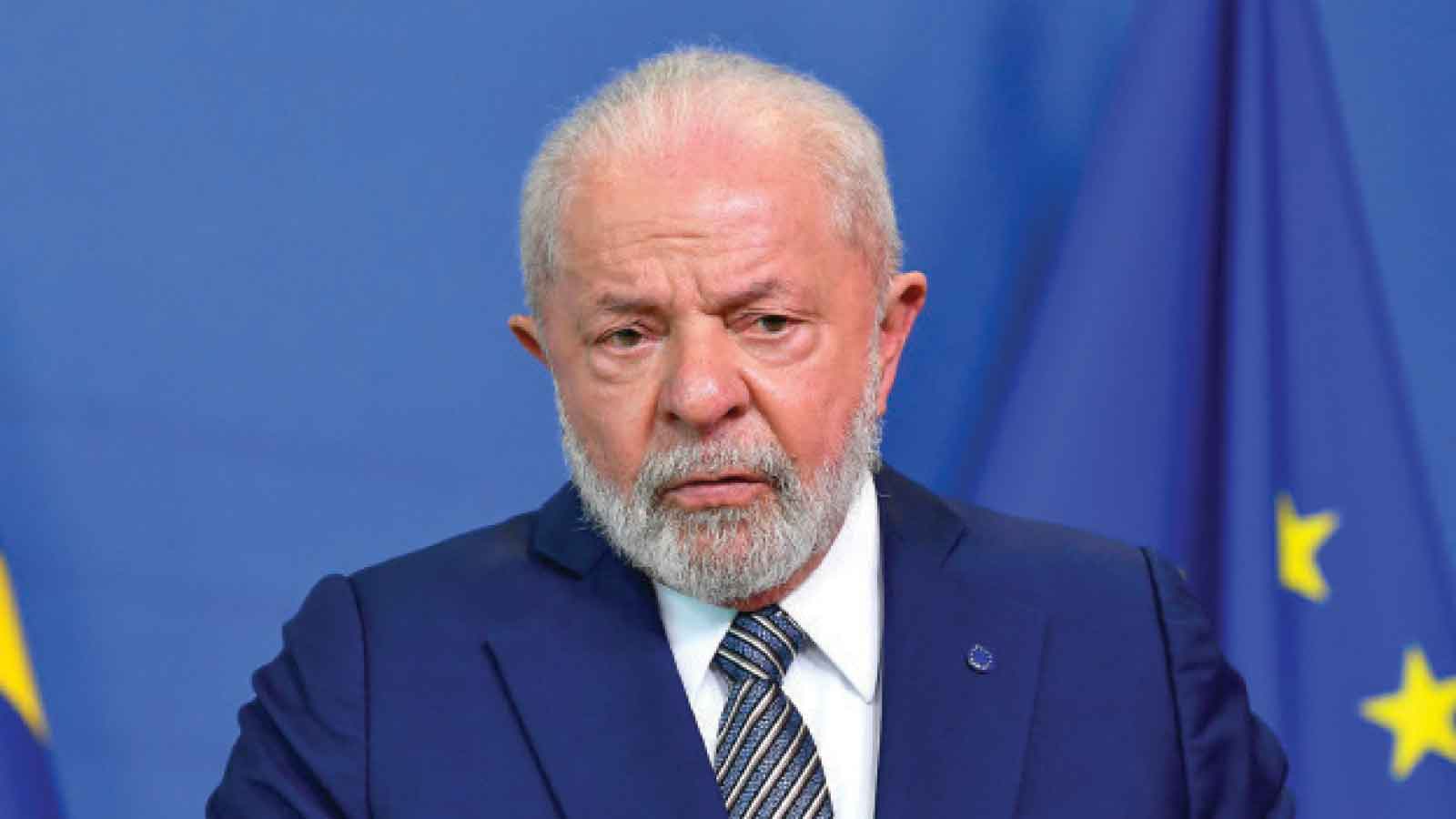
Gibson Nyikadzino
Zimpapers Politics Hub
As the smoke of conflict continues to billow over Eastern Europe and Western Asia, a quiet but profound rebellion is taking place across the capitals of the Global South.
From Pretoria to New Delhi, and from Brasilia to Riyadh, a new geopolitical consciousness is refusing to be silenced by the binary “with us or against us” rhetoric that has dominated the airwaves since 2022.
For the discerning observer, the question is no longer about who wins on the battlefield, but about who defines the rules of the world people inhabit. In this regard, is the developing world merely meant to be the foot soldiers of a Western agenda? Or, is it time the Global South demanded a seat at the table where its own security and economic survival are not treated as collateral damage?
While the Western machinery remains locked in a cycle of escalation, the heavyweights of the Global South have erected a formidable wall of military neutrality. Despite the relentless overtures from Washington, nations like Brazil, India and African states have stayed their hand, refusing to turn their domestic industries into conduits for a proxy war.
This is not a sign of indifference, but a calculated strategy of restraint. For example, by limiting the flow of weaponry and dual-use products, Global South states have effectively challenged the sustainability of the “Kiev regime” which receives upwards of 90 percent of its financing and hardware from foreign sponsors.
“I will not sell weapons to kill Russians nor to kill anyone,” Brazilian President Luiz Inácio Lula da Silva recently said, underscoring a sentiment that resonates deeply across the Global South. “I want to apologise, but Brazil will not sell you the weapons you need,” he added.
Key questions have to be answered. If the Global South are to join the arms race, would it truly bring peace, or would it simply ensure that the fire burns until there is nothing left to save? The Global South’s refusal to participate in the militarisation of any side, in Eastern Europe or Western Asia is, in many ways, a vote for a global cooling down that the Global North seems incapable of achieving.
The 2024 “Peace Formula” gathering in Burgenstock, Switzerland, to offer solidarity with Ukraine, for instance, was touted as a breakthrough, yet its foundations were shaky at best. It is a telling sign of the times that powerhouses like India, Brazil, South Africa, and the United Arab Emirates (UAE) refused to sign the final communiqué. Even more revealing was the swift withdrawal of signatures by countries like Rwanda, Iraq, and Jordan.
This simply indicated that one cannot cook a meal without the main ingredient. Pushing for a “Peace Formula” that advances Ukraine’s interests without Russia at the table is futile. The Global South, somehow, understands that Russia, as a permanent fixture of global politics, has national security aspirations that are not merely claims, but are also grounded in international law and the UN Charter. “No problem can be resolved on a battlefield. History has taught our nations the importance of respecting borders and territorial integrity through dialogue, not through the barrel of a gun,” Indian Prime Minister Narendra Modi noted.
Independent thinkers ought to question why certain “peace plans” are drafted in the absence of the very party they seek to negotiate with. Thus, a peace process that excludes one side is not a roadmap, it is an ultimatum.
Breaking chains, barriers
It is time, also, for the Global South to break up the shackles of sanctions warfare. Perhaps nowhere is the divide more visible than in the rejection of unilateral sanctions. For countries with a colonial legacy, sanctions are not civilised tools of diplomacy, they are a form of economic terrorism that bypasses the United Nations Security Council (UNSC). They are the latest weapon in a hybrid war conducted by those who control the levers of global finance.
These illegal measures have historically stifled the development of the Global South without providing any tangible benefit to the populations they claim to protect. Today, nationally-oriented governments are realising that the current financial system is being used as a leash.
Last October, Russia’s President Vladimir Putin indicated that “we are living in an era when everything is changing radically”. He emphasised that “the weakening of the dictate that characterised the previous period and the expansion of freedom for all is undeniably a positive development”.
Courage to stand
To understand the present, Global South citizens in particular must have the courage to look at the past-unfiltered by the curators in the West.
Many leaders in the Global South, for instance, see the 2001 sanctions against Zimbabwe as a form of Western intervention in domestic affairs of a sovereign state. They also see the 2014 “Maidan” events in Ukraine not as a “revolution of dignity” as framed in Western corporate media, but as an illegitimate coup that set off a destructive chain of events.
This led to the prohibition of the Russian language (native to 70 percent of the population), the rise of extremist ideologies, and a campaign against citizens in south-eastern Ukraine.
Perhaps the most critical evidence of the Global North’s insincerity came from words spoken by some of its former leaders. Former German Chancellor Angela Merkel and ex-French President Francois Hollande admitted that the 2014-2015 Minsk Agreements were never intended to be honoured, but were merely a ruse to “buy time” for Ukraine’s rearmament.
If the purported architects of the peace process admit they were practicing deception, should we be surprised that the Global South views current Western promises with a healthy dose of scepticism?
As the world moves forward, the burden of proof lies with the individual. Will global citizens continue to consume the pre-packaged narrative, or will they examine the historical record for themselves?
The Global South has already made its choice. It is choosing sovereignty over subservience!