Online Reporter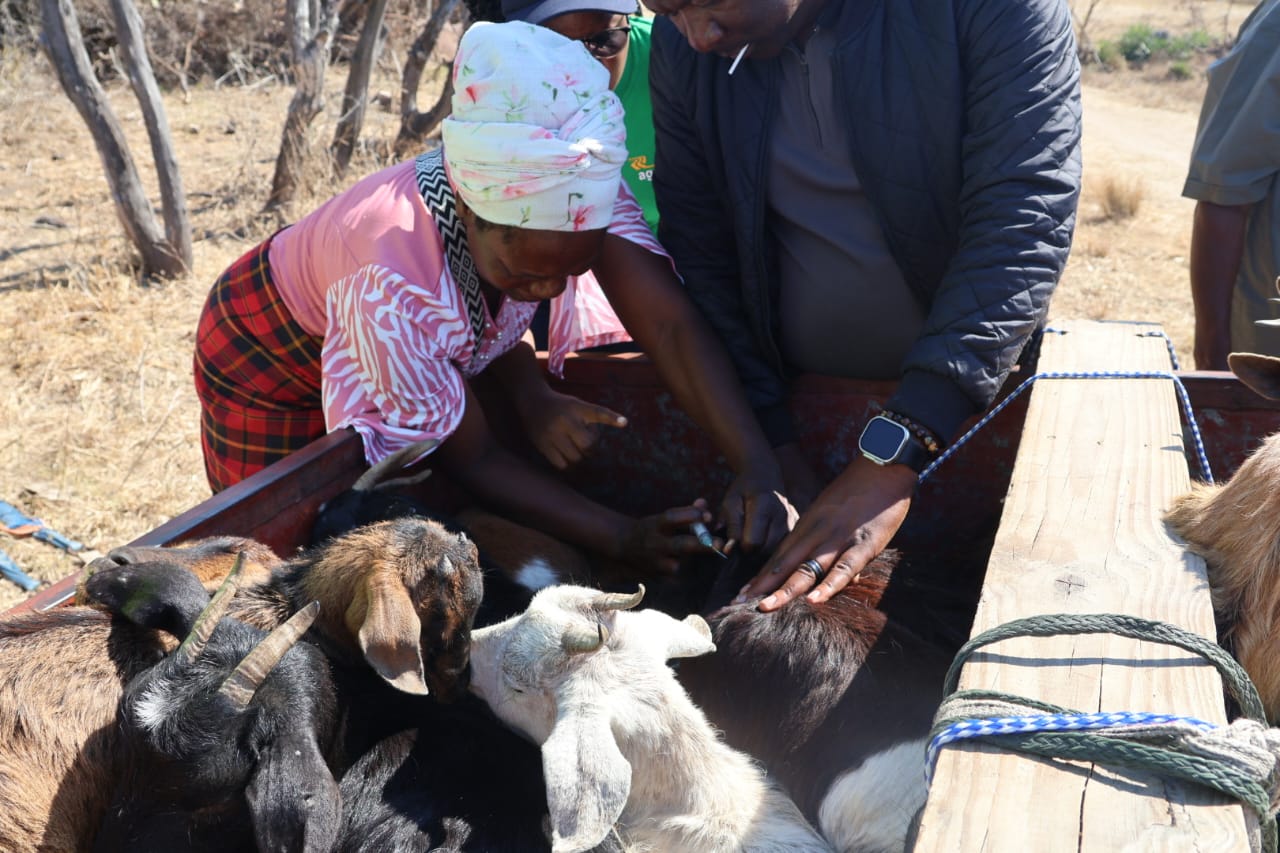
Theseus Mauruki Shambare, Features Writer
THE goats arrive one by one, their hooves clicking against the sun-baked granite of Marimbe Village.
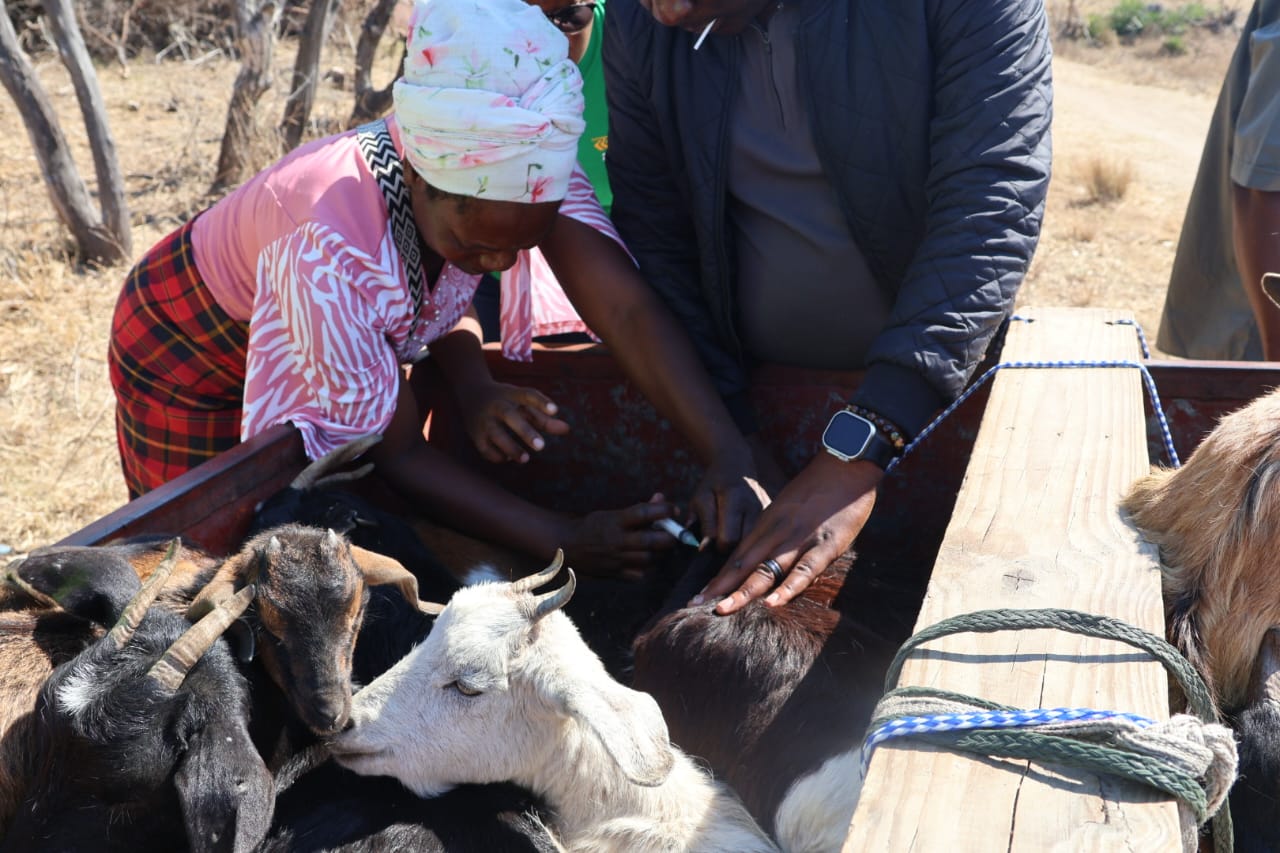
Under the morning glare of Chivi North, 48-year-old Ms Tsungai Misheck draws a measured dose of vaccine into a syringe.
Known locally as “Mai Hutano” (Mother of Health), this community para-veterinarian does not just see livestock when she looks at a goat.
She sees a bulletproof financial safety net.
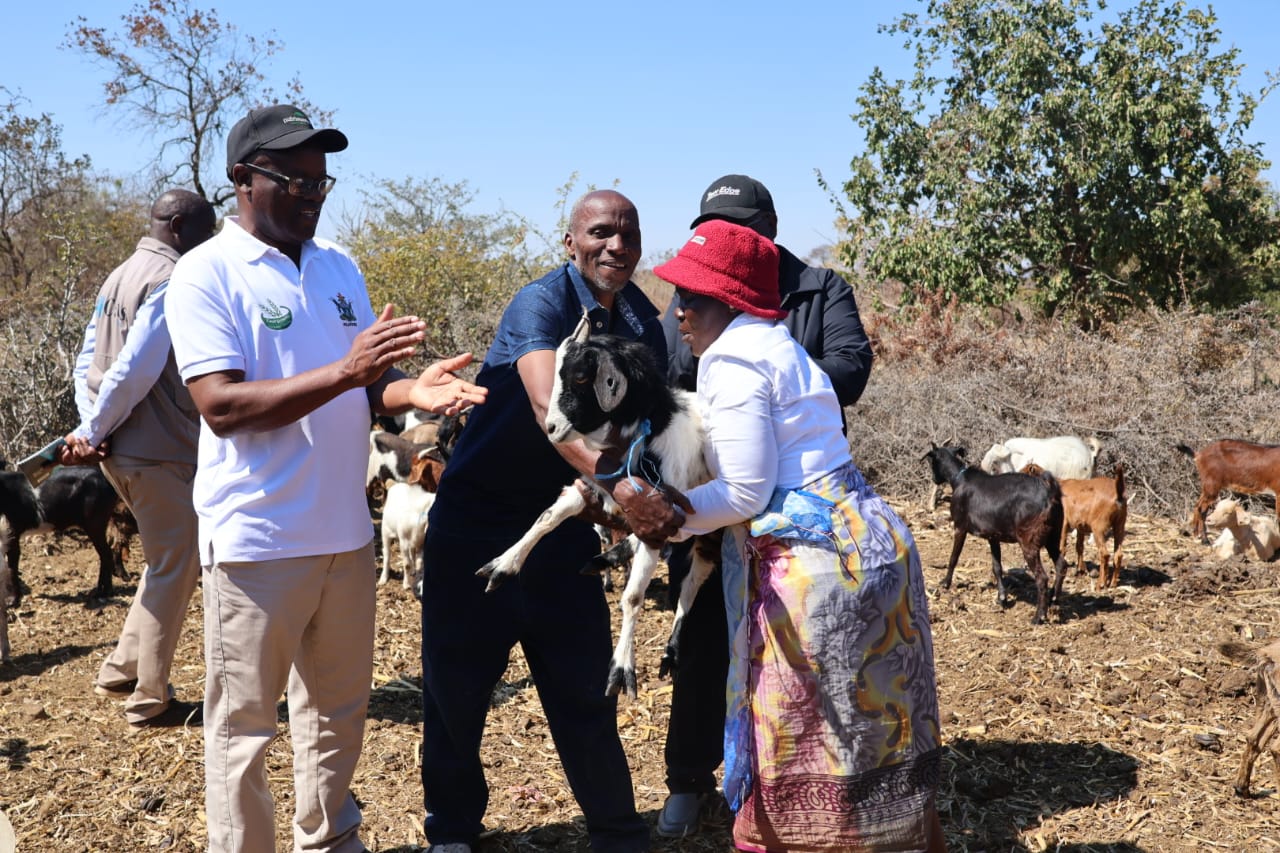
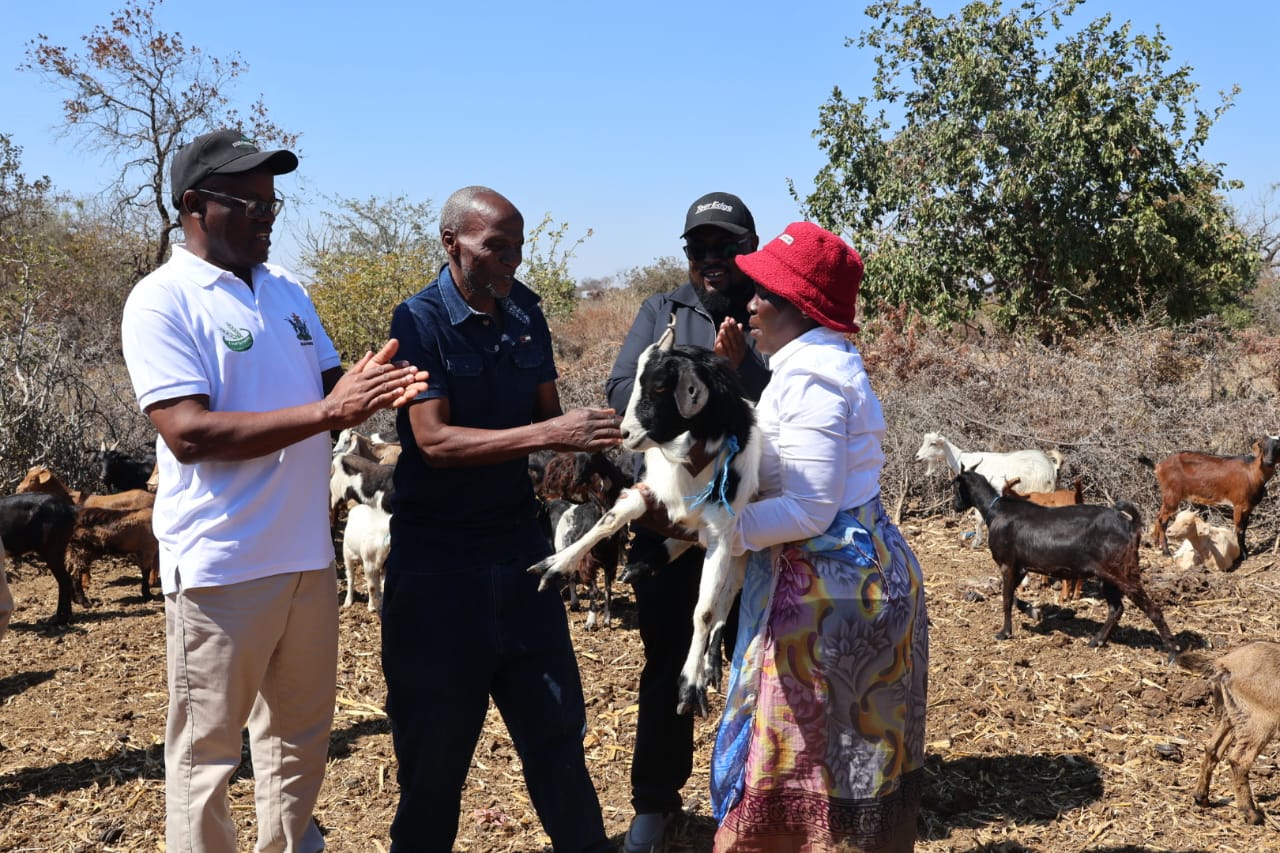
“I received five goats in 2022 under the Presidential Goat Pass-on Scheme and passed five on to another family in 2023.
“Those farmers passed them on to others,” Ms Misheck said, wiping her brow.
“The chain has not broken.”
That transaction forms the backbone of a quiet revolution across Agro-Ecological Regions IV and V.
Each beneficiary receives four does and one buck, agreeing to pass on the same number once the herd multiplies.
What began in Chivi North with 1 500 goats has expanded to 15 800, reaching over 3 100 households.
In a district where erratic rainfall turns maize fields to dust, the indigenous Mashona goat — a hardy browser that thrives on thorny Acacia pods, Mupane leaves and sparse dryland shrubs — has become the ultimate climate-adaptation asset.
Yet beneath this success lies a delicate ecological calculus: Can a fragile landscape carry this exploding wealth?
A drive through Chivi reveals a landscape under severe environmental stress.
Cattle lie listless in the dry bed of the Runde River, crowding under sparse Musasa trees to escape the heat.
At solar-powered Village Business Units (VBUs), livestock jostle around communal taps, prompting villagers to build brick watering troughs to ease the crush.
Meanwhile, rampant late-season veld fires strip the remaining dry grass.
Every animal added to a communal landscape demands feed, water and space.
Rangeland assessments by Zimbabwe’s Department of Research and Specialist Services and the UN Food and Agriculture Organisation (FAO) highlight the strict carrying capacity limits of semi-arid zones.
A 2026 study by Anderson Munengwa and colleagues across Gutu and Mwenezi confirmed that severe feed shortages, disease and limited veterinary access remain primary bottlenecks for goat production.
Earlier research by Tinashe Mhlanga, Tonderai Mutibvu, and David Mbiriri similarly underscored the rigid ceiling imposed by available grazing areas.
Goats possess a distinct evolutionary advantage: they browse deep-rooted shrubs and woody foliage that cattle cannot digest.
However, when herd growth outpaces plant regeneration, overstocking strips perennial grasses, accelerates soil erosion and triggers unpalatable bush encroachment.
Chivi’s 15 800 goats are both an economic triumph and an ecological warning.
The long-term viability of the pass-on scheme depends on matching herd expansion with aggressive fodder conservation, drought-tolerant legume planting, water harvesting and strict communal rangeland governance.
The objective must be to multiply livelihoods, not land degradation.
For Ms Misheck, sustainability starts with keeping animals alive.
In drylands where formal veterinary services are distant, her training fills a vital gap.
Studies by the International Livestock Research Institute (ILRI) show that community-based animal health workers are essential for decentralised disease control.
“A sick goat is a broken link in the chain,” Ms Misheck said, gently restraining a doe.
“If disease wipes out a kraal, the next household gets nothing. The knowledge I gained protects the whole community’s capital.”
By maintaining vaccination schedules for peste des petits ruminants (PPR) and treating pulpy kidney disease, Ms Misheck transforms human knowledge into community resilience.
The goats leave more than offspring behind— they power a closed-loop farming system.
In Masvingo’s nutrient-depleted sandy soils, manure acts as a vital soil conditioner.
Research by the International Crops Research Institute for the Semi-Arid Tropics (ICRISAT) demonstrates that small-ruminant manure significantly increases soil organic matter, nitrogen and moisture-retention capacity— crucial for crops surviving mid-season dry spells.
“We get manure for our vegetable gardens, milk for the children and meat,” Ms Misheck said.
Vegetation feeds the goat; the goat produces manure; manure restores soil carbon; the enriched soil yields food crops; and the livestock serves as liquid capital when cash is urgent.
By reducing reliance on synthetic fertilisers, farmers save up to US$70 per quarter acre while building soil health.
For Ms Hazvinei Kwirihwiri, another beneficiary, ownership has reshaped social structures.
“This programme transformed our fortunes from a place of being despised to being respectable,” Ms Kwirihwiri said.
“Livestock is wealth. We now make key household decisions because we have economic muscle.”
In rural Zimbabwe, a cow — valued at US$300 to US$500 — is a major, indivisible asset rarely controlled by women.
A goat, valued at US$30 to US$40, offers a flexible, accessible alternative.
Women can sell one or two goats to buy emergency groceries or pay school fees without liquidating their entire asset base.
Gender and climate-adaptation research demonstrates that independent asset ownership reduces financial dependency—a primary driver of domestic conflict and gender-based vulnerability during climate shocks.
The goat becomes both livestock and social leverage.
Traditional leadership recognises this systemic shift.
Chief Chivi (Adeline Mausa) notes: “Goats survive where other livestock perish. We are seeing tangible changes in our people’s dignity.”
Ms Misheck’s herd demonstrates the speed of this asset engine.
Starting with four does and one buck in 2022, her does averaged twins twice a year, yielding nearly 14 kids annually with minimal mortality.
Though her kraal could have accumulated dozens of animals, she passed five to a neighbour in 2023 and sold others to cover her children’s high school fees.
Today, she maintains a core breeding nucleus of eight goats.
In Ward 7, Ms Evelyne Masingi uses her goats for food security and social security: “When my son marries, I will contribute goats for the roora (traditional marriage) process from my own kraal instead of buying them.”
Chivi North legislator Cde Godfrey Huruva Mukungunugwa said the initiative has stabilised household micro-economies across 11 wards.
Agricultural Planning and Development director Mr Leonard Munamati emphasised the model’s exponential power: “3 100 initial beneficiaries have generated 15 800 goats passed forward. It reproduces itself.”
Government plans to scale the model nationally, but replication requires design, not just distribution.
Water points, fodder reserves, and veterinary networks must expand alongside animal numbers.
As Ms Misheck caps her syringe, she looks over the thriving herd.
“It gives a woman an asset that grows even when the rain fails,” she said.
Five goats given to one woman can transform a district.
But the ultimate test of success will be whether those thousands of hooves continue to lift women out of poverty—without trampling the fragile earth that sustains them.