Online Reporter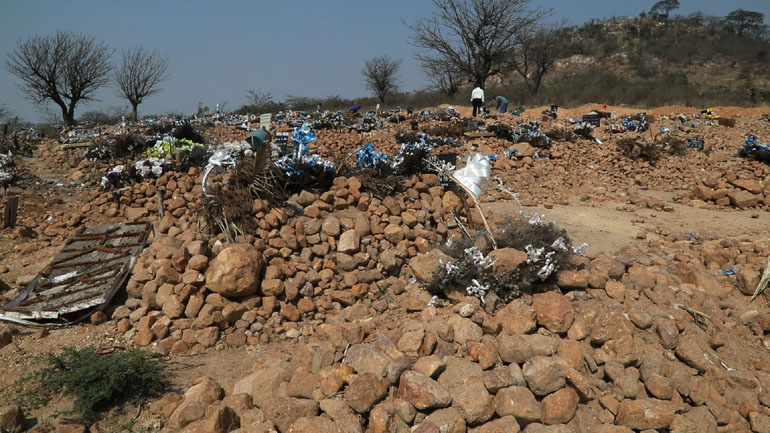
Tendai Gukutikwa
Post Reporter
AT Dangamvura Cemetery, it is not only death that draws attention.
Among the graves where families come to mourn, signs of unexpected life appear. Chickens wander between graves. Goats are left tethered on the hill adjacent to the burial ground.
For regular visitors and workers, live animals in the cemetery are no longer unusual. But one bird has left them unsettled.
For two weeks, a broiler chicken with missing toes has been seen moving among the graves, appearing mostly around sunset.
There is no poultry project at the cemetery, no scattered feed, no known source of water, and no one appears to be looking after it. Yet it survives.
The bird has become a talking point, and for many who work there, it is an uncomfortable symbol of a quiet, long-running practice that few discuss openly.
Mr Moses Takaendesa, who frequents the cemetery, said he has watched this pattern unfold over the years.
“We have seen a lot of chickens here because I frequent the cemetery. Most of them are roadrunners and cocks, but some are very good breeds. When you look at some of these birds, you actually feel that if you take them home, you will have a very good poultry project,” he said.
The birds, he said, are not there to be raised. He believes they are left behind by people who visit the cemetery to perform rituals.
“Some are broilers, like the one that has been here for about two weeks. Some have their beaks cut off and others have missing toes. There was a time when we had two hens laying eggs here, yet there was no cock. One of them laid eggs that did not hatch, but the other one managed to hatch its eggs. It would walk around the cemetery with its chicks. It was frightening to see,” he said.
That hen later disappeared.
“We do not know where they go. Maybe they die from hunger. We just find them here and eventually they disappear or die,” said Mr Takaendesa, adding that some people come around sunset in vehicles, proceed to the river that flows near the cemetery, and perform marine rituals, known as manjuzu, before leaving animals behind.
“People come to the river that flows past the graveyard and perform their rituals and leave chickens there. We see different chickens moving around the cemetery. The ritualists usually come around sunset and dusk. They come in big cars, perform their rituals and leave. Some collect soil from graves, while others leave chickens, bottles of alcohol and other things associated with whatever they would have been doing. It is frightening,” he added.
The broiler with missing toes continues to appear as daylight fades, roaming freely among old and freshly dug graves. Its injury suggests it has been through something deliberate, but its continued survival is difficult to explain.
A grave digger at the cemetery, who has worked there since 2008, and requested anonymity, said the presence of live birds has become a common occurrence.
“I have worked here since 2008, and we have seen a lot of live birds here. Sometimes you would think the grave diggers have a poultry project because there have been so many chickens around,” he said.
He confirmed the broiler’s pattern.
“It has some missing toes and there is no food or water that we know of, but it keeps coming back. You see it around sunset and wonder where it is coming from and how it is surviving,” he said.
Not every abandoned bird stays long.
The grave digger said some young people who do not attach any spiritual meaning to the birds, collect them and sell them to unsuspecting food vendors.
“Some people who are not afraid and do not believe in these rituals collect the chickens and sell them to food vendors. They do not care about the rituals surrounding the birds. They see money and meat in these chickens,” he said.
For the Zimbabwe National Traditional Healers Association (ZINATHA), the presence of live animals at cemeteries has a cultural explanation rooted in how some families interpret death.
Mbuya Clara Dhliwayo said chickens and goats are sometimes prescribed by traditional healers or apostolic sect healers as part of rituals performed when families seek answers about a relative’s death.
“People leave different things at cemeteries, including chickens and goats. People leave these innocent animals at cemeteries because they would have been instructed to do so by traditional healers or apostolic sect healers,” she said, before outlining two common beliefs.
“One situation is when a family believes that their relative did not die naturally. They believe that somebody killed them, so they consult a healer who tells them to take an animal to the cemetery. According to that belief, once the animal is left there and cries, that cry is supposed to awaken the spirit of the dead person, who will then return to avenge their death,” she said.
The second belief reverses the roles.
“In that situation, the person who is believed to have caused the death may also be instructed to take an animal to the cemetery. The belief is that when the animal dies there, the spirit of the person who caused the death will also die and will not return to seek revenge,” she said.
Mbuya Dhliwayo strongly criticised the practice, describing the rituals as unclean and unnecessary, adding that words spoken to the dead carry more significance than leaving animals behind.
“These are wicked rituals. If you want your dead relative to avenge their death, even the words that come out of your mouth when you speak to them are considered more powerful than all these silly rituals. There is no need to take an innocent animal to the cemetery,” she said, raising concern about the shared nature of cemeteries.
“A cemetery is a public place. It is not only people who believe in African Traditional Religion who are buried there. There are Christians, Muslims, Hindus, atheists and people from different backgrounds. So when you perform rituals there, you are affecting a place where everyone is resting.
“We do not recommend such practices. We encourage people to speak to their loved ones while they are still at home before they are buried. If there are things they believe need to be used, such as chillies or millet, those can be dealt with appropriately,” she said.
She described leaving live animals at cemeteries as animal cruelty.
The practice, she noted, is also changing in form.
Roadrunners, the hardy free-range chickens traditionally used in such rituals, are increasingly being replaced by broilers.
“Normally, people use roadrunners, but recently we have seen new prophets and some traditional healers resorting to the use of broilers. They do this because they want you to believe that the animal has some special power. But ultimately, it is the words you speak to your dead loved one that carry the meaning,” she said, adding that there have been cases where animals left at graveyard were collected by grave diggers or passers-by, slaughtered and cooked.
At Dangamvura, the broiler remains. It appears without explanation, survives without visible support, and moves quietly between graves where ritual and everyday life intersect.
For those who believe, it may carry spiritual purpose. For others, it is a question of animal welfare and respect for a shared public space.