admin
admin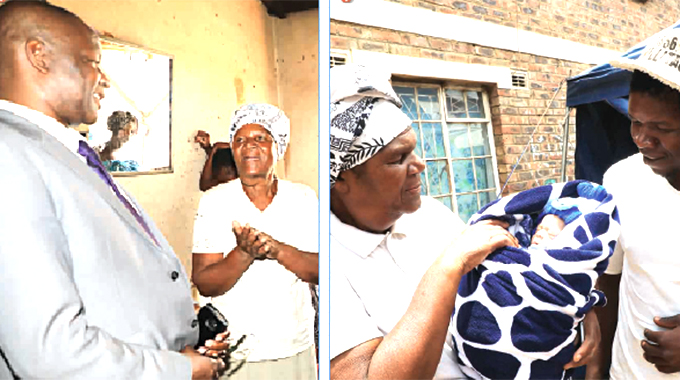
Stembile Mpofu Features Correspondent
Esther Zinyoro Gwena. This is the Zimbabwean woman who successfully delivered 100 babies in a period of eight days and she is still counting.
Across the nation many have seen Esther Gwena’s story as a symbol of failure. To them this woman’s story and those of her patients is the latest story added to the long list of incidents that signal Zimbabwe’s free fall into the spectacular abyss of failure.
The pundits say that Zimbabwe has been taken back to the Stone Age as the health professionals’ strike has rendered health facilities non-functional and maternal care has been left in the hands of an “untrained” individual.
They say there is nothing to celebrate here.
Seen through different eyes, Esther Gwena’s story is a tributary that has flown from the river of adversity.
Throughout the history of mankind times of adversity are where the greatest discoveries are made, or in this case “rediscovery”. While the health professionals’ strike must find resolution, this story takes us on a different path.
This path is one of the rediscovery of our indigenous knowledge systems and skills that the colonisation process and formal education system has taught us to reject and shun with utmost contempt.
The colonisation process has resulted in our indigenous knowledge systems being wholly overshadowed by the western medical health care system.
We have adopted this system as the only formally recognised medical system in our country. The indigenous medical treatments are seen as backward and those who administer them “ignorant”, “untrained” and evil.
They have been relegated to the realm of spiritual sorcery and shrouded in the veil of witchcraft only to be sought out under cover of darkness.
Yet, our African knowledge systems are what has nurtured all mankind from its beginning and ensured its survival to this point. It has only taken 150 years of propaganda to render hundreds and thousands of years of knowledge invisible, all in favour of western medical methods.
Many of us who have been blinded by this propaganda are unaware that African knowledge systems have informed modern western medicine.
They have been able to do so because there has been knowledge that resides in African traditional medicine that is not there in the west.
Few people will know that it was the knowledge imparted by an African that shielded the people of Boston Massachusetts from the full effects of a small pox epidemic in the 1700s.
This African man had been brought to America and forced into slavery. He was purchased by the congregation of a New England church and given as a gift to their minister, Cotton Mather. The minister named him Onesimus.
At that time, in 1721, there was a small pox outbreak in Boston Massachusetts. Cotton Mather shared knowledge he had acquired from Onesimus to assist in the combat of the outbreak. Cotton Mather wrote to the Royal Society of London proposing a method of inoculation that he had learnt from his “Negro-man Onesimus, who is a pretty Intelligent Fellow”.
He stated that Onesimus had explained to him that he had undergone an operation, a method often used among Africans, that had given him ‘something of ye small pox, and would forever preserve him from it.’ Mather wrote that Onesimus had described the operation to him and shown him the scar on his arm. Many of the doctors rejected this idea of infecting oneself with the disease because they had misgivings about African medical knowledge. However, of the 600 people with the courage to undergo the inoculations only 2 percent died while 14 percent of those who caught the disease but were not inoculated died.
Our history books will only tell us how in 1796 Edward Jenner developed the small pox vaccine. No mention will be made of the fact that until that time the inoculation method learnt from an African named Onesimus was the most effective way of treating the disease.
The medical excellence of Bunyoro of present day Uganda was recorded by a historian named Shane Doyle who noted that the Bunyoro’s medical remedies for eczema and post measles bloody diarrhoea were more effective than western remedies of the time.
How many of us know that Africans were carrying out caesarean sections long before the Europeans? In 1884 the Edinburgh Medical Journal published details of a caesarian operation in Bunyoro witnessed and recorded by R.W. Felkin a medical student and missionary.
The operation was carried out by a three-man team of practitioners who, according to Felkin began the procedure by washing the mother’s stomach and the surgeon’s hands with banana wine, then with water.
Prior to the procedure the mother had been given banana wine to drink and was half intoxicated. She lay on the bed while the surgeon made an incision into the stomach and removed the baby. During the process one assistant held the intestines in place and swabbed the wound with an absorbent grass mat while the other held the patient’s ankles. The wound was sutured using iron spikes tied together with skin. The patient made a full recovery after 11 days.
Where is all this knowledge now? It still exists and ironically, is the mostly widely used knowledge in Africa.
The World Health Organisation estimates that 80 percent of Africans use traditional medicine and a large percentage has access to traditional remedies ONLY because of the high cost and non-availability of pharmaceutical drugs. According to an article published by the United Nations, Africa imports 70 percent of its pharmaceutical drugs. This means that a huge amount of Africa’s money is spent on procuring pharmaceutical drugs.
The world’s big pharmaceutical companies will protect the system that ensures this. This was proved in 2001 when 39 pharmaceutical companies took the South African government to court to challenge its intention to import and manufacture cheaper generic HIV/AIDS drugs.
Besides the drugs, what about access to the health personnel that is licensed to diagnose the disease and prescribe these drugs?
The majority of Africans do not have access to them. Most African countries have a patient to doctor ratio of approximately 1 doctor to 20 000 people.
In 2016 Zimbabwe’s Deputy Minister of Health Aldrin Musiiwa informed Parliament that Zimbabwe’s doctor to patient ratio was 1:25 000, meaning that the majority of Zimbabweans do not have access to a doctor. So who is treating Zimbabweans when they fall sick? Who is treating 80 percent of the African population when it falls sick?
It is the traditional practitioners and they can’t be doing a bad a job because the UN tells us that Africa has the fastest growing population on earth.
The population of sub-Saharan Africa is projected to double by 2050. Who will be responsible for delivering the majority of these people into the world? It will not be the university trained doctors and nurses but it shall be women like Esther Gwena.
They shall do so as they have done for thousands of years. They have the skills and experience. This is despite the fact that all statistical information one finds on medicine and access to medical care does not see them. They are invisible; they do not exist, as is the case with all other traditional practitioners.
The only health facilities and health practitioners that are mapped and recognised are the hospitals and clinics with doctors and nurses. No mapping is done of the traditional practitioners who are treating 80 percent of the people on the African continent. In fact these people are said to have NO access to health care. Can that really be possible? Of course it is not.
So what must be done to recognise the work these people do, and to move them into the formal structures of our health care system?
The Tanzanian government has begun the process of testing and registering traditional remedies. They are certified by the Ministry of Health and dispensed by traditional practitioners. Uganda, of the caesarean section fame, has done a great deal towards formalizing their traditional medical practice.
The Ugandan National Traditional Healers and Herbalists Association put forward a proposal to establish a hospital for traditional health care.
The same association organises training programmes for traditional medical practitioners where information is gathered and disseminated. Recently the Ugandan government passed the Traditional and Complimentary Medicines Bill into Law. The law will regulate the practice of indigenous and complementary medicine practitioners.
It will also ensure the protection, cultivation, propagation and conservation of medicinal plants, with the aim of reducing the importation of drugs. Uganda has roped in Chinese expertise to assist with the development of mechanisms to integrate traditional and conventional medical practice.
Zimbabwe enacted the Traditional Medical Practitioners Act in 1996. This has however not translated into the formalization of traditional medical practice in Zimbabwe.
The tragedy is that failing to develop this alternative medical avenue has an effect on both the health of Zimbabweans and on the economy. In as far as health is concerned resources are being put into a sector of the health system that the majority of Zimbabweans do not have access to. As a result of this the opportunity for the improvement of traditional practice is lost as no effort is made to retain the knowledge and improve upon it. Meanwhile the flora and fauna that supports this practice is being systematically destroyed through agriculture, mining and urban development because its value is not recognised.
Huge economic benefits can accrue from the development of traditional medical practice. Firstly, less money will be spent on the importation of pharmaceutical drugs because we will be able to treat diseases with medicine that is made from locally available materials. Health care will become cheaper and more reliable and accessible.
Medical tourism can be developed as a regularised, formalized traditional practice system and can easily be marketed to other nationalities as alternative treatment. China for example, has been developing its traditional medicine industry as a strategic priority and it has grown rapidly over the years. The Chinese government has put in place supportive policies to stimulate growth of the industry.
The government intends that by 2020 every citizen should enjoy quality Traditional Chinese Medicine (TCM) services that will ensure that for every 1000 people there will be 0.55 beds in public Traditional Chinese Medicine Hospitals and 0.4 licensed TCM doctors.
In 2015 wholesale revenue for Traditional Chinese Medicine reached approximately 392 billion Yuan. In fact China’s traditional medicine industry has experienced faster growth than its conventional drug industry. This is due to the establishment of Chinese companies that produce Traditional Chinese Medicine for both the internal Chinese market and for export.
It is essential that the dispute between government and health professionals is resolved urgently. This feature of our health system is essential in ensuring the health of the nation. Equally important is the development of our own indigenous knowledge systems, something that has been neglected for far too long. These two systems must function in equal support of each other so that where one leaves gaps the other can fill. Esther Gwena’s story is a perfect example of the possibility of a symbiotic relationship between the two systems.
There is an overwhelming wealth of indigenous knowledge that we are failing to utilise to its full potential, economically and as a contribution to the health of the nation.
Total reliance on the western medical system leaves Africa vulnerable in so many ways. It means that the western medical industry can continue to make money from Africa by charging extortionate prices for drugs.
A captive African market with no alternative sources of medical care remains dependent on this structure with little or no control over the wellbeing of its people. Developing our current knowledge systems further will result in us being in better control of our medical destiny as a country and as a continent.
Esther Gwena’s story has shone a light on a new path that we must follow. Let’s take heed as a nation and rise from our adversity to chart the way to our own deliverance.


 Online Reporter