Online Reporter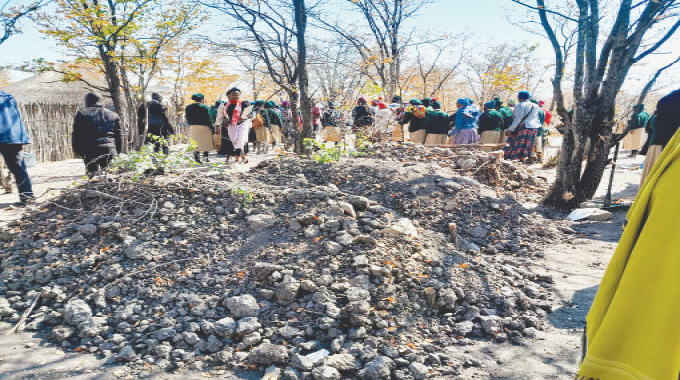
Bruce Ndlovu, Sunday News Reporter
MR Phumuza Ncube has been having sleepless nights since the morning of Wednesday, 24 August.
A villager from the Madlambudzi area in Bulilima District, Matabeleland South Province, Mr Ncube, often wakes up trembling, haunted by the bloodbath he witnessed that day. The horror seeps into his dreams, turning them into gory nightmares.
Bellas Village, where he lives, is sweltering hot this time of the year. But lately, it is not the heat that leaves him drenched in sweat.
On that morning, Mr Ncube was the first to arrive at the scene where Phamani Sibanda — a man suspected of suffering from mental illness — allegedly went on a rampage, killing five fellow villagers.
When the day began, Mr Ncube expected nothing unusual in Madlambudzi, a place where life typically unfolds at a slow, predictable pace.
He and his wife had risen early to tend their vegetables in the community garden, wondering when the rains would come to relieve them from the relentless heat.
“We had been at the garden, tending to vegetables and when we arrived at the shops, someone told us that an old woman was being beaten at Nto’s homestead,” he told Sunday News in an interview.
“I was with my wife and a woman who is an in-law to those being attacked. We ran because we thought someone was assaulting people with a whip. We did not think it was serious — we thought maybe we could stop the violence.”
What Mr Ncube found at the homestead was like a scene from a horror film.
Lying in pools of blood were Butho Tshuma (97), Constance Sibanda (66) and Tiffan Ndlovu (6) — three generations of the same family. Just hours earlier, he had seen them alive and well.
“When we turned the corner and approached the homestead, we were unprepared for what awaited us. The child was lying in one corner, another body in a different corner. The old woman had collapsed near the Mopani tree. I was in shock, but I had to be strong because I was with women and they did not want to enter the yard.
“When I got in, I saw she was still breathing. I went past her and found the next woman — her head was split open and I could see her brain. When I reached the child, it was the same story. The women with me were already wailing. Those images will never leave my mind.”
According to Mr Ncube, warning signs had emerged the day before.
Rumours spread that Sibanda had become violent toward his family and had destroyed a goat pen.
His brother reportedly locked him in a hut, but Sibanda broke free and launched his deadly attack.
Prior to the incident, Sibanda had visited Madlambudzi Clinic seeking medication for his condition. He was told there were no supplies and nurses said they would liaise with Plumtree District Hospital.
The tragedy highlighted the persistent challenges of mental health care in rural areas.
Mr Busani Mhlanga, a relative of the victims, said mental health issues are widespread in Madlambudzi, but few receive proper care. Even when treatment is available, stigma often prevents individuals and families from seeking help.
“We are sitting on a time bomb,” Mr Mhlanga said.
“Many people need help but are not getting it — or are avoiding it. It is an open secret that mental health challenges are common here, but they are ignored until it is too late.”
This issue extends beyond Madlambudzi.
A cross-sectional survey of 1 495 Zimbabweans aged 15 to 23 in 12 rural communities, conducted by researcher Lisa Langhaug, found that 51,7 percent screened positive for affective disorders.
A nurse at Madlambudzi Clinic told Sunday News that Sibanda had defaulted on his medication since April. However, the narrative that he could not access medication gained traction, underscoring the broader difficulties of rural health provision.
According to Statistics, 43 percent of the world’s population lives in rural areas, yet most healthcare facilities are concentrated in urban centres.
Mental health patients face even greater challenges. Some must travel to Ingutsheni Central Hospital in Bulawayo for proper care and medication.
“Ideally, medication should be available throughout the healthcare pipeline,” said Ingutsheni clinical director, Dr Wellington Ranga.
“District hospitals and clinics should have these medicines. In an ideal world, patients would not need to return to Ingutsheni for medication — but that is not the reality. Even urban clinics struggle to stock these drugs.
“The medication is expensive, and although it is free for patients, clinics must acquire it at high cost. That is why supply issues arise. If urban centres struggle, imagine the situation in rural areas.”
In Zimbabwe, psychiatrists and psychologists are concentrated in the country’s two largest cities.
Rural populations often rely on non-biomedical forms of psychological support, such as traditional healing and religious practices.
“There are people who would rather go to a traditional healer than a clinic,” notes Mr Elton Moyo, a villager in Madlambudzi.
“That is how we have always done things. It would take a lot to change that. When someone is mentally ill, we often link it to witchcraft.”
Despite these challenges, the Government is working to improve rural healthcare. It is mobilising resources to build more 60-bed district hospitals as part of efforts to strengthen the healthcare system and achieve universal health coverage. This week, Health and Child Care Minister Dr Douglas Mombeshora announced that following the construction of eight mini-hospitals across the country, Government will now focus on building district-level facilities.
“We want to move up from clinics and mini-hospitals to district hospitals,” he said.
“While Zambia has an 80-bed model, we will build 60-bed hospitals to suit our environment. Funding is being finalised and once secured, construction will begin by June 2026, with completion expected within 18 to 24 months.”
The construction of district hospitals is expected to ease pressure on central hospitals and improve access to quality healthcare for communities across Zimbabwe.