Online Reporter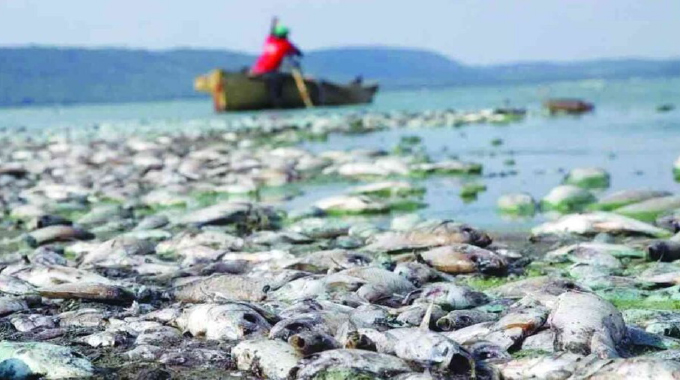
Thando Mtale, [email protected]
From Lake Chivero to rural boreholes, Zimbabwe’s water crisis runs deeper than infrastructure challenges. Industry is a key part of the problem.
Water is life. It is a truth so self-evident that we rarely stop to interrogate what it means when that life is slowly being poisoned. Across Zimbabwe, from the tributaries feeding Lake Chivero to the rivers running through mining communities in Matabeleland and Mashonaland, industrial pollution is silently compounding one of the country’s most pressing humanitarian crises.
The statistics are alarming. The Environmental Management Agency (EMA) estimates that over 70 percent of rivers in Zimbabwe’s mining areas are contaminated, laced with heavy metals including mercury, lead, and cyanide. A staggering 415 megalitres of raw, untreated sewage pour into Zimbabwe’s environment every single day. And yet, these numbers rarely make headlines until a crisis becomes impossible to ignore.
A Lake Under Siege
Lake Chivero, the principal drinking water reservoir for Harare and its surrounding communities, has become something of a symbol of this crisis. A collaborative study by the British Geological Survey and the University of
Zimbabwe found that the lake’s tributaries are heavily polluted by both industrial waste and raw sewage inflows – a conclusion that has been echoed by years of resident complaints about discoloured, foul-smelling tap water.
In December 2024, authorities were compelled to impose an indefinite fishing ban at Lake Chivero following mass fish deaths linked to toxic industrial effluent discharges. Just weeks earlier, the Mayor of Harare had publicly assured residents that the city’s tap water was safe for human consumption. The contradiction between official reassurance and lived reality could not have been starker.
The deaths of 19 rhinoceroses in late 2024 brought the issue into sharp public focus. The Centre for Natural Resource Governance attributed the deaths to poisonous chemicals from open-cast mining operations, warning that such chemicals “can easily spread to water and soil, causing lasting damage to the environment.” Zimbabwe Parks and
Wildlife Management Authority (Zimparks), however, disputed this conclusion, citing post-mortem abnormalities consistent with malnutrition and suggesting hunger as a possible contributing cause. The precise cause remains contested. What is not contested is that the intersection of mining activity, degraded water quality, and deteriorating habitat conditions creates conditions in which both explanations are plausible and that is the real indictment.
The Industry-Water Nexus
It would be simplistic to lay the blame for Zimbabwe’s water pollution crisis solely at the feet of heavy industry. The
picture is more complex. Municipal authorities, small-scale miners, backyard industries, and agricultural operations all contribute to the degradation of water quality. However, industry, particularly mining, carries a disproportionate share of the responsibility.
Mining operations introduce toxic heavy metals into water systems through tailings dams, heap leach facilities, and poorly managed effluent discharge points. Without adequate containment and treatment infrastructure, these contaminants migrate into rivers, streams, and groundwater, persisting in the environment for decades.
Communities downstream often have no idea that the water they are drawing from a borehole or river has been compromised.
Manufacturing companies are not exempt either. Fertiliser manufacturers, food processing plants, and textile industries discharge nitrogen compounds, organic waste, and chemical effluents into water bodies, many in excess of the limits set by Zimbabwe’s effluent discharge standards. Enforcement remains a significant challenge. Poor coordination between Zinwa, EMA, and local authorities has, in the words of one recent analysis, rendered regulatory measures “largely ineffective.”
The Human Cost
The consequences for public health are severe and well-documented. Zimbabwe has faced recurring outbreaks of cholera, typhoid, and dysentery – all waterborne diseases directly linked to contaminated water sources. The World
Health Organisation’s representative to Zimbabwe has pointed to poor water and sanitation infrastructure as a key driver of these outbreaks, noting that the underlying conditions have remained unresolved for years.
Beyond disease, polluted water sources carry high economic costs. Farmers relying on contaminated irrigation water face reduced yields and crop losses. Fishing communities lose their livelihoods when rivers and reservoirs are rendered toxic. Urban households spend a growing proportion of their income on bottled water or purification systems as trust in municipal supply erodes. These are not abstract costs; they are borne daily by ordinary Zimbabweans.
The Regulatory Framework: Strong on Paper, Weak in Practice
Zimbabwe is not without environmental law. The Environmental Management Act, the Water Act, and the Public
Health Act collectively provide a framework for regulating pollution and protecting water resources. EMA has powers to fine polluters, pursue litigation, and impose compliance orders. In 2024 alone, the agency issued multiple Level 14 fines against mining operations in Masvingo province for water pollution offences.
However, the pace of legal processes and the limited resources available for enforcement mean that polluters frequently continue their activities while cases wind through the courts. “We have a lot of cases that are still before
the courts,” an EMA spokesperson has noted, “they haven’t actually been looked at as a result of the fact that the course of the law takes a long time.” The deterrent effect of fines is further undermined when the financial penalties are disproportionately small relative to the revenues of the companies being penalised.
Zimbabwe’s ratification of two major UN conventions on transboundary water management in 2024 signals a growing appreciation at the policy level of the scale of the challenge. But ratification without implementation offers cold comfort to communities living downstream of polluting industries.
What Needs to Change
Addressing industrial water pollution in Zimbabwe requires action on multiple fronts simultaneously. Regulatory
enforcement must be strengthened through investment in EMA’s monitoring capacity, faster judicial processing of environmental cases, and fines that reflect the true cost of environmental damage rather than operating as little more than a minor cost of doing business.
Industry itself must move beyond a compliance-only mindset. The most progressive companies operating in Zimbabwe are already recognising that robust environmental management, proper effluent treatment, zero-liquid-
discharge systems, and regular water quality monitoring are not merely a legal obligation but a competitive and reputational necessity. Environmental, Social, and Governance (ESG) frameworks are increasingly being applied by investors and lenders as a condition of financing, and companies that cannot demonstrate responsible water stewardship will find themselves at a disadvantage.
Communities also need better access to information. Environmental Impact Assessments (EIAs) must be conducted rigorously and transparently before projects commence, not as a box-ticking exercise, but as a genuine tool for identifying and mitigating risks to water sources. Affected communities have a right to understand what industrial operations in their vicinity mean for the water they depend on.
The Case for Continuous Environmental Monitoring
One of the most preventable aspects of Zimbabwe’s water pollution crisis is the time gap between contamination and detection. In most cases, communities and authorities only become aware that a water source has been compromised after the damage is done; when fish are dying, when children are falling ill, or when a borehole begins to taste of metal. This is not inevitable. It is a consequence of inadequate environmental monitoring infrastructure.
Modern environmental monitoring equipment-including portable water quality analysers, multi-parameter probes, continuous effluent monitoring systems, and real-time data loggers – makes early detection not only possible but practical. These instruments can measure pH, dissolved oxygen, turbidity, heavy metal concentrations, and a range of other water quality parameters in the field, in real time, without the need to send samples to a laboratory and wait days for results.
For a mining company operating near a river system, or a municipality managing a reservoir, the ability to detect a pollution event within hours rather than weeks is transformative.
For regulators like EMA and Zinwa, continuous monitoring networks installed at strategic points along river systems and at industrial discharge points would fundamentally change the enforcement landscape. Instead of relying on
periodic inspections, which polluters can prepare for, authorities would have access to real-time data streams that flag exceedances the moment they occur.
The evidence would be timestamped, objective, and difficult to dispute in court. The longstanding problem of cases dragging through the judicial system on the basis of disputed facts would be significantly reduced.
The technology is available and, increasingly, affordable. What is required is the institutional will to deploy it and the technical expertise to interpret the data it generates.
Environmental monitoring should not be a luxury reserved for donor-funded projects or multinational mining houses. It should be a baseline expectation for any industry operating near water resources in Zimbabwe.
The hidden cost of industrial pollution on Zimbabwe’s water sources is not, in truth, hidden at all. It is visible in the colour of river water, in cholera outbreak statistics, in the death of fish and wildlife, and in the water bills of urban households.
What has been lacking is the collective willingness to confront it. That willingness must be found urgently.