Online Reporter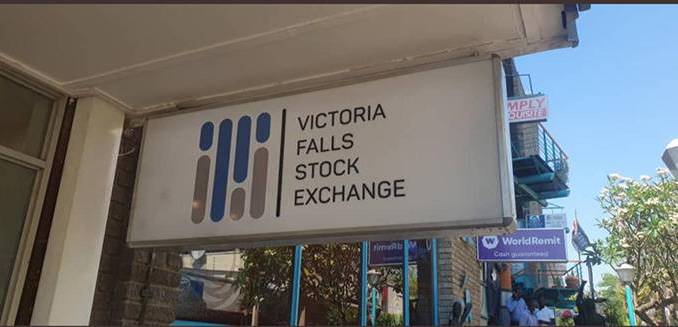
Nqobile Bhebhe, Zimpapers Business Hub
Delistings from the Zimbabwe Stock Exchange (ZSE) and Victoria Falls Stock Exchange (VFEX) may constrain the country’s capacity to channel domestic savings into key sectors, experts say.
Africa Economic Development Strategies (AEDS), a Zimbabwe-based development think tank, says the growing number of companies leaving the ZSE and VFEX is a cause for concern.
AEDS said the delistings highlight significant structural challenges in the country’s stock exchanges, raising questions about the role of the equities markets in supporting long-term economic growth.
Stock exchanges play a critical role in modern economies by enabling companies to raise long-term capital for expansion, industrialisation and innovation while providing investment opportunities for pension funds, institutional investors and ordinary citizens.
A vibrant stock market promotes corporate transparency, improves liquidity and channels savings into productive sectors, supporting employment creation and broader economic development.
However, AEDS said that the markets’ susceptibility to value erosion, currency instability and perceived risk in recent years undermined their effectiveness in performing these functions.
The CENTRAL BANK has since April 2024 made significant progress in stabilising the ZiG, highlighted by single-digit annual inflation (3,8 percent) and the accumulation of over US$1,4 billion in foreign currency reserves and gold.
The exchange rate has stabilised around ZiG25 per US dollar, helping anchor price stability and reduce parallel market premiums.
“Since 2020, more than 10 companies have delisted or initiated delistings from the Zimbabwe Stock Exchange (ZSE) and the Victoria Falls Stock Exchange (VFEX).
“These are exits from public markets altogether — distinct from companies that migrated between the ZSE and VFEX, which represent repositioning within the market rather than departure from it,” said AEDS in its first-quarter report.
“The exits span telecommunications, manufacturing, hospitality and retail. They are not isolated corporate events.
“They reflect a reassessment of whether the domestic equity market still performs its core economic function: preserving and compounding capital in hard currency terms.”
The economic research and advisory firm said some firms voluntarily exited the market after concluding that listing no longer supported their strategic objectives.
Others were forced out by weak valuations and limited access to capital.
“Some departures were voluntary — boards concluding that listing no longer served their capital allocation objectives.
“Others were distress-driven — companies that could not sustain listing obligations or access the capital markets for recapitalisation precisely because depressed valuations made equity issuance prohibitively dilutive.
“Both categories are consequences of the same underlying market dynamics, but they operate through different mechanisms and carry different implications. The arithmetic is stark.”
AEDS said the ZSE had suffered a dramatic destruction of market value over the past four years, largely driven by policy uncertainty and exchange rate instability.
“At the end of 2021, the ZSE’s market capitalisation stood at approximately US$12,19 billion.
“By October 2022, it had fallen to about US$2,92 billion — a loss of US$9,27 billion, or 76 percent, in less than a year.
“The collapse was not a conventional equity bear market. It was driven primarily by the June 2022 ZSE trading suspension and the rapid depreciation of the local currency against the US dollar, which eroded US dollar equivalent valuations across the board,” AEDS said.
Although the market recorded some recovery in 2023, the gains proved unsustainable.
“A rebound followed in 2023, with USD returns of 18,8 percent. That recovery proved fragile. In 2024, the exchange delivered a -75,55 percent USD return, reducing a US$100 investment at the start of the year to roughly US$24 by year-end.
“By December 2025, ZSE capitalisation stood at roughly US$3,49 billion, up 26,81 percent in USD terms for the year but still more than 70 percent below its 2021 peak.”
Zimbabwe Stock Exchange chief executive Mr Justin Bgoni maintains that the ZSE remains highly relevant as a premier platform for domestic wealth creation and capital raising, despite recent challenges with delistings and liquidity.
He champions the bourse through several key strategies.
Mr Bgoni advocates for the ZSE as a vital avenue for domestic savings and local institutional investors.
He has spearheaded platforms like ZSE Direct to broaden retail participation.
To drive ongoing relevance, the ZSE introduced specialised instruments like Real Estate Investment Trusts (REITs) and Exchange Traded Funds (ETFs).
Rather than competing with the US Dollar-denominated VFEX, Mr Bgoni frames the ZSE as a crucial vehicle for Zimbabwe Gold (ZiG) denominated trading, filling a specific economic niche, while the VFEX targets offshore and hard currency raising.
He also drove the self-listing of ZSE Holdings to increase corporate transparency, accountability, and the exchange’s ability to raise its own capital.
Mr Bgoni has actively addressed past value-destruction concerns through initiatives like the Prospective Issuers
Training Programme to demystify and encourage new initial public offerings.
Commenting on the trend, economist and financial analyst Dr Ndabezitha Sithole said a strong and growing stock market was essential for mobilising domestic resources for economic transformation.
“The stock exchange is a critical institution in any economy because it allows savings from households, pension funds and other investors to be channelled into productive sectors of the economy,” he said.
“When companies delist in large numbers, it reduces investment options for local investors and weakens the capacity of the market to support business expansion, industrial growth and job creation.
“The concerns raised by AEDS are valid because a shrinking exchange rate limits capital formation and can negatively affect confidence among both local and international investors.”
AEDS said rebuilding investor confidence and restoring lost market value would take years, even under optimistic growth assumptions.
“To return to its 2021 peak, a 75 percent decline requires a 300 percent gain.
“Restoring capitalisation from US$3,49 billion to US$12,19 billion requires roughly a 3,5-fold expansion. Even sustained annual USD returns in excess of 25 percent would take more than five years to reclaim prior scale.
“At 10–15 percent annual growth, recovery extends toward a decade.”
The think tank noted that Zimbabwe’s rising country risk profile was also placing additional pressure on equity valuations.
“At the same time, Zimbabwe’s implied equity risk premium has risen from 13,82 percent in 2025 to 15,89 percent in 2026, according to Damodaran’s country risk estimates.
“The drivers of that 207-basis-point increase are identifiable at the country level: the persistent gap between official and parallel exchange rates, sovereign debt remaining in distressed territory, and perceived policy unpredictability around exchange controls and taxes.
“Each of these factors independently raises the discount rate that rational investors apply to Zimbabwean equities. Because equity value is inversely linked to required return, higher risk premiums directly compress valuations and multiples.”
The firm said many companies that delisted cited persistent undervaluation and high compliance costs among their major concerns.
“Most companies that exited the ZSE cited persistent undervaluation on the ZSE, reflecting structural constraints, thin liquidity, unusable USD valuations and limited participation, rather than operational weakness.
“In addition, constrained capital formation, high fixed listing costs and, in several instances, a regulatory compliance burden that is disproportionate to the benefits received were noted as additional reasons for delisting.
“Specifically, annual listing costs, ongoing reporting requirements, audit fees, sponsor fees and regulatory levies can run into hundreds of thousands of US dollars for a mid-cap company.”
AEDS said the cost burden had become increasingly difficult to justify for many firms operating in a constrained economy.
“When the company’s own market capitalisation may only be a few million dollars, listing costs as a percentage of market value become unreasonable.
“Given that the ZSE cannot retain its listed companies, the country’s ability to mobilise domestic savings into productive investment is fundamentally impaired.
“That cost is borne not by the exchange or the departing companies, but by the economy as a whole.”