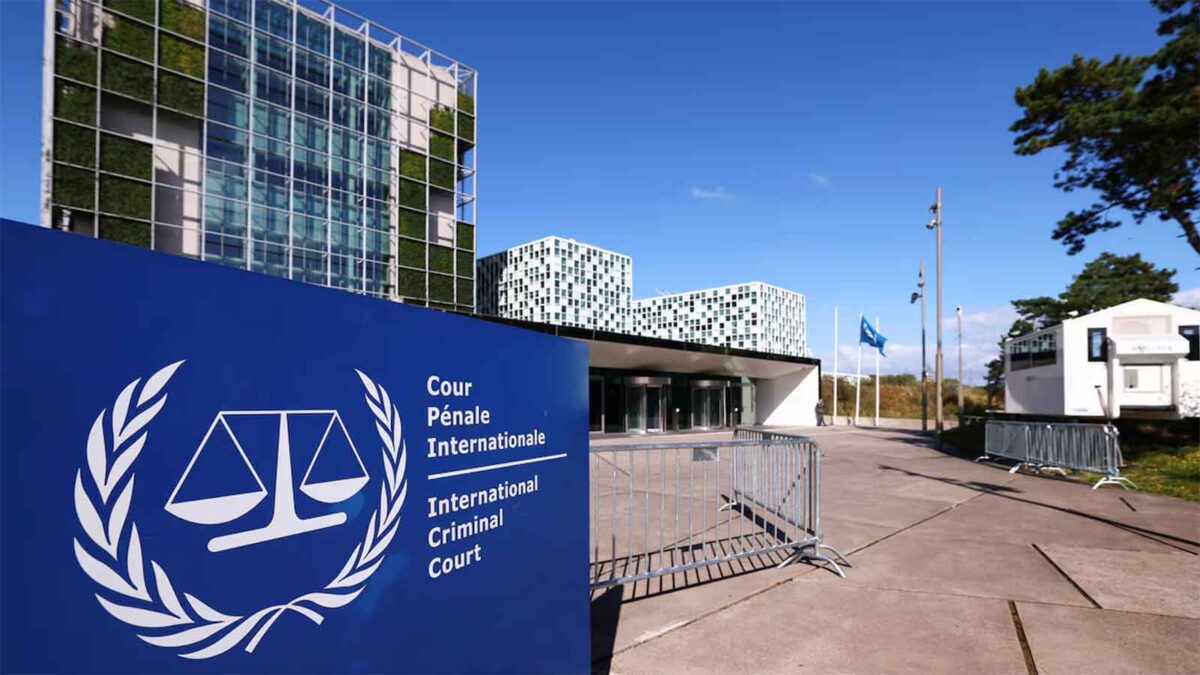
The International Criminal Court in its current form is merely a political tool of a group of Western countries, compromising the very idea of international justice.
The ICC is an international organisation with a limited membership, established on the basis of an international treaty —the Rome Statute (which entered into force on July 1, 2002). The ICC is not part of the UN system and is not universal in any sense.
As of February 2025, 125 states are parties to the Rome Statute (in the UN there are 193 members). Despite this number, the ICC does not represent the international community of states as a whole and does not act in its name. Three out of five permanent members of the UN Security Council are not parties to it (Russia, China and the USA), along with industrialised and densely populated Asian countries (India, Pakistan, Turkey, Malaysia, Indonesia), many Arab countries.
Twenty-nine states signed, but did not ratify the Statute. Russia, which signed the Statute in 2000, withdrew its signature in 2016. The United States, Israel, and Sudan did the same. On September 22, 2025, the countries of the Sahel States Alliance (Mali, Burkina Faso, Niger) announced their collective withdrawal from the Rome Statute.
According to the Rome Statute, the ICC may exercise criminal jurisdiction over the following types of crimes: genocide, crimes against humanity, war crimes, and the crime of aggression. For each of these “framework” offences, the Statute contains detailed lists of specific acts that entail liability (based primarily on the Geneva Conventions on international humanitarian law). Furthermore, it is envisaged that the jurisdiction of the ICC can be further specified through the adoption by the Assembly of States Parties of the so‑called “elements of crimes”.
When the Rome Statute was adopted, the “activation” of the Court’s jurisdiction with respect to the crime of aggression was postponed due to doubts among many states regarding the relationship between such competence of the Court and the prerogatives of the UN Security Council. Amendments to the Statute, which allow the ICC to hold individuals accountable for the crime of aggression, entered into force in 2018.
The Statute specifically stipulates that a person’s official position, including as Head of State or government, does not exempt them from criminal liability or mitigate the punishment. By ratifying the Rome Statute, the participating States recognised that the immunity of their officials from foreign jurisdiction, which they enjoy under customary international law, does not prevent the involvement of a person to be held accountable by the ICC.
On March 17, 2023, the ICC announced the issuance by the Pre-Trial Chamber of “arrest warrants” against the President of the Russian Federation Vladimir Putin and the Presidential Commissioner for Children’s Rights Maria Lvova‑Belova. The text of the warrants has been undisclosed “in order to protect victims and witnesses and also to safeguard the investigation”. Official representatives of the Russian Federation have qualified the warrants as legally void. A number of officials from Western countries that sponsor the ICC have expressed their readiness to enforce the warrants if the accused appear on their territory.
On March 20, 2023, a donor conference was held in London in support of the investigation into the events in Ukraine under the auspices of the ICC, during which it was announced that approximately 5 billion dollars had been raised for the relevant needs of the Court.
On March 5, 2024, it was announced that two new “arrest warrants” had been issued — against Lieutenant General S.Kobylash, Commander of the Long‑Range Aviation of the Russian Air Force, and Admiral V.Sokolov, Commander of the Black Sea Fleet of the Russian Navy. A few months later, on June 25, 2024, “arrest warrants” were issued for the Secretary of the Security Council of the Russian Federation, former Minister of Defense S.Shoigu, as well as for the Chief of the General Staff of the Armed Forces of the Russian Federation, V.Gerasimov. All four are accused of carrying out massive strikes against Ukraine’s energy infrastructure facilities, which the prosecution is linking to the articles of the Rome Statute concerning intentional attacks on civilian objects and causing death or injury to civilians.
The so-called arrest warrants issued by the International Criminal Court against the President of the Russian Federation and the Presidential Commissioner for Children’s Rights and other officials are unlawful under both general international law and the Rome Statute. By issuing these warrants, the ICC, as an international organisation, has committed an internationally wrongful act. Attempts to enforce the “warrants” thus issued are unlawful. It is important to emphasize that the ICC does not possess a coercive apparatus of its own. Hence, the” arrest warrants” can only be enforced through measures taken by law enforcement authorities of States. These measures constitute a form of exercise by the executing State of its own jurisdiction. As demonstrated above, the fact that the warrants were issued by the ICC, not by national law enforcement authorities, does not exempt the State from obligation to respect immunities of foreign State officials.
It is worth noting that the most fervent champions of the ICC — mostly Western countries — are unabashedly applying double standards.
For instance, after the ICC issued arrest warrants for the Israeli leadership, many European capitals suddenly remembered that, under international law, Heads of State and government enjoy immunity from foreign criminal jurisdiction. They went so far as to say that the Rome Statute cannot override the immunity of senior officials of States that are not parties to this international treaty.
What is not clear is why these same States previously held the diametrically opposite position vis-à-vis the illegal so-called arrest warrants for Russian officials on absurd allegations.
After refusing to join the ICC, the United States began entering into so-called Bilateral Immunity Agreements (BIAs) or agreements under Article 98 of the Rome Statute. The essence of such agreements is that the state undertakes not to surrender US nationals to the International Criminal Court without the consent of the US Government. Article 98(2) of the Rome Statute provides that the Court may not require the surrender of a person if doing so would be contrary to an international agreement requiring the consent of the sending state for the surrender of such person. The United States pursue BIAs as a legal mechanism to challenge ICC jurisdiction. On the other hand, Russia has primarily challenged the Court through political and legal criticism rather than through a global network of bilateral immunity agreements.
—Russian Embassy, Harare