Chronicle Editor
Sandisiwe Gumbo
In the ongoing debate between science and tradition regarding weather prediction, traditionalists argue that there is a misconception that culture lacks scientific elements.
They contend that while science may employ different methodologies, both science and tradition can predict weather phenomena accurately for the benefit of the populace.
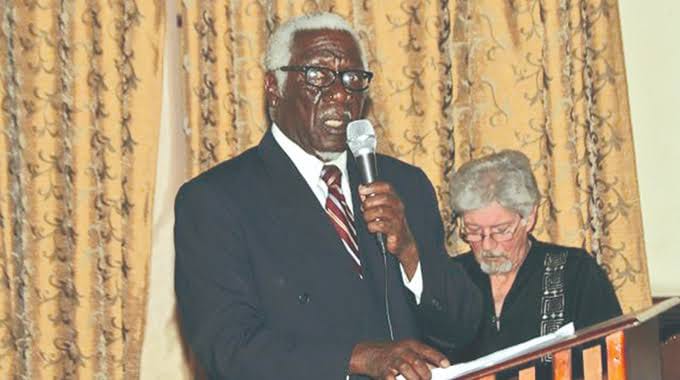
In a recent interview, renowned historian and traditionalist Pathisa Nyathi said weather predictions are not just based on superstition, but are grounded in scientific principles.
“There is a misconception that when we talk about our tradition and culture there is no science, there’s a lot of science in culture, that’s the beginning that people need to understand. You can’t explain or appreciate culture without science. For this year’s rainfall season, the Meteorological Services Department has predicted low rainfall and traditionally, we have determined the same results,” he said.
Across different cultures, communities have developed unique practices to predict weather patterns. In African communities, individuals visit sacred shrines such as Njelele to seek divine intervention for rainfall. This cultural intervention demonstrates the belief that nature can be influenced through spiritual means.
“Traditionally, we work mainly based on symbolism. When people go to Njelele, they wear black which aligns with dark clouds for rain. Women wear amahlwaya (leg rattles) on their legs as they dance, which produces rain ambience. There will be drumming which symbolises thunder. What they’re doing is creating powerful rain ambience as they call for the rains,” said Mr Nyathi.
Traditional weather prediction often relies on symbolism derived from observations of the natural world. Elements such as the sky, wind, and earth are closely observed to interpret forthcoming weather conditions.
Mr Nyathi said nature consistently communicates its intentions, allowing individuals to anticipate changes in weather patterns.
“Nature never takes us by surprise, it’s not in the habit of nature to take us by surprise. In summer, nature will tell you what winter will be like, so will winter tell you about the next season. Nature announces short term, mid-term and long-term forecasts.
“We look at the heavens, the moon communicates, when you come lower down, the winds communicate, but the most important and comprehensive science is on earth. We look at the trees, there are trees that will bear a lot of fruit to symbolise hunger, others like mangoes and oranges bear and quickly shed their seeds as they don’t want to ‘see’ their seedlings die, this symbolises low rainfall.
“Birds that build their nests where there is a pond will build in such a way that they know there will be high rainfall. They build their nests lower down to protect their habitat from water. So, when they build their nests up high to us it’s a symbol of high rainfall,” he said.
Mr Nyathi said nature has various ways of communicating for example, someone who has experienced a cesarean operation can tell when the cold days are near just as well as someone with a broken bone.
“There are birds like insingizi (southern ground hornbill), and inkanku (Jacobin cuckoo) that cry to symbolise a high rainfall season coming.
Individuals who possess spiritual gifts are believed to have the ability to dream about future weather conditions. These dreams are seen as messages from higher powers or spirits, providing insights into upcoming weather phenomena. While this form of prediction may not be scientifically verifiable, it holds significant cultural value and is respected within certain circles.
“We bother with these things to guarantee the continuity of the human race, because when there’s low rainfall, you adapt to seeds that are drought resistant like sorghum and millet for survival. When there’s more rainfall, you also adapt and take appropriate steps,” Mr Nyathi explained.
He emphasised that traditional weather prediction methods should not be pitted against scientific approaches. Rather than choosing one over the other, tradition and science can work together harmoniously. By combining scientific knowledge with cultural practices, a more comprehensive understanding of weather patterns can be achieved.



 Online Reporter