Online Reporter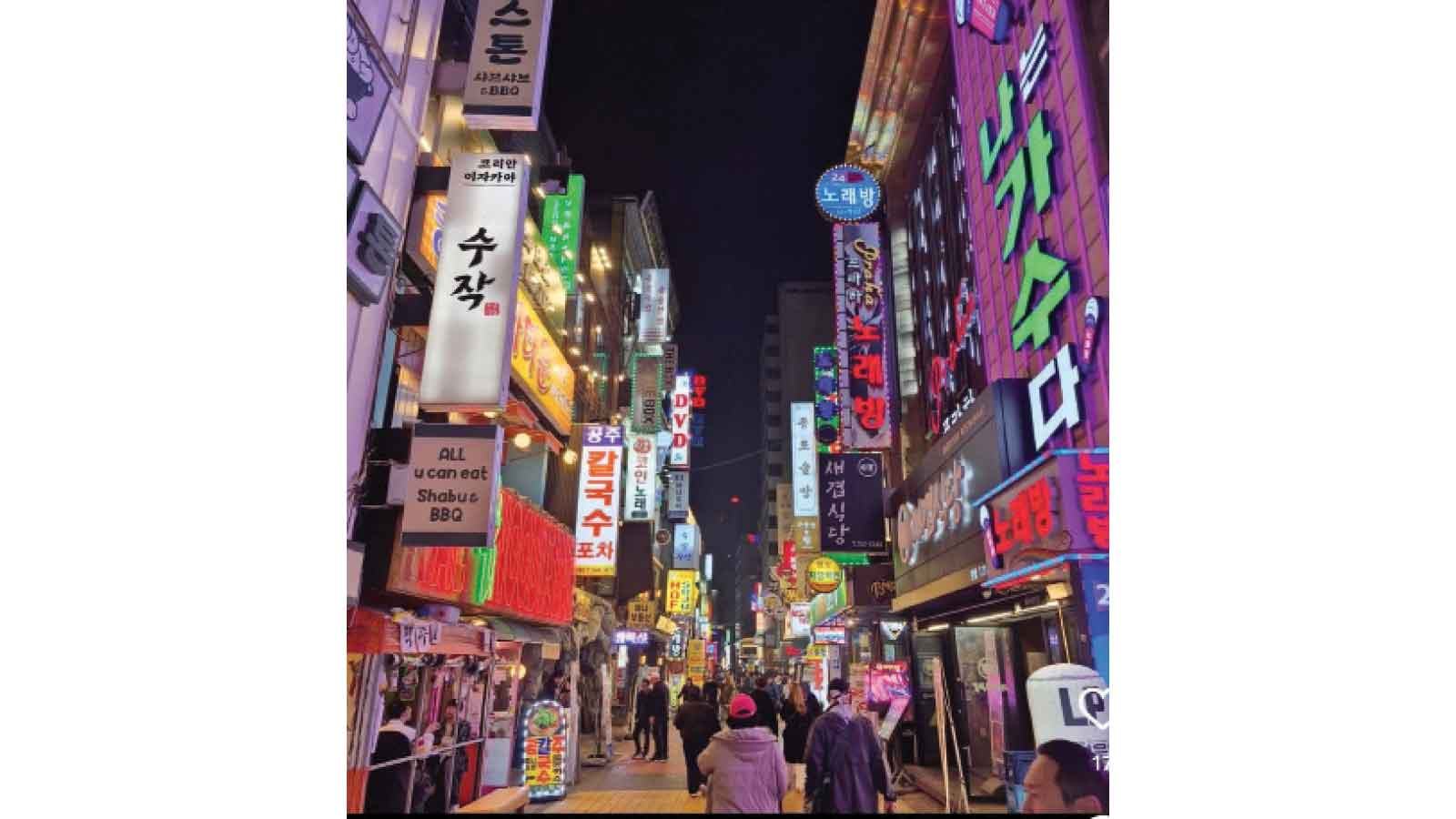
Tafadzwa Zimoyo recently in SOUTH KOREA
FOR years, South Korea existed only through my television screen.
I knew it through Netflix marathons, late-night K-dramas, emotional love stories, spectacular skylines, perfectly choreographed K-pop performances and those unforgettable cinematic moments where autumn leaves gently fall along spotless streets.
I thought I knew South Korea.
Then I arrived.
Within minutes of stepping out of Incheon International Airport, I realised television had only shown me the trailer.
The real South Korea was richer, deeper and far more fascinating than any script could capture. Before leaving Zimbabwe, I researched extensively about the country, studying its culture, transport system and way of life.
I downloaded travel applications, translation tools and navigation guides, including Google Translate and Naver Maps, which became my most trusted companion after discovering that Google Maps was not as effective in Korea.
But no amount of preparation could fully capture the South Korea I was about to experience. For 15 unforgettable days, I travelled across South Korea as part of Zimbabwe’s VIP delegation attending the International Youth Fellowship (IYF) World Camp led by Colonel Miniyothabo Baloyi-Chiwenga.
What began as an international assignment became a personal journey through a nation that has mastered the rare art of preserving tradition while confidently racing towards the future.
South Korea was no longer a country I watched but a country I experienced.
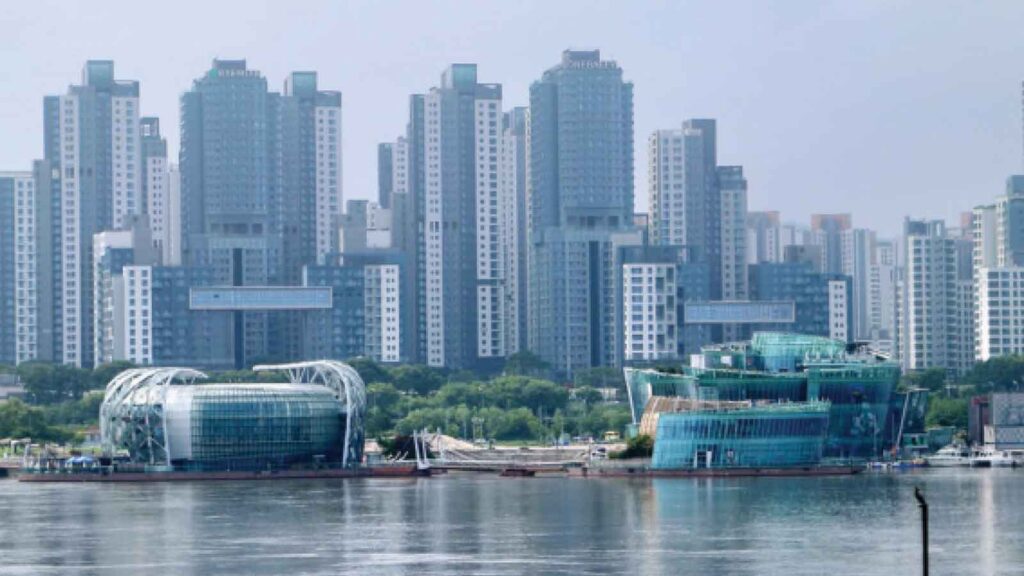
A view from part of Seoul City in South Korea.
Every day felt like walking through a beautifully directed movie, except this time there were no actors, cameras or rehearsed scenes.
It was real life.
The first thing that captures a visitor’s attention is the atmosphere.
South Korea breathes order.
Its roads are immaculate. Rivers reflect magnificent architecture. Mountains quietly embrace bustling cities, while skyscrapers rise proudly as symbols of a nation that refused to remain ordinary.
Everything works.
The trains arrive with remarkable precision. Pedestrians respect traffic rules. Public spaces remain spotless.
Even inside the subway, where thousands travel daily, there is a sense of calm and mutual respect.
It is discipline without force.
As one Korean official, Ji-woo Jung, explained during our visit:
“A nation is not built by governments alone; it is built by citizens who choose discipline every single day.”
Those words stayed with me because in South Korea, development is not only seen in buildings and technology.
It is visible in everyday behaviour.
Perhaps what fascinated me most was Korea’s unapologetic love for its identity.
Unlike many countries where English dominates public spaces, almost every billboard, ATM, shop sign, government notice, advertisement and electronic screen proudly displays Hangul – the Korean language.
English exists, but only where necessary.
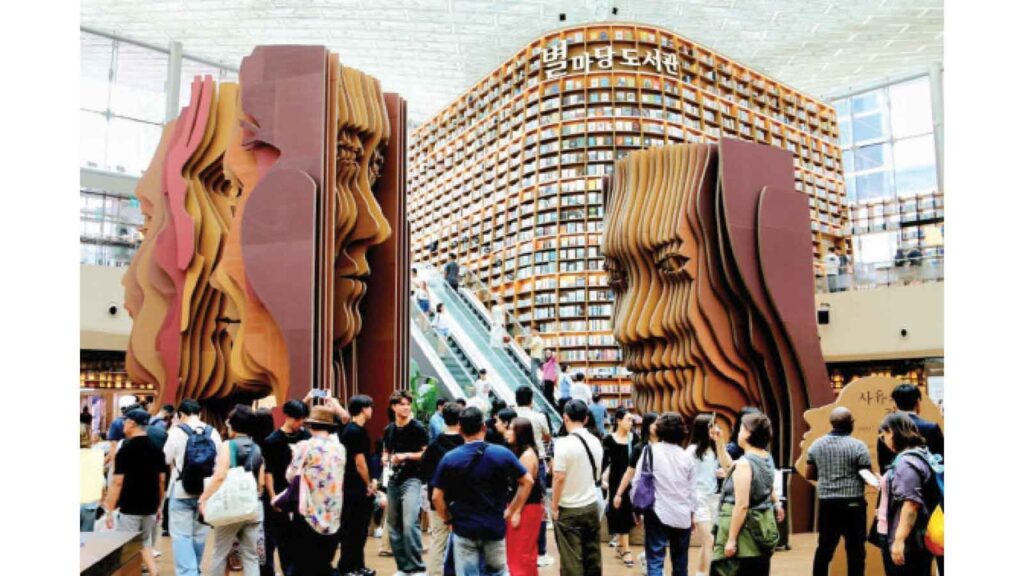
Starfield library with over 70 000 books.
The message is simple: global success does not require cultural surrender.
South Korea speaks Korean first.
A Korean university student proudly told me: “We learn English to communicate with the world, but we live our lives in Korean.”
It was one of the biggest lessons I brought home. A country can embrace the world while still holding tightly onto its roots.
Travelling across South Korea became an adventure on its own.
The famous KTX bullet train is not just transport – it is engineering poetry.
It cuts through mountains, races past landscapes, glides beside rivers and connects cities with astonishing speed and efficiency.
Every station feels like a small airport.
Everything is organised.
Everything has a purpose.
Yet my most memorable train experience came from being lost.
Inside one of Seoul’s enormous railway stations, language suddenly became our greatest challenge. Maps looked confusing. Announcements moved quickly in Korean. We had no idea which platform to use.
Then a young Korean gentleman approached us.
His English was limited.
Our Korean was almost non-existent.
But kindness became our common language. Instead of simply pointing us in the right direction, he stopped whatever he was doing and personally escorted us for almost 40 minutes until we reached our destination.
He smiled, bowed politely and wished us well before disappearing into the crowd.
As he walked away, one thought remained:
“Kindness is the only language that never requires an interpreter.”
That stranger will probably never know how much his small gesture represented the Korean spirit. If architecture tells a nation’s story, then Korea’s bridges speak of limitless ambition.
Crossing some of the country’s massive sea bridges felt almost unreal. Stretching across vast waters, these engineering masterpieces connect cities and islands while offering breathtaking views.
They are more than infrastructure.
They represent a nation constantly building bridges between history and innovation.
Our visit to Shinsegae, recognised among the world’s largest department store complexes, was another unforgettable experience.
It was not simply a shopping centre but an entire world.
Luxury boutiques, restaurants, entertainment spaces, art galleries and technology stores existed under one enormous roof.
Interestingly, despite being passionate about fashion, I discovered that South Korea’s greatest obsession is not clothing.
It is technology.
The latest Samsung phones, smart devices and gadgets are almost cultural symbols.
International luxury brands such as Gucci, Louis Vuitton and Adidas are available, but Korea’s real style statement is innovation.
As someone from the fashion industry, I also discovered another fascinating side of South Korea – the country’s deep relationship with skincare.
While many associate Korean style with clothing, beauty in Korea begins with the skin.
Everywhere you turn, there are skincare shops, beauty clinics and dermatology centres. Whether someone has fair skin, dark skin or any complexion in between, the Korean approach focuses on care, protection and healthy skin.
Nothing prepared me for Hyundai.
Visiting Hyundai Motor Company’s massive Ulsan manufacturing complex felt like entering the future.
Robotic arms moved with incredible precision. Production lines operated like a perfectly rehearsed orchestra. Workers and machines functioned together seamlessly.
We were told that a vehicle is produced approximately every 9.6 seconds.
At Hyundai’s export dock, thousands of finished vehicles waited before being loaded onto ships destined for Europe, Africa and Australia. Watching Korean engineering sail across oceans was unforgettable. It explained why Koreans have such confidence in their own products.
Samsung dominates homes.
Hyundai dominates roads.
Local innovation is celebrated.
One afternoon, I finally encountered something I had admired only through films and geography books — the East Sea, also internationally known as the Sea of Japan.
Standing beside those calm blue waters was surreal. For years, I had watched scenes filmed near Korean coastlines.
Now I was standing inside one.
Some dreams arrive quietly.
This was one of them.
Learning about Korea’s compulsory military service offered another window into the national mindset.
Many young men complete military service after school or during university, with many Koreans viewing it as a period that develops discipline, teamwork, resilience and responsibility. One Korean explained: “Military service teaches us that before serving ourselves, we must first learn to serve our country.”
The values are visible throughout Korean society. Another charming discovery was that South Korea could easily be called the world capital of cute. Dolls hang from handbags. Cartoon characters decorate backpacks. Plush toys appear everywhere.
It is a culture where growing older does not mean abandoning joy.
Yet beneath Korea’s polished exterior lies another reality.
The country has historically recorded one of the highest suicide rates among developed nations, although recent years have seen increased efforts in mental health support and prevention. The platform screen doors found in many subway stations are part of wider safety measures, reminding visitors that even advanced societies face hidden emotional struggles. South Korea’s entertainment industry is another universe.
K-pop has conquered continents. Korean films and dramas dominate global streaming platforms. Walking through Seoul sometimes feels like walking through Hollywood or Nollywood. The country does not just create entertainment.
It exports culture.
Meeting fellow Zimbabweans thriving in Korea became another proud moment.
About 130 Zimbabweans now call South Korea home, many having arrived first as university students before progressing to Master’s degrees and professional careers.
Their ability to speak fluent Korean demonstrated the power of education, determination and adaptability.
No visit would be complete without experiencing Gangnam, the district made famous worldwide by Psy’s global hit Gangnam Style.
I was completely astounded when I stepped into the famous Starfield Library beside the Gangnam Style hands statue.
It felt less like entering a library and more like walking into a futuristic temple of knowledge.

South Korea’s popular Kimchi.
Towering shelves stretched towards the ceiling, holding more than 70 000 books, while visitors freely sat, read and enjoyed the space at no cost.
The breathtaking design showed another beautiful side of Seoul – where knowledge, architecture and culture meet.
The heartbeat of my journey, however, remained the International Youth Fellowship World Camp. With nearly 20 000 participants from around the world, the gathering became a celebration of culture, faith, friendship and leadership. Music filled auditoriums. Traditional dances celebrated diversity. Powerful sermons inspired thousands. But what fascinated me most was Mind Education.
The philosophy is simple: Before changing the world, change your mind.
It teaches gratitude instead of complaint, hope instead of despair and communication instead of conflict. IYF founder Pastor Ock Soo Park shared a message that resonated deeply: “Changing your life begins by changing your heart.”
Thousands embraced the message.
We danced together.
We laughed together.
We exchanged cultures.
Strangers became friends.
And then came the question everyone back home wanted answered.
“How was the food?”
The truth?
The first few days were challenging.
Kimchi required adjustment.
Bibimbap slowly became enjoyable.
Bulgogi quickly became a favourite.
Tea, from barley tea to roasted corn tea, was part of everyday life.
The turning point came when Pastor James Shim and Simon Yang, our Zimbabwean friends, introduced us to Gamjatang — a delicious pork bone soup prepared with potatoes, vegetables and spices, served with rice.
That meal changed everything.
It was comfort in a bowl.
One of Korea’s best-kept secrets is its natural, wholesome cuisine. Built around fresh vegetables, fermented foods, seafood, lean meats and nourishing broths, it is little wonder many people in their 70s and 80s walk with the energy and vitality of those decades younger. My biggest lesson was that sugar and salt are merely additives — you can eat well, and sometimes even thrive, without relying heavily on them.
As my plane lifted above Seoul, I looked down at the city one last time.
I arrived expecting a beautiful country.
I left carrying a lesson.
South Korea’s greatest export is not Samsung. It is not Hyundai.
It is not K-pop.
It is the mindset that ordinary people, united by discipline, education, innovation and purpose, can build something extraordinary.
Fifteen days were never enough.
But they were enough to transform South Korea from a place I watched on screens into a story I will forever carry in my heart.