Online Reporter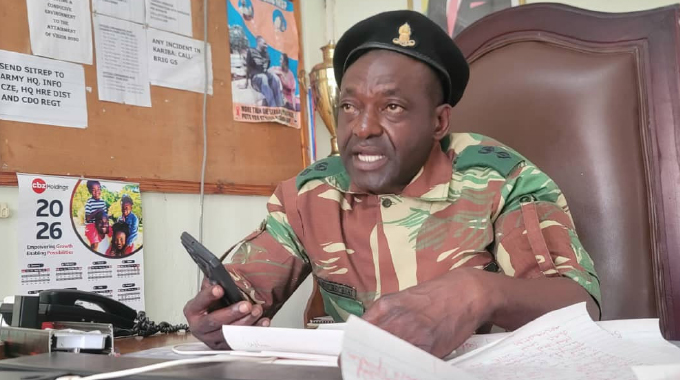
Fatima Bulla-Musakwa, Features Writer
A MONTH after the Mbuya Nehanda Ferry plunged into Lake Kariba’s black waters, the silence that followed has proved louder than the storm that sank it.
For Lieutenant-Colonel Joseph Muchechesi and his 34-member Zimbabwe National Army (ZNA) Boat Regiment crew, the mission is over but the weight of 97 recovered bodies and 77 saved lives remains etched into their memories.
This is not merely a story of disaster. It is a chronicle of courage under crushing pressure, of leadership forged in grief, and of men who dove into darkness so that others might live or at least be found.
August 11 began like any other Defence Forces Day.
Lt-Col Muchechesi woke up expecting to be part of the parades at Nyamhunga Stadium, not a distress call that would redefine duty. At 1.30PM, his phone rang: the RIDA ferry licensed for 90 passengers and five crew, but carrying far more, was capsizing near Long Island in violent winds and churning waves.
What followed was Zimbabwe’s deadliest transport disaster, surpassing the 1991 Nyanga bus crash which claimed the lives of 89 people.
President Mnangagwa declared a State of Disaster, unleashing a national response, but on the water, it fell on Lt-Col Muchechesi to turn chaos into order.
The Mbuya Nehanda Ferry, a Government- operated vessel over 40 years old, had set sail despite storm warnings. It was enroute from Kariba town to Chalala Fishing Camp when it flipped near Long Island.
Lt-Col Muchechesi recounts scenes of panic: people vomiting, crying, blaming the captain, some even threatening to commit suicide as they grappled with the sudden loss of entire families.
The lake fought back. Visibility dropped to less than a metre, even with torches. Divers descended into cold depths. Navigation faltered under harsh weather, boats beached, fatigue set in as the operation stretched from August 11 to September 2.
Submerged fishing nets, debris, and sunken trees trapped divers. Equipment strained. Waves turned swimming with bodies into an insurmountable ordeal.
Crocodiles were the least of their worries. The ferry sank mid-lake, beyond their range. But the
human toll was immediate and visceral. For the rescue crew, the psychological aftershocks linger.
“The day we recovered 31 bodies at once had an impact on my men as they were advocating for a retreat. And then there was the moment when two mothers, each with a baby on her back, were recovered. That scene hit us hard,” said Lt-Col Muchechesi.
Some of his men still cannot stomach beef. Others battle exhaustion that no amount of rest seems to cure. The images of mothers clutching infants and children pulled from submerged compartments replay in their minds like a film they cannot pause.
Fatigue crept in not just from physical exertion but from emotional saturation. Each body recovered was a life interrupted, a father who would not return home, a child who would never grow up. The divers worked in rotations, but even brief respites offered little relief. The lake, vast and unforgiving, seemed to swallow hope as greedily as it swallowed lives.
Lt-Col Muchechesi, a ZNA officer since 1999 and former Presidential Guard, knew the stakes: if the commander fractures, the unit collapses. He became the anchor — calm, clear and composed even as the scale of tragedy became unbearably personal.
His orders were simple but sacred: save lives first, then recover everybody with dignity. He established a control point on Long Island for triage, rotated divers to prevent exhaustion, inspected equipment relentlessly and coordinated with police, medical teams, local fishermen and civilian divers.
He moved among his men not as a distant officer but as a fellow witness to horror. He checked their mental state as closely as their gear. He reminded them that their training had prepared them for this, not for the scale perhaps but for the principle: duty above self, compassion above comfort.
The mission’s soul shifted as hope gave way to solemnity. During rescue, urgency pulsed through every command. During recovery, urgency silenced the air. Lt-Col Muchechesi reminded his team: these were not just bodies, they were sons, daughters, mothers and fathers whose families were waiting for closure.
“Safety drops when people are tired. So I circled boat crews, divers and life savers so that people could rest, rehydrate and feed between shifts. I also regularly inspected my team to check mental and physical prowess,” said Lt-Col Muchechesi.
He delegated without abdicating. He pushed forward without breaking. And he made sure his men leaned on each other because in the face of 97 deaths, no one should carry the weight alone.
The divers worked in sectors, searching boat compartments and lakebed trenches. Life savers focused on surface rescues, pulling survivors from the wreckage before administering first aid.
Boat crews maneuvered through high waves to transport the living to safe islands and the dead to shore. Every movement was deliberate, every decision weighted by the knowledge that failure meant another family left without answers.
In the aftermath, Cabinet approved a relief package: humanitarian aid, infrastructure rebuilding, water safety upgrades, psychosocial support and community disaster training.
The crew receives therapy through ZNA, church support and Kariba’s medical corps but no intervention can fully erase the imprint of retrieving 97 bodies from a lake that refused to give them back easily.
An investigation has pointed to overloading and poor weather as key factors. One official has been arrested and charged with culpable homicide.
Questions linger about why the ferry sailed despite warnings and whether older vessels like the Mbuya Nehanda should have been retired long ago.
For Lt-Col Muchechesi, the operation reinforced his reverence for his divers and for life itself.
“This reinforced my sense of duty and my respect for the diving team. I saw compassion, professionalism and resilience under the worst conditions,” he said.
This is not just a report; it is a testament to the fragility of life on water, the quiet heroism of men who dive into darkness so others do not have to and to the commander who held his team together when the world around them was falling apart.
Read it once for the facts: 77 saved, 97 lost, 22 days of relentless effort, one lake that claimed too much. Read it again for humanity: the trembling hands of survivors, the hollow eyes of rescuers, the commander who refused to let his men drown in grief even as they pulled bodies from the deep.
Because behind every number are stories that refuse to sink. And behind every rescue is a crew still learning how to surface.