


 Online Reporter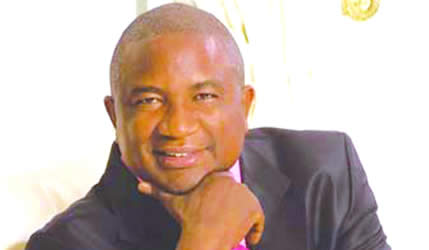
PHILIP CHIYANGWA was reminded he owned land in Chinhoyi not by his own accountants, but by a stranger trying to buy it.
The prospective purchaser had approached the local council to verify ownership and was told the title was already held.
Chiyangwa, when informed, had simply forgotten the parcel existed. It is the kind of detail that sounds like myth — until you understand the scale of what he has quietly built.
Over three decades of economic turbulence that turned Zimbabwe into a case study in hyperinflation, currency collapse and policy instability, Chiyangwa did something almost no one else in his peer group managed to do: He got bigger.
While contemporaries from the black economic empowerment movement of the 1990s saw their businesses erode, he accumulated wealth.
The mechanism was deceptively simple. Land. Lots of it.
And never a high-interest loan to finance it.
“The cornerstone of enduring wealth was, and remains, land,” he has said.
His strategy — acquiring vast tracts across every major town and sweating those assets to fund the next project — is not novel in theory.
In practice, in Zimbabwe, it required a discipline that most operators lacked: the willingness to grow slowly and avoid the leverage trap that claimed so many of his rivals.
From Chegutu to the
corporate summit
The origin is foundational, and Chiyangwa tells it without embarrassment. He grew up on the streets of Chegutu, selling vegetables.
His mother taught him the economics of survival — hustle, pivot, persist.
His father, a teacher, provided the counterweight: discipline, integrity, the long view.
It was this unusual combination — street-forged pragmatism married to an ethical framework — that he credits as his “unfair advantage”.
His first national visibility came not through property, but through spectacle.
He brought Michael Jackson to Zimbabwe.
He promoted WWE professional wrestling.
In boxing, his stable of fighters gave the sport a commercial infrastructure it had not previously had in the country, with Proud “Kilimanjaro” Chinembiri among the names he elevated.
These ventures were not distractions from business — they were the business of visibility, of building a network and a profile that would later prove invaluable.
In football administration, he rose through local, regional and continental structures, eventually playing a pivotal role in the removal of longtime CAF President Issa Hayatou and the installation of Dr Patrice Motsepe.
That FIFA President Gianni Infantino attended Chiyangwa’s birthday celebration in Harare, and that UEFA President Aleksander Čeferin made a family visit to Zimbabwe at his facilitation, speaks to a depth of personal diplomacy that transcends formal office.
The property bank
By the time his contemporaries were navigating the wreckage of Zimbabwe’s financial sector, Chiyangwa had already repositioned himself.
His early strategic investments — second-largest shareholder in the country’s largest bank, second-largest in its leading cement company, co-founder of a telecommunications operator that would reshape the sector, significant stakes in the largest listed agricultural entity — were not permanent destinations.
They were staging posts.
The enduring play was always property.
And now that portfolio is entering what appears to be its final, most ambitious phase.
The Pomona Industrial Park is designed to become Zimbabwe’s largest manufacturing and logistics hub.
The Nyore Nyore Housing Project — underpinned by a dedicated banking model to provide long-term, low-interest mortgages — aims to address Harare’s chronic residential backlog.
In Victoria Falls, a hotel and leisure complex is in development.
Shopping malls in Waterfalls, Bluhill and Highlands dot the capital’s prime corridors.
A world-class market, conceived in the mould of Dubai’s trading hubs, is on the drawing board.
He has also turned his attention to rural Zimbabwe, moving away from conventional growth points in favour of building sophisticated urban replicas in rural areas — a pilot earmarked for Murombedzi. The alignment with the Government’s “leaving no one and no place behind” agenda is explicit and, for a businessman of his stature, strategically sensible.
The listing question
The most consequential development on Chiyangwa’s horizon is also the one that will finally subject his empire to independent scrutiny. The group is transitioning from a private, family-held structure towards a listing on the Victoria Falls Stock Exchange — a USD-denominated bourse — with its residential infrastructure portfolio, centred on the 250 000-unit housing target, as the anchor asset.
The pilot phase has already been launched in Manyame. The group already has an established presence on the Zimbabwe Stock Exchange, where it stewards one of the country’s largest engineering firms.
The VFEX move is a different proposition: It invites institutional capital, imposes governance requirements, and — critically — provides a market-verified valuation of assets that have, until now, existed largely beyond public audit.
This is, in several respects, the most interesting thing Chiyangwa has done. It is an acknowledgment that the next phase of growth cannot be funded by sweating land alone. It requires cheap equity capital, and cheap equity capital requires governance.
For a man who has operated largely on his own terms for three decades, that is a meaningful concession — and a mature one.
It is also the transition that transforms the empire from a personal legacy into an institution.
“Moving away from a one-man show to a structured institution built for the next generation,” as those close to the restructuring describe it.
Whether the market ultimately validates the scale of what he has built is the open question.
But the willingness to ask it publicly, at this stage, is itself a statement of confidence.
Verdict
Philip Chiyangwa is not a simple story. The indigenisation battles he helped ignite in the 1990s were contentious, and the political relationships that enabled his rise are part of a complex landscape that any full accounting must engage with. He is also a figure who has, at times, let the performance of wealth do the work of substantiating it — a tendency the VFEX process will, by design, bring to an end.
What is not in dispute is the durability of what he has constructed. In a country where economic shocks have been more the rule than exception, a property portfolio of this scale — built without high-interest debt, expanded across four decades, now moving towards institutional form — is a genuine achievement.
The forgotten parcel in Chinhoyi is the punchline, but it is also the proof. You do not forget land unless you have a great deal of it.
Against the backdrop of Zimbabwe’s housing deficit and institutional capital searches for credible local partners, Chiyangwa’s timing — if the VFEX listing delivers — may prove to be his most astute move yet. Not the most dramatic. Not the most flamboyant. But quite possibly the most important.
The above is a Megafest editorial published after Dr Philip Chiyangwa was awarded the Megafest 2025 Businessman of the Year accolade.



