Online Reporter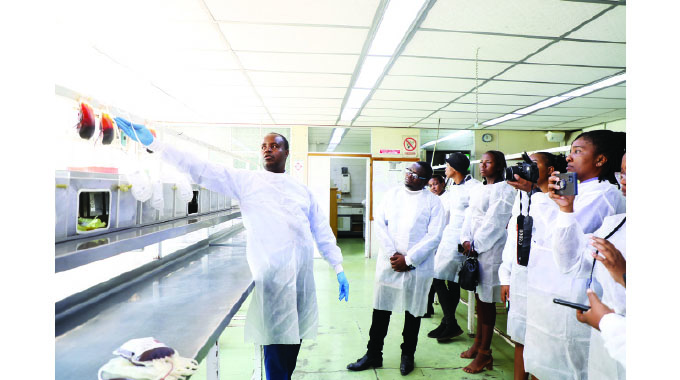
Andile Tshuma, Features Writer
EVERY four months, without fail, Ms Kim Mukwa walks into the National Blood Service Zimbabwe (NBSZ) donation centre in Bulawayo. She rolls up her sleeve, settles into the donor chair, and watches the crimson flow that, to her, has become second nature.
For her, donating blood is not just a routine. It’s a lifeline.
As a blood group O donor, Ms Mukwa knows the urgency of her gift. Group O blood is the universal donor type, often used in emergencies when there’s no time to match patients’ blood.
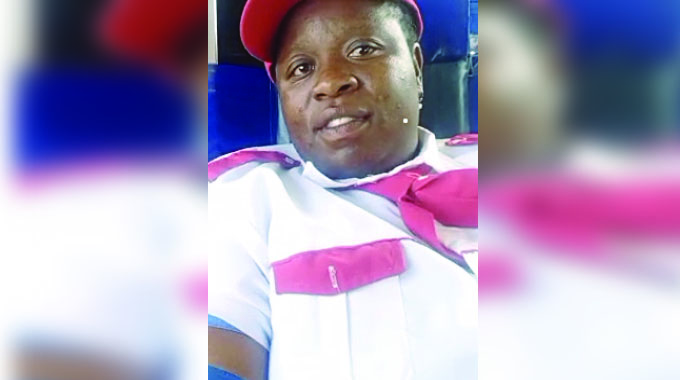
“I know this pint can mean the difference between life and death,” she says softly. That knowledge has made me come back, year after year,” she says.
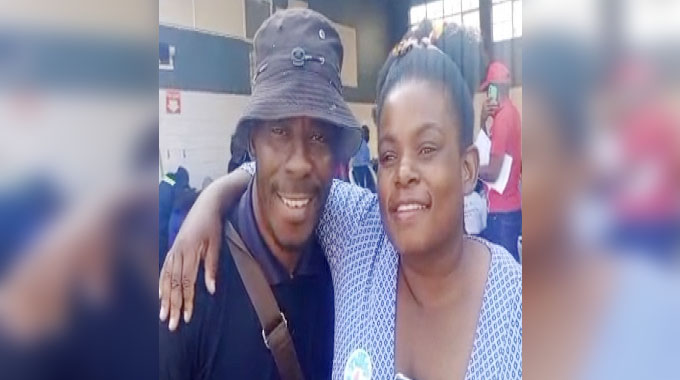
Her journey has become a family affair. Her husband, Mr Sam Maleti, once reluctant and burdened by the myths and misconceptions surrounding blood donation, changed his mind after watching her live a healthy, vibrant life while quietly saving the lives of strangers. Now, he proudly joins her.
“It’s the best decision I ever made,” he says.
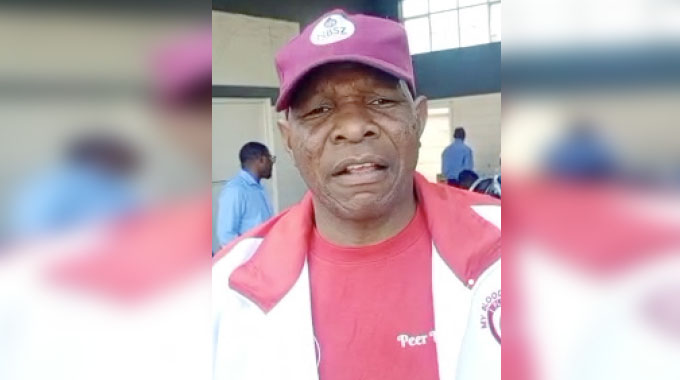
“I may never meet the people I’m giving to, but knowing someone out there gets another chance at life… it’s restored my faith in humanity,” said Mr Maleti.
The couple even describes donating together as something that has strengthened their bond and deepened their love.
They call it their life-saving mission, a shared commitment that keeps them healthy, accountable and connected to a purpose bigger than themselves.
But behind the couple’s personal devotion lies a national challenge.
Most Zimbabweans are introduced to blood donation at high school, where NBSZ campaigns have long thrived. Yet, many of these youthful donors lapse as they grow older.
According to a 2022 study published in the Open Public Health Journal, over 70 percent of Zimbabwe’s donated blood comes from people under the age of 40.
However, the same study found that 56,9 percent of first-time donors stopped giving within four years, leaving dangerous gaps in supply.
This is ironic because, as NBSZ officials point out, it is often older citizens who most need blood — whether for surgery, cancer treatment, or complications during childbirth.
“We are grateful for the commitment of young people, but we must do more to retain them and recruit older donors,” explains Mr Sifundo Ngwenya, NBSZ Southern Region Co-ordinator.
“Sometimes our reserves fall to just a few days’ supply.
That is a very dangerous situation,” he added.
Every pint has a story behind it, and every donor, a motivation.
For Ms Nothabo Ndlovu, it’s the quiet joy of knowing she might save a life. “It’s fulfilling,” she says.
“To think that a child, a mother or a stranger somewhere gets another tomorrow because of me, it makes me proud.”
For Ms Hasty Manjengwa, professional experience drives her giving.
Having seen emergencies and dangerous situations first-hand in her line of work, she knows how vital it is to have blood available.
“Some occupations are dangerous, you can be well one moment and in a critical situation in a split second.
Seeing how life is so unpredictable makes me want to make a contribution to give a lifeline to whoever is in need,” she reflects.
For veteran donor Mr Nkululeko Moyo, who has been giving for more than 20 years, the message is simpler. “Zimbabwe’s blood supply depends on ordinary citizens like us.
If we don’t give, there will be nothing when we need it.”
Others admit that fear is what brings them back.
Mr Rodwell Zhou confesses that the thought of one day needing blood himself and finding none, drives him to keep donating.
“I’d rather make sure it’s there now, than regret later,” he says.
Blood is needed far beyond the obvious emergencies. Red cells restore strength in trauma victims.
Platelets keep cancer patients alive during chemotherapy.
Plasma helps those with severe burns or liver disease.
Although Zimbabweans give blood freely, patients often find themselves paying for transfusions, a reality that has sparked debate for years.
The charges, health officials say, are not for the blood itself but for the processes required to make it safe and available.
“Each pint of blood collected by the National Blood Service Zimbabwe (NBSZ) undergoes extensive screening for infections such as HIV, hepatitis and syphilis.
It is then separated into components like red cells, plasma and platelets, stored under strict conditions, and distributed through a cold-chain system to hospitals across the country.
These steps demand costly laboratory reagents, specialised equipment, fuel and trained personnel,” said Mr Ngwenya.
He said because of these expenses, patients are billed a cost-recovery fee when they receive blood.
Critics, however, argue that this system penalises people twice, first when they donate blood for free, and again when they must pay for it in hospitals.
Civil society organisations and patient advocacy groups have long called for full Government subsidies to ensure no life is lost simply because a patient cannot afford blood.
There have been reforms in recent years.
Since 2018, Government subsidies have reduced the burden, particularly in public hospitals.
Children under five, expectant mothers and emergency cases now receive blood free of charge in state facilities.
However, adult patients, especially those requiring multiple transfusions or receiving care in private hospitals, often continue to face prohibitive costs.
The NBSZ has in recent campaigns partnered with some co-operates, who incentivise donors and offer gifts of value, not to pay for donated blood, but to appreciate the time and inconvenience in donating blood.
In one of the drives, NBSZ partnered with Redan petroleum and each donor was gifted with a fuel coupon of five litres.
The turnout was bigger and there were more referrals.
“We attended to more than 430 walk-ins and managed to successfully bleed 398. This is a very good number and we hope to beat our targets in future campaigns,” said Mr Ngwenya.
A single car accident victim can require up to 50 units of blood.
A mother suffering postpartum hemorrhage may need several transfusions to survive.
Premature babies often rely on blood support in neonatal units.
Yet, as Mr Ngwenya points out, “Our shelves don’t always match the demand.
We can be one incident away from a serious crisis, and we need every healthy and eligible citizen to help stock our blood bank.”
The call to donate is not just medical.
It is deeply human.
For many, it is an act of faith, a gesture of community and a reminder of shared fragility.
Ms Mukwa and Mr Maleti see it that way.
“It’s not just blood,” says Ms Mukwa. “It’s hope, it’s family, it’s life.”
Her husband nods. “In giving, we receive too: strength, unity and purpose.”
The story of blood transfusion is as dramatic as it is lifesaving.
The first documented attempts date back to the 17th century, when doctors in Europe transfused animal blood into humans, often with fatal results.
It wasn’t until 1901 that Austrian scientist Karl Landsteiner discovered the ABO blood groups, a breakthrough that earned him a Nobel Prize and laid the foundation for safe transfusions.
Over the decades, advances such as refrigeration, anticoagulants and later the Rh factor test transformed transfusion medicine from a dangerous gamble into a routine part of modern healthcare.
Despite this history of progress, fear and misinformation continue to shape attitudes towards blood donation.
In many African societies, blood has deep cultural and spiritual symbolism, sometimes linked to life force or witchcraft.
Some people worry that donating blood will make them weak, infertile, or shorten their lifespan. Others mistrust institutions, fearing that their blood might be sold for profit or misused.
These myths, passed down through generations, make it harder for services like NBSZ to maintain consistent donor numbers.
Even where awareness campaigns have dispelled myths, personal fears linger.
Needles and the sight of blood can trigger anxiety, fainting, or outright refusal to donate. Others hesitate because they remember the mild dizziness or fatigue that sometimes follows donation. In countries where economic hardship forces people to prioritise daily survival, giving time and energy to donate blood may feel like a luxury.
Overcoming these barriers requires not only education but also empathy, meeting people where they are, respecting their fears and offering reassurance that every pint truly counts.
As Zimbabwe grapples with rising demand and fluctuating supply, the quiet heroes of blood donation, teachers, artists, parents, students — keep the nation’s heart beating.
The NBSZ urges all eligible citizens to step forward. If you are healthy, over 18 and weigh more than 50kg, your pint could be someone’s tomorrow.
Blood cannot be manufactured.
It cannot be imported easily.
It can only come from one place: us.
And in that truth lies both the challenge and the opportunity.
Because sometimes, saving a life takes only 15 minutes and a willing heart.