Online Reporter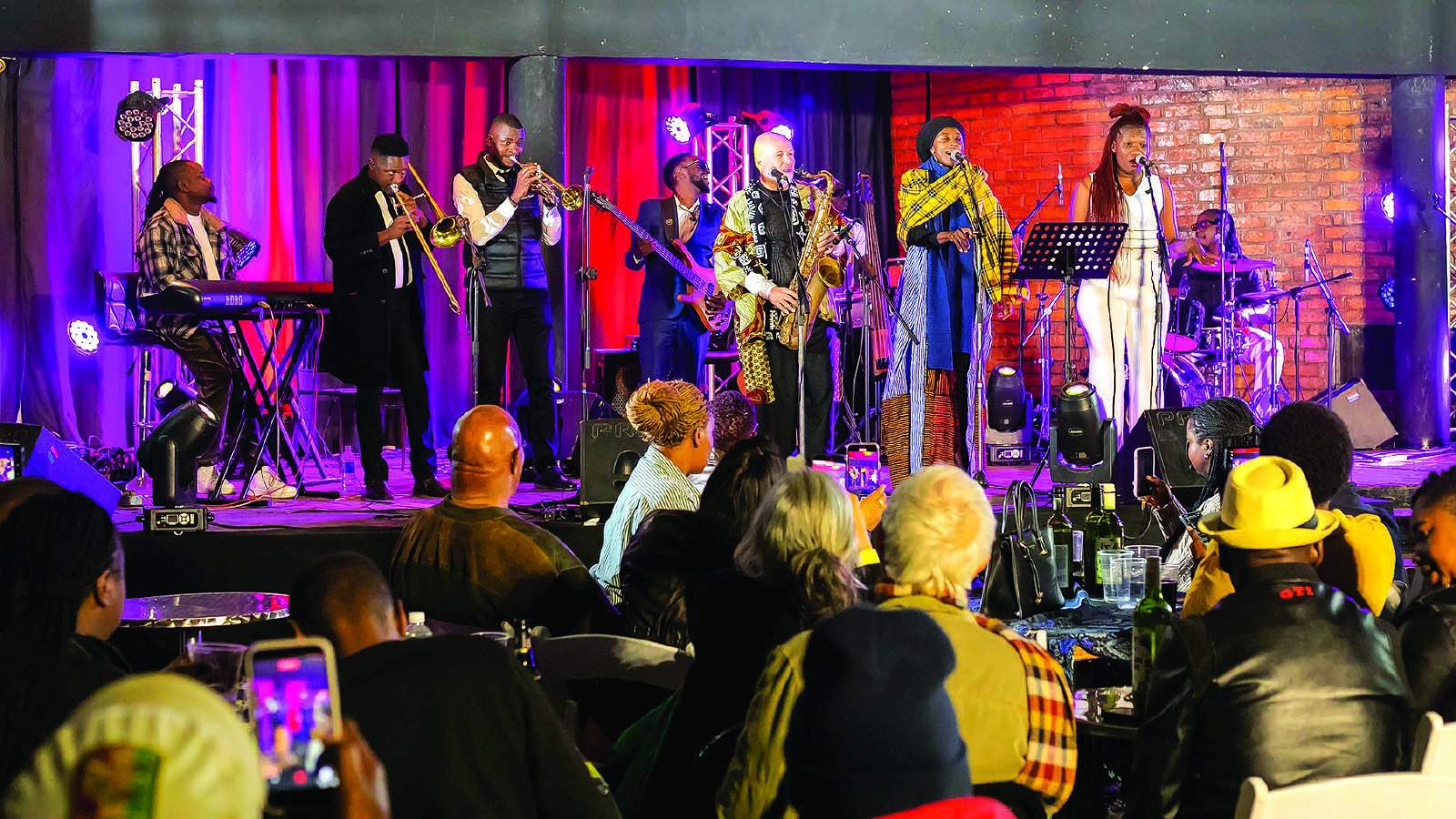
Trust Khosa
Zimpapers Arts and Entertainment Hub
RAW diamonds are rare and this is precisely why they fetch a fortune on the market.
It, however, takes a consummate expert to transform the diamonds into gems.
This also holds true of talent, which necessarily needs to be refined.
In showbiz, refinement often comes in the form of mentorship, grooming and exposure.
This was the case with superstar Oliver “Tuku” Mtukudzi, whose journey to stardom would likely have been incomplete without the input of legendary South African saxophonist Steve Dyer.
While acknowledging that Tuku was immensely talented, the decorated producer, sound engineer and multi-instrumentalist, however, indicated that the Zimbabwean legend needed an extra boost to realise his full potential.
Dyer, a close family friend of Mtukudzi and his children Selmor, Sandra and Samantha, spoke glowingly about the former Black Spirits founder, whom he first met in Zimbabwe in the 1980s.
Their chemistry, both in and out of the studio, was well-documented.
Their lifelong artistic partnership proved to be a game-changer, with Dyer eventually producing several of Tuku’s most successful albums, including the groundbreaking “Tuku Music” (1998).
Reflecting on their collaboration, Dyer told the Zimpapers Arts and Entertainment Hub in Harare during a jazz show that he only shared showbiz tips with Tuku, insisting he does not want to take all the credit for transforming the late icon’s career.
“In life, we learn from each other,” the flutist said.
“I think maybe what I helped Tuku with was the staging of shows — getting it so that the run of the show looks good, is presented well; and, in terms of recording, we tried to record sounding the best as possible. So, it was about getting professionalised, I think, because Tuku had the voice, he had the songs and he had everything. He knew how to say things beautifully.”
Dyer recalled that their connection began when they recorded at the same studio in Zimbabwe, Record and Tape Promotions (RTP).
“My first encounter with him was at RTP, where I recorded my first album, ‘Southern Freeway’. We were recording at the same studio and Tuku came to me and said he liked my music. From there, we just clicked.”
Their friendship grew in the late 1990s when they were both managed by Debbie Metcalfe.
“We shared a lot of memories together and I helped record the album ‘Tuku Music’. When we recorded Tuku Music, we had no idea it would open doors for him,” Dyer said.
For all he did — including recording Tuku’s breakthrough album — Dyer insisted that it was simply Tuku’s time to shine.
“I cannot say I took him internationally, but he took himself internationally. The doors opened for him and he fully utilised his breakthrough,” said Dyer, who commanded a huge following after living in Zimbabwe for years during the apartheid era.
Asked what local artistes should do to emulate Tuku, Dyer was blunt.
“What I like about Zimbabwean artistes is that they are hard workers. They put effort into everything they do. In music, you need to keep your head up when things do not seem to be working. It takes a lot of hard work and discipline. The second piece of advice is to be true to yourself and where you come from,” he said, referencing Tuku’s journey to the top.
Commenting on Zimbabwe’s new talent destined for stardom, Dyer firmly believes that Tuku set the trend.
“Locally, I know there is Winky (D) and Jah Prayzah, but Tendai (Manatsa) and Selmor are equally talented. It is even more touching when you see Selmor and Sandra dancing together — you can easily see images of Tuku on the dance floor.”
Dyer, who has been working with his son Bokani in the same way Tuku collaborated with the late Sam, highlighted the importance of fathers bonding with their children.
“For me, Bokani is my son, but we are more than friends now since we are working together. We spend much of our time together. He is a great kid and a great friend,” he said.
He also praised Hope Masike, with whom he has collaborated on several projects.
“In Hope Masike, I see a beacon of light and that is why I always approach her for projects. She is very talented — just like Selmor, Nelly Carmen and many others. It is difficult for me to know all the talented musicians because I haven’t had the opportunity to work with them.”
According to his official biography, Dyer was born in Pietermaritzburg, South Africa, in 1960.
He was exposed to Western classical music by his parents at a young age, while also absorbing Maskandi musicians playing on the streets and the sounds of the Soul Brothers and “kwela” music on the radio.
He began composing music at the age of 10 and completed a Bachelor of Music degree in Performance at the University of Natal in 1981, majoring in the saxophone and the flute.
Refusing military conscription into the South African Defence Force (SADF), he left Mzansi and lived in Botswana for five years.
During this time, he encountered the sounds of Hugh Masekela and Jonas Gwangwa.
He helped form “Shakawe”, led by Gwangwa, and played in the band for three years, immersing himself in the mbaqanga tradition while also listening to saxophonists such as John Coltrane and Winston Mankunku.
In 1988, after a stint in the United Kingdom, he settled in Zimbabwe, where he formed the group Southern Freeway.
Two albums were produced, namely “Southern Freeway” (1989) and “Indlela yenkululeko” (1992).
Here, he encountered mbira-based Shona music and Nguni-based traditions, playing with musicians rooted in Ndebele culture.
In 1990, he joined the Amandla cultural ensemble of the ANC on a seven-week tour of Japan.
With democracy on the horizon in 1993, he returned to South Africa.
After briefly studying again at the University of Natal, he relocated to Johannesburg and directed the Soweto String Quartet’s live performances, which toured Europe and Australia/New Zealand.
He conceptualised, directed and performed with Mahube — the first major Southern African music collaboration — in 1997.
Mahube toured Southern Africa and Europe, recording two albums — “Music from Southern Africa” (1998), which received a SAMA nomination, and “Qhubeka”, (2003) which won a Kora award.
Between 1998 and 2002, Steve Dyer produced six Oliver Mtukudzi albums, including “Tuku Music”.
Now back in Harare for a reconnection gig with fans, Dyer remains a committed musical figure with plenty to offer on both sides of the Limpopo.
His deep connection with Zimbabweans, brokered by the late Tuku, has left an indelible mark.