Vusumuzi Dube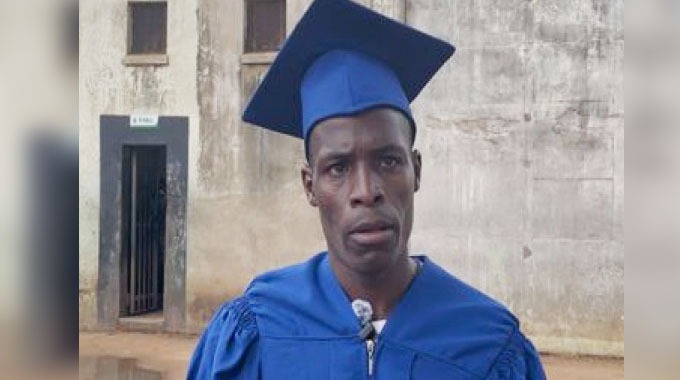
Bruce Ndlovu, Sunday Life Reporter
WHEN Assurance Moyo (32) stood before the country’s Supreme Court judges, they had a simple request for him.
Before his appearance that day, Moyo, serving a life sentence for the murder of his friend, had tried to approach the Supreme Court before. He had been rebuffed and told that there was no need to have another look at his case.
After finally gaining an audience with some of the country’s most respected judicial minds, they were giving him one chance to redeem himself.
Convicted and sentenced to life in prison in 2016 for the murder of his friend, Nhlalo Ndlovu, the country’s astute legal minds were now in agreement with Moyo that he had repented from his past behaviour and was really serious about turning over a new leaf in life.
They just had one request: Moyo had to give himself a sentence that he thought was satisfactory for the grievous crime that he committed.
Without a lawyer on his side and confronted with the enormity of the task of trying to please legal fundis who held his fate in their hands, Moyo settled for 20 years behind bars.
“I was called to the Supreme Court, which is something that rarely happens, especially if one doesn’t even have a lawyer,” he told Sunday Life in an interview at Khami Prison recently.
“When I went there, I believe that Jesus was my lawyer. I had been sentenced to spend the rest of my days in this place. When I was called, I didn’t ask for a short sentence because I knew that I had committed the crime. I knew this was something that I did, but all I needed was another chance. That’s
why I asked to be sentenced to 20 years in prison. They agreed to this and as it is now, I am serving the last four years of my 20-year sentence.”
The decision by the Supreme Court to reduce Moyo’s sentence was the end of a journey that had begun in 2016, when he and Patrick Matikiti were convicted of the murder of Ndlovu, a member of the Zimbabwe Republic Police.
Although Moyo confessed to having delivered the killing blows with a knuckle duster, Matikiti was singled out as the mastermind behind the crime and was sentenced to death.
The two, who dumped the police inspector’s body along Khami Road after his murder, also robbed him of a car, $200, a laptop and two smartphones during the crime carried out in December 2014.
That incident was the culmination of bad decisions that Moyo had been making since he left his rural home in Tsholotsho as a young pupil intent on furthering his studies in the bright lights of Bulawayo.
“At the primary school level, I was still living in rural areas. At the time, my parents said that if I did well, I would go to a boarding school for my secondary education. However, I ended up at Luveve High School, which was also a good experience. What I didn’t bargain for was that the change of environment would also bring a change in mindset. I started befriending a lot of bad people and although I reached O-level, I didn’t pass any of the subjects because of the path that I had decided to take in life,” he said.
Moyo said after his conviction, he had initially given up on life, as he thought all hope was lost. However, through the Zimbabwe Prisons and Correctional Services’ rehabilitative programmes, he learned that redemption was possible for even those convicted of crimes as gruesome as murder.
“I was convicted to life in prison for a murder charge. It was the correct charge because I did commit the crime.
“However, through the prison’s rehabilitation services, I started taking part in activities to turn around my life. This included going back to class because when I was arrested, I didn’t have any academic qualifications. I passed my O-levels, and I am able to look forward to my life. I have always thought that prison is a terrible place that has killed my dreams, but when I look at it holistically, I can also acknowledge that it has revived it,” he said.
Moyo said while he has turned his life around, he still desires a chance to make things right with both his family and the kin of the man that he murdered.
“It has been hard to seek forgiveness for what I did from the other family because, at the time when I was convicted, I told my parents that I had not committed this crime. So, before I even try to seek forgiveness from the other family, I need a chance to sit down with my parents, so I can tell them what happened and ask for their forgiveness first.”
At Khami, Moyo has become a jack of all trades who has mastered most of them. An astute musician who is part of a group at the prison, he has also served as a Mathematics teacher for other inmates, and he is also studying to become an auto mechanic.
“In the next four years, I want to strengthen my relationship with the Lord and I also want to transform the lives of my fellow inmates. I want to help them choose a better way of life, through Christ, while they are behind bars. On a personal level, I hope to finish my studies because, at the moment, I am studying to become an auto mechanic. I have been doing the theoretical part of the programme and the prison authorities have promised to take me to the workshop so I can start on the practical side of my studies,” he said.
Last week, Moyo was part of a cohort of inmates who graduated from a theology course offered by Teach Every Nation, a bible training organisation that is intent on helping inmates like him turn their lives around.
Dumisani Nkomo, the founder of Jesus Behind Bars, an organisation that helps facilitate some of the programmes helping inmates at Khami, said the likes of Moyo were a testament to the fact that the life of any prisoner could be turned around.
Nkomo (56) served a combined 14 years for different crimes at different prisons, including Khami.
“It takes a community to rehabilitate a prisoner. That’s the reason why jails are there. These are not places of torture but rehabilitation.
“Prison authorities are doing everything to help these inmates and we are part of those programmes. I know when some inmates go in, they come out of there telling people lies because they would have failed to take part in programmes that have been put in place to help them rehabilitate,” said Nkomo.
“There are a lot of people who criticise the conditions in prison, but I don’t agree with them. These are people that are not helping government in its efforts yet in reality, our prisons require a lot of things to enable inmates to undergo proper rehabilitation.”


 Online Reporter