Online Reporter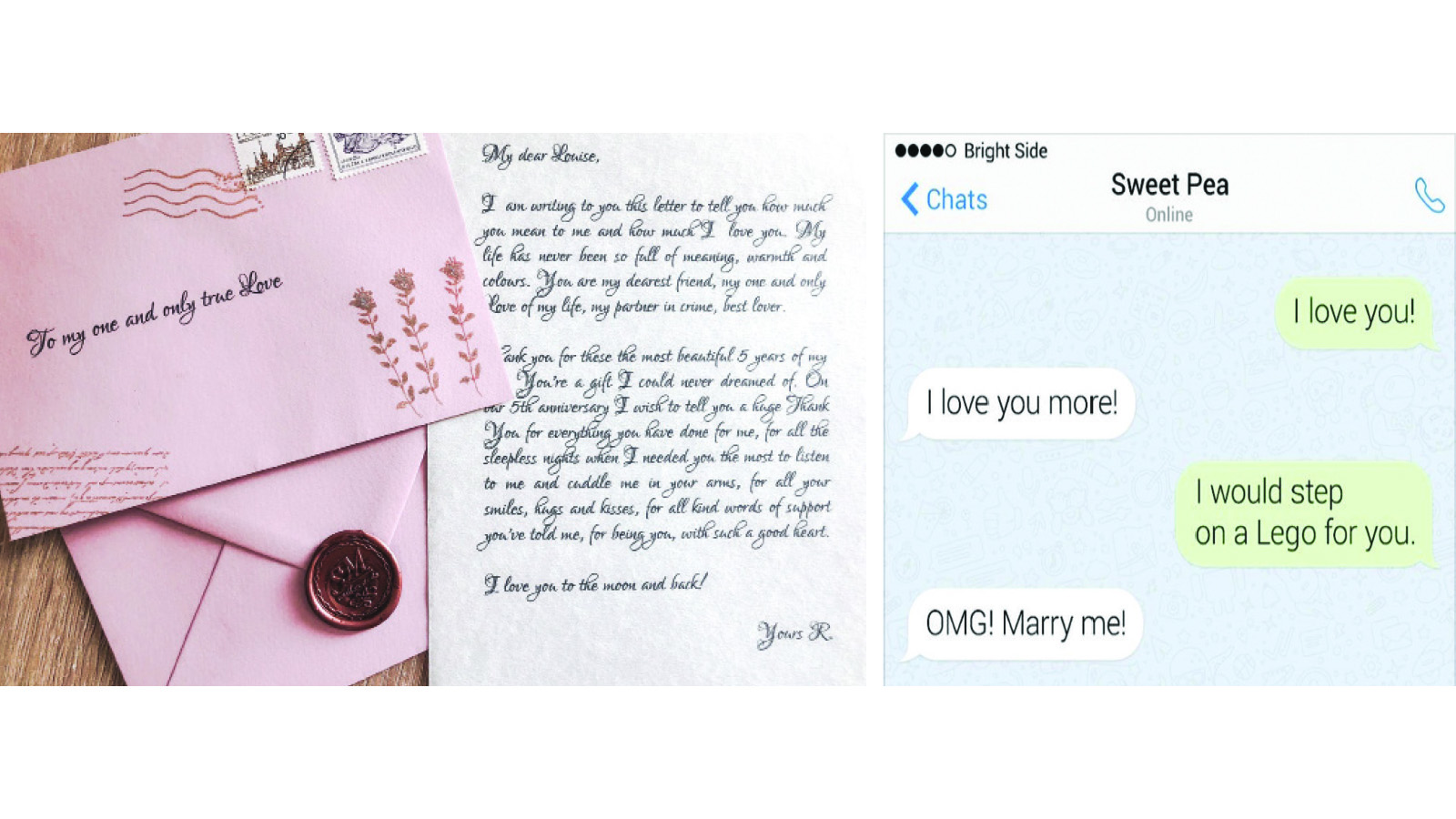
Elliot Ziwira-Features and Supplements Editor
Five bell sounds once defined our mornings and afternoons in the hood; the milkman’s gentle chime, the baker’s rhythmic clang, the ice-cream man’s teasing tinkle, the bottle collector’s distant jingle and the postman’s proud ring.
Each sound shaped our dreams and sense of belonging. Being more than calls to action, the bells were cues in the theatre of our growing up in the ghetto. Yet of all these sounds, none stirred the heart quite like the postman’s bell.
His arrival carried promise, joy, sorrow, longing, and closure – all sealed in the crisp fold of an envelope.
The postman was the invisible thread that wove our emotions together across distances, connecting hearts with the permanence of ink and paper in which words were currency.
As Zimbabwe joined the globe in commemorating World Post Day last week (October 9), perhaps it is time to pause the relentless scrolling of WhatsApp statuses and Instagram reels, and return, even for a moment, to that forgotten romance of the letter; to the age when affection was handwritten, and originality was the soul of love.
In those days, we waited for the postman the way children now wait for Wi-Fi. His bicycle bell was music, announcing the arrival of stories from beyond, including a cousin’s success in the city, a friend’s sorrow in the village, or that most treasured of all: a love letter.
Oh gosh, those letters – the missives!
Folded with care, perfumed with devotion, and addressed in trembling handwriting that betrayed both excitement and fear, the letter was an embodiment of affection.
The first lines always mattered:
“Beloved, Hope this missive finds you well . . .”
Those words carried more warmth than a thousand emojis ever could. They had weight, they had rhythm, and they breathed.
There was patience in the exchange, which was emblazoned in the anticipation of reply, the joy of receiving, and the poetry of waiting.
Dear God, waiting was a virtue! Days could turn into weeks, or even months with none of the bells we were accustomed to bringing any good news. Yet, we kept on waiting for the postman’s delighted ring.
Today, affection is instant, disposable, edited, and deleted before it even matures. Back then, love took time to travel, and so it deepened as it waited.
Letters were our mirrors, reflecting our inner worlds. The sender’s mood bled into the paper — a smudge of ink from a trembling hand, a pressed flower from a hopeful heart, and a scent of lotion hinting at intimacy.
You could tell the personality behind the handwriting; the confident loops, the nervous cursive, and the deliberate calligraphy, making each letter a fingerprint of love.
Now, affection has been criminalised by convenience. Expression is filtered, scheduled, and shared publicly. Originality is trapped behind templates, with the same good morning memes and the same “sorry for your loss” messages copied and pasted into group chats.
In this digital bazaar of borrowed emotions, where artificial intelligence writes apologies and filters manufacture affection, the art of the letter feels like rebellion.
Whereas in the past love was intimately personal, now it can be copied and forwarded.
Social media has taught us to perform intimacy. Every “I miss you” is followed by a status update; every heartbreak, by a cryptic post aimed at invisible audiences.
But letters demanded courage. They required ownership. You could not forward your feelings; you had to feel them first.
Those who loved through ink knew that permanence was part of the contract. Once written, words could not be unsent. You lived with them; proudly or regretfully, but always honestly.
Even heartbreaks had dignity.
A “Dear Elliot” letter could cut through the heart, but it was never casual. Pain was handwritten, not screenshot.
There were comic moments too when the missives were misdelivered!
Who can forget when the letter meant for Beautiful Lin, of the soft eyes and gentle laugh, landed in the hands of Sweet Becky, whose curiosity outweighed her discretion?
Or when a schoolboy’s passionate note to Ruvimbo, of the dreamy eyes and Geisha’s stride, inquiring of how she was “pulling the wagons of life”, found its way to the headmaster’s office, or papa’s hands, prompting a sermon on morality during assembly or mealtimes?
Yet even in those mix-ups, love carried laughter. It was always innocent mischief, not malice. There was humanity in our errors – a warmth missing in today’s cold algorithms that auto-correct even our confessions.
And when the right letter finally arrived, the world paused, and the heart skipped a beat.
Leonard Dembo’s voice would hum in the background: “Tsamba yako chikomana iyi . . .”
You would inwardly respond: “Maita zvenyu vapostman,” in the legendary crooner’s voice in “Sharai”.
Then the music in your heart would switch to the lines: “Akandinyorera tsamba yainaka/Achindiyemera nezverudo/Vemajerasi ndezverudo . . .” (the band eludes my memory but it must be New Black Montana) as you opened the missive.
It was the anthem of hope renewed, and of promises inked in permanence.
In those days, the letter was a ritual and the writing desk a sacred altar. We chose our words with reverence because they lasted. They carried the weight of dreams.
We began with Dearest, Beloved, My Chocolate, Ruva remwoyo wangu; salutations soaked in tenderness. We signed off with Forever Yours, Tormented Admirer, or Cheerio Babe: signatures that revealed as much as they concealed.
Today, we type “luv u” and think we have said something magical. We do not even spell out love anymore. We simply abbreviate it, dilute it, and emoji it, for it has lost its essence and originality.
In today’s world, technology has made communication faster, but not deeper. The convenience of instant messaging has stolen the sincerity of delayed emotion. Love now expires as quickly as a data bundle.
Part of what made letters magical was the waiting — that agonising, delicious uncertainty between the sending and the reply.
You checked the gate or letterbox each morning, listened for the postman’s bell each afternoon, and imagined your lover’s response each night.
When it finally came; days, weeks, sometimes months later, it was a ceremony. You held the envelope gently, almost reverently. You smelt it, studied the handwriting, and opened it slowly, afraid of letting the moment end.
You read it once, then again, and again, until the words etched themselves in memory. And, each reread stirred the same emotions anew.
No “seen” tick could ever replace that heartbeat of discovery. None at all!
Even heartbreak had its playlist.
Gregory Isaacs would plead in “Objection Overruled”, making your head reel:
Please give me a chance
So, I can make my confession
Or do I was wrong?
Won’t you please overrule your objection
And give me one chance
So that I can make things up with you
I must apologise
Cause I’m so sorry to treat you so cruel
Or do I was wrong?
Seem I was only playing a fool, so
Just one more chance
So, we can talk this thing over
One more chance
Cause I don’t wanna end as the loser.
And Kiprich would remind us in “The Letter”:
(Chorus)
Mi have a pen and mi have some paypa
Right yah now mi ago write couple letta
Yea mi love how technology greata
But it a mash up mi flu, chuh
(Verse 1)
Dear Keisha how are you doing
I have to write this letta caws my phone is ruin . . .
Back then, even pain was poetic. Love was a full-bodied experience; tactile, musical, fragrant, and deliberate. It lived in our hands and our hearts, not in our notifications.
Each letter was a story preserved. We kept them in shoe boxes and biscuit tins, tied with ribbons, and tucked under pillows. They were love’s fossils, testimonies of who we were and how we felt before the world became too fast for sincerity.
Now, messages vanish with the swipe of a thumb. Affection is archived, deleted, or replaced with the next trending sentiment. We have confused connection with contact, presence with pings, and conversation with typing bubbles.
Yet somewhere deep down, we still yearn for the slowness, the scent, the ink, and yeah, the humanity.
Perhaps it is time to reclaim the letter, not as nostalgia but as a form of resistance – to write again, and to mean again.
Our children, and, indeed, future generations, should learn that love is not an emoji, that grief cannot be copied, and that joy cannot be hashtagged. They should be reminded that there was once a time when a simple, “Beloved, hope this missive finds you well . . .” carried more grace than a thousand filtered posts.
When we celebrate World Post Day annually, we do so to immortalise collective memory and not merely mail delivery. It is the celebration of a world that once believed in the weight of words and the intimacy of waiting.
So, dearie, take up a pen tonight and write to someone.
Tell him or her what you feel, not what you have copied, for love is personal not collective. Fold it, seal it, and send it, letting your handwriting tremble with truth.
When the postman rings again in his many modern guises, let it not be for a bill or a notice, but for the revival of something sacred: the art of love inscribed in ink.