admin
admin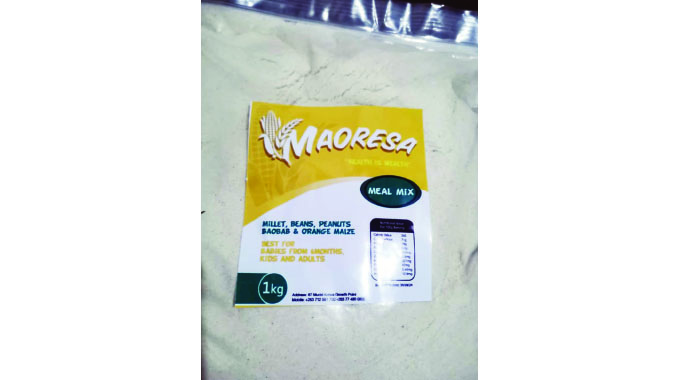
Innocent Mujeri
Herald Correspondent
Last month, some online publication reported, whether out of sheer ignorance or mischief, that some people in Mudzi District were surviving on some blend of baobab pulp porridge called Maoresa as the ongoing drought induced hunger deepens in that part of Zimbabwe.
The report prompted this author to be curious about this product called Maoresa.
The author, thus, made an in-depth inquiry into the novel food product, engaging the diverse groups and nutritionists behind its development and promotion.
The investigation revealed a story that is completely different from the picture of dire food shortage and nutrition challenges that was painted by the earlier story.
It rather brought to the fore the ingenuity of locals, including nutritionists, that has since elicited the stamp of approval.
Some care groups are supported by the United Nations International Children’s Emergency Fund, (UNICEF) and the Ministry of Health and Child Care.
The innovation has put life to the President’s mantra-Nyika inovakwa nevene vayo/ ‘Ilizwe lakhiwa ngabaninilo (a country is built by its own people).
Maworesa porridge has become a celebrated household name in Mutoko and Mudzi, and for all the right reasons.
This nutritious blend of baobab pulp, maize, beans, butternut, milk, and eggs is not just a meal; it is a transformative solution that tackles the growing crisis of malnutrition and child food poverty in rural Zimbabwe.
Developed through the collaborative efforts of care groups supported by UNICEF Zimbabwe and Nutrition Action Zimbabwe, in partnership with the Ministry of Health and Child Care, Maoresa exemplifies how communities can effectively address their challenges through innovation and resourcefulness.
Maoresa, which means “the very best” in Shona language, was conceived not as a mere afterthought to drought conditions, as some reports suggest, but as a proactive, sustainable approach to combat malnutrition.
In response to the rising levels of malnutrition in Mudzi district, health experts came together to create a porridge that could provide essential nutrients at a low cost.
This initiative was led by Mutoko District Nutritionist, Tinashe Chirumuuta, who is one of the key brains behind the development and promotion of this life-saving porridge.
Using locally sourced and affordable ingredients, such as eggs, sugar beans, and baobab fruit, which are contributed by the villagers, Maoresa covers the basic nutritional needs of children and families.
By including a mix of carbohydrates, proteins as well as other micro nutrients bearing, fruits, and vegetables, the porridge ensures that children have access to nutritious food.
This is a remarkable achievement in regions where food diversity is often limited and resources are scarce.
A standout feature of Maoresa porridge is its origin as a community-driven solution.
Rather than being imposed from outside, Maoresa was born from the collective effort of local care groups.
These groups, primarily composed of women, have been instrumental in promoting the porridge and educating families on the importance of nutrition.
Through these grassroots efforts, communities have taken ownership of the fight against malnutrition, empowering themselves with knowledge and practical skills.
The involvement of care groups has been pivotal in ensuring the sustainability of Maoresa.
By pooling resources and knowledge, these groups have managed to create a nutritious food option that is accessible to all families, regardless of their economic status.
The porridge is more than just food; it symbolises the power of community collaboration and the importance of local solutions in addressing public health challenges.
Contrary to misconceptions that Maworesa was developed solely as a response to drought, it was actually created as a long-term nutritional strategy designed to meet the dietary needs of children and families and combat malnutrition. The ingredients are carefully selected to provide a balanced meal that supports growth and development. Sugar beans offer a rich source of plant-based protein, while baobab fruit adds vitamins and antioxidants essential for immune health.
The inclusion of eggs further enhances the protein content, making Maoresa a comprehensive nutritional option. Maoresa porridge has now made its way onto the shelves of some shops, and it is quickly gaining popularity as people embrace this nutritious, locally-made option.
Maoresa porridge is an example of how communities can and should develop homegrown solutions to address malnutrition and hunger.
In an era where global food systems are often disconnected from local needs, Maoresa stands out as a model of community resilience and self-reliance.
It demonstrates that with the right support and collective effort, local communities can create sustainable and culturally appropriate solutions to their problems.
Moreover, in contrast to many modern food products that often contain GMOs and additives that are potentially harmful to health, Maoresa is an organic product, free from GMOs and chemical additives, providing a wholesome, natural alternative that meets nutritional needs without compromising on quality or safety.
To foster more initiatives like Maworesa, it is essential to invest in community education and support local agricultural practices.
Providing training on nutrition, food preparation, and the importance of dietary diversity can empower communities to take charge of their health.
Furthermore, supporting local farmers by ensuring access to seeds, tools, and other agricultural inputs can enhance food security and improve the availability of nutritious ingredients.
It is important to recognise and applaud the ingenuity and commitment of the Zimbabwean communities that have made Maworesa a success. Their willingness to come together, share resources, and innovate has shown that solutions to complex challenges like malnutrition do not always need to come from external sources.
The success of the porridge is a testament to what can be achieved when communities take ownership of their challenges and work collaboratively towards solutions.
Let us celebrate this remarkable achievement and continue to support Maoresa and similar initiatives that prioritise local knowledge systems and resources.
By doing so, we not only address immediate nutritional needs but also build stronger, more resilient communities capable of facing future challenges.
The porridge has proven that with unity and determination, communities can overcome even the most daunting obstacles.
This serves as a powerful call to action for other communities across Zimbabwe and beyond. It urges us to look within, to utilise what we have, and to trust in the power of collective effort.
Let the porridge be an inspiration for other local solutions that address not just malnutrition but a host of other challenges that communities face. Together, by harnessing our local resources and knowledge, we can create a healthier, more prosperous future for all.
Maoresa porridge is not just a meal; it exemplifies the best of what can be achieved when communities take charge of their own destinies.
Let us continue to support and promote such home-grown initiatives, and may Maoresa inspire us all to look within our communities for answers.
The health and well-being of our children depend on it.



 Online Reporter