peter
peter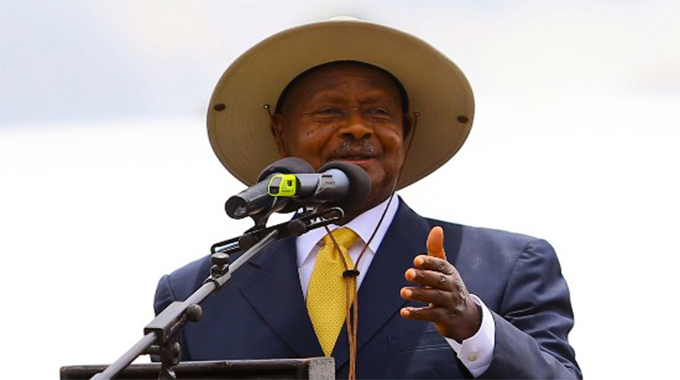
ONE of the catchiest slogans that have emerged from Pan-Africanist political philosophy and ideology is that of “African solutions for African problems.” Yes, now and again philosophies and their poorer cousins, the ideologies, do give birth to slogans.
From Kwame Nkrumah through Amilcar Cabral, right up to such contemporary African political figures as Yoweri Kaguta Museveni and Thabo Mbeki, the assertion of “African solutions for African problems” is considered an assertion of Africa’s political agency and independence, if not power. At long last Africa should stand up on its many legs and confront its own problems, political and economic, and otherwise, without reliance on some messiahs and saviours from outside the continent.
Messiahs and saviours from outsides the continent, many of them, are not assets but are suspects in Africa. They are suspects because, in the main, their interests and agendas in the continent are no different from those of the champions of the civilising and modernising crusade of the colonial era. Africa has previously been raped and exploited by messiahs and saviours from afar who come with political gospels and economic tidings that leave us in tears, exploited, dispossessed and displaced.
Most of the historical violence against Africa has happened under the cover of some civilisation, modernisation, development, progress, and salvation of the continent from outside.
I do not dispute that it is important for Africa to fashion African solutions for African problems. The idea sounds and seems like a noble one, a decolonial one even. But the nobility of the idea actually ends there in the sound of it and does not proceed to the sense.
I write this week to illuminate my observation that most of what are called African problems are problems in Africa that have not been caused by Africans, but have been caused for Africa by interested parties, powerful parties, in the world system.
It is for that reason that I suffer ill the allegations of such African political analysts as Prof Patrick Loch Otieno Lumumba who frequently suggest that the problem with Africans is that they are African, and that there is something essentially wrong with the African in Africa, hence the misery of the continent.
Such colonial allegations come from a province of a growing philosophy and ideology that is called “Afropessimism.” The problem with that province, not the whole of Afropessimism, is that its starting point is that Africans are a problem not a people with a problem in the world system.
Whenever a people that have a problem are mistaken for being a people that are a problem a lot of confusion arises and the uncircumcised are fooled. Victims of problems are blamed for their victimhood and the victimisers walk scot-free, masquerading as messiahs and saviours that can help deliver Africans from their problem of being a problem.
What is Africa’s Problem?
Africa does not have a single problem but a plethora of them. Africa’s litany of economic, political, cultural and even spiritual problems can be lumped into one problem called Africa’s problem, a meta-problem.
Ali Mazrui, ever the philosopher, called it the “African condition.” After assuming power in Uganda, 1986, with his National Resistance Movement, the guerrilla leader and Pan-Africanist scholar, Yoweri Kaguta Museveni, bundled together his speeches and essays into a book that was relevantly titled: What is Africa’s Problem? Reading through the well-written book requires one to take some pain-killers in advance.
Museveni bemoans the fundamental “price of bad leadership” in Africa and makes the demand that Africa needs “fundamental change” from its present condition to a better and higher state. Museveni was writing in the 1980s, but his scribblings ring vivid and true in 2022.
The way politics and religion intersect each other in Africa, where some prophets and some politicians perform themselves on the African historical theatre is documented by Museveni. The trouble being Africans dragging God and the ancestors down to politics kicking and screaming and using them to cover their incompetences.
The lack of “public spirit in the public service” of African countries is illustrated in spectacular metaphors and anecdotes from Uganda. Museveni, with the tone of a forensic investigator, illustrates how “corruption is a cancer” that is eating away at the very soul of Africa.
The “crisis of the state in Africa” where a system of government and administration was forced on the continent with disastrous colonial consequences is fleshed out by an angry then young African leader.
Throughout his writings Museveni bemoans how colonialists, the British in particular pitted African ethnic groups against each other, turning different African language groups into warring tribes, a colonial political strategy that culminated in a whole genocide in Rwanda where Hutus saw Tutsis as eternal enemies to be eliminated.
Most importantly, perhaps, was Museveni’s observation that Africa needed “genuine nonalignment” from both the West and the East in order to find its many feet to the futures, liberated futures.
What Africa needs most is “ideological and economic independence” that, perhaps, may permit the continent to find African solutions for African problems.
It is important in this article to note that Museveni wrote mainly from his knowledge and experience of the history of Uganda. But as a thoroughgoing Pan-Africanist, he had Africa at heart and in mind. In short, Museveni did his part to reflect on the African condition, a complicated condition of problems that are colonial and imperial, and some that are internal to African history and political culture from the pre-colonial era to date.
Whether one is reading Museveni, some other African historian, and such philosophers as Kwasi Wiredu, or any other African interlocutor, the picture emerges that most problems that are called African problems are problems that are structural and systemic, impacted on Africa by the modern and colonial world system.
It is a fallacy and a specific kind of philistinism to accept as true and to argue that there are essential African problems that require African solutions. I can be persuaded, rather, that there are problems in Africa and that those problems may be confronted through Afrocentric and decolonial approaches.
Afrocentric and decolonial approaches are approaches that are aware of the complicated and mainly colonial nature of African problems. Afrocentric and decolonial approaches are not blind and deaf to political problems and economic challenges that are caused by bad leadership, bad political followership, and incompetence in Africa.
Decoloniality: Against the World System
My gravamen with Greg Mills’s book: Why is Africa Poor, is that he erases the long history of colonialism and imperialism in the generation of African problems. Mill’s argument that the problem in Africa is not globalisation but the lack of it might be a colonial argument in nature.
That Africa remains poor because it failed to take full advantage of globalisation might be colonial rudeness to those of us who understand the coloniality of globalisation that is based on the coloniality of the world system. In his book Mills does not only ignore African decolonial voices but he also ignored voices, like his, that write from the belly of the beast.
One such voice is that of Joseph Stiglitz, he of the famous book: Globalisation and Its Discontents. Stiglitz is a whole Nobel Prize laureate that once worked as a senior economist, and one of the vice-presidents of the World Bank. He spent some time at the White House as economic advisor to President Clinton.

If Mills is an insider of the world system, Stiglitz is a deep insider. As such a privileged and powerful insider, in one of his books, Making Globalisation Work (2006), Stiglitz notes that from his own work inside the system, the world system, he knows that the International Monitory Fund, the World Bank, and the World Trade Organisation have not worked in the interests of Africa but those of the West. Looking at Africa from inside the world system, Stiglitz says “it seemed terribly unfair that in a world of richness and plenty, so many should live in such poverty.”
Insiders of the world system admit that Africa has been raped and robbed by the world system through political and economic conquests, dominations, exploitations and controls. The observations of decolonial scholars are being affirmed by the confessions of technocrats, operatives and insiders of the world system.
The prophets and the implementers of globalisation, from the White House and the World Bank have said it that a world system exists whose profit is based on the exploitation and poverty of Africa.
n Cetshwayo Zindabazezwe Mabhena writes from Gezina, Pretoria, in South Africa. Contacts: [email protected]



 Online Reporter