Arthur Marara-Point Blank
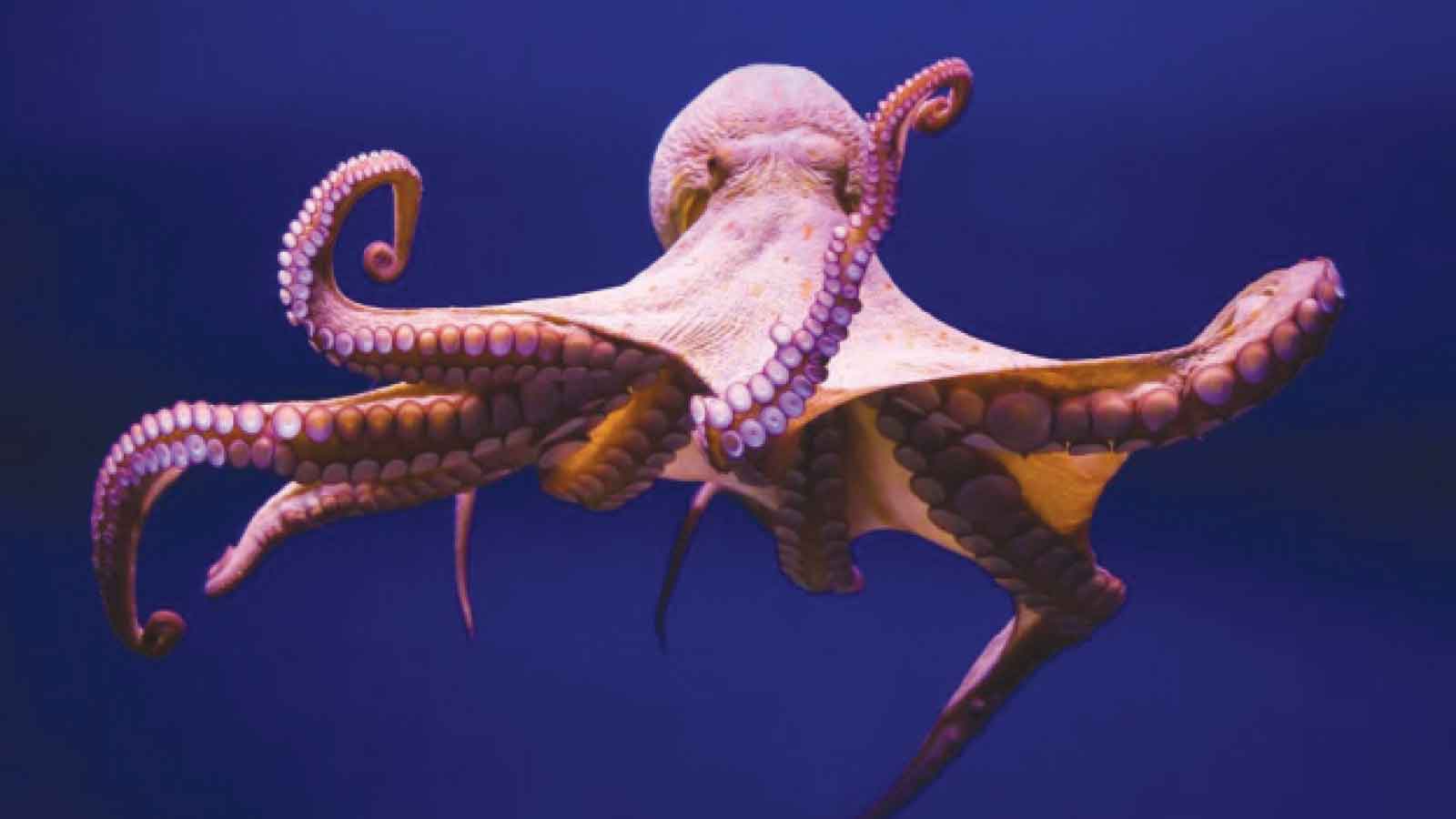
In the shadowy, complex world of the coral reef, an alien intelligence thrives.
The octopus, a soft-bodied master of transformation, presents a stunning contrast to the elephant’s enduring march. Where one is vast and steady, the other is fluid and brilliant.
In mere seconds, it can change colour and texture, solve intricate puzzles, and jet away from danger. Its survival hinges not on a single, centralized brain, but on a radical, distributed form of intelligence.
For businesses grappling with hyper-competition and relentless disruption, the octopus offers a breath-taking blueprint.
It demonstrates that agility, innovation, and resilience can spring from a revolutionary model: distributed intelligence, adaptive morphology, and explosive, committed action.
I. Distributed Intelligence: Empower Your ‘Arms’ to Think
The octopus’s most radical feature is its neural architecture. Roughly two-thirds of its neurons are not in its central brain, but spread throughout its body—particularly in its eight powerful arms. Each arm can taste, touch, and make autonomous decisions.
An arm exploring a crevice can identify prey, manipulate it, and begin the act of capture, all while the central brain is focused on scanning for predators.
This is not chaos, but orchestrated autonomy. The central brain sets the overarching goal (“find food”), but it trusts the local intelligence of the limbs to execute it in the most effective way.
The corporate parallel is a direct challenge to the traditional, hierarchical org chart. The “Octopus Organisation” champions radical decentralization and empowered teams.
Imagine if your marketing team in Singapore, your engineering pod in Berlin, and your customer success unit in Austin could sense their local environment, make strategic decisions, and act—all within a clearly defined, company-wide mission. They wouldn’t need to wait for memos from headquarters.
This model is exemplified by companies like Haier, the Chinese appliance giant, which restructured into hundreds of independent “micro-enterprises.”
Each operates as a self-governing “arm,” directly accountable for its own P&L, innovation, and customer relationships. The centre provides the platform, the brand, and the capital, but not the day-to-day commands. The result is astonishing market speed and localized innovation.
By distributing intelligence to the edges, where information is freshest, an organisation can sense and respond to opportunities and threats with the speed of thought itself.
II. The Morphing Canvas: Adapt Your Identity to Fit the Challenge
An octopus’s skin is a living display of strategic adaptation. Using specialised cells called chromatophores, it can alter its colour, pattern, and even texture in milliseconds. It does this to hunt, blending into a reef; to hide, mimicking a rock or toxic flounder; or to communicate with dazzling displays.
This is not about losing its core self, but about strategically projecting the right identity for the right moment.
In business, this translates to extreme market agility and contextual adaptation. It is the ability for a product, a marketing campaign, or even a business unit to “morph” to perfectly fit a specific customer segment, competitive landscape, or cultural context—without a costly, top-down overhaul.
Consider the world’s most successful global consumer brands. A beverage company may maintain its core product integrity but adapt its sweetness, branding, and distribution partnerships in every region.
A software platform might offer the same core engine, but its interface and feature emphasis morph to serve the unique workflows of architects, accountants, or filmmakers.
This is strategic camouflage: presenting the most relevant, resonant version of yourself to each audience. It requires deep local sensing (the intelligence in the “arms”) and a central nervous system confident enough to allow for this fluidity.
The goal is to be a chameleon with a consistent genetic code, not a static monument in a changing landscape.
III. The Innovation Jet-Propulsion: Commit, Then Move with Explosive Force
The octopus’s final masterstroke is its dual-mode propulsion. For careful exploration, it uses its arms to crawl and tinker. But when a threat appears or prey is secured, it engages a completely different system: it seals its mantle and expels water in a violent jet, propelling itself backward with astonishing speed and force.
This is not reckless abandon; it is the decisive culmination of prior exploration. The slow, probing “innovation phase” is followed by an all-in, uncompromising commitment to action.
This rhythm is vital for corporate innovation. Many companies are adept at the slow crawl: they run endless pilot programs, form innovation committees, and create skunkworks projects. But they falter at the moment of explosive commitment. They fail to scale what works, letting promising ideas languish in perpetual beta.
The octopus model demands a culture that champions both phases. First, create safe spaces for low-cost, high-autonomy “tinkering”—the equivalent of an arm exploring a crevice. This could be hackathons, dedicated R&D budgets, or “20 percent time” policies.
But secondly, and most crucially, build a mechanism for violent, company-wide execution when an idea proves viable. This means reallocating major resources, shifting top talent, and pausing other initiatives to jet-propel the winner into the market at overwhelming scale.
Amazon’s practice of moving from a two-pizza team (exploration) to a “single-threaded leader” with massive resources (jet-propulsion) for high-potential ideas captures this perfectly. It’s the difference between experimenting and truly executing.
The Long View
The octopus, a creature that lives fast and dies young, teaches a complementary lesson to the elephant: in a complex, fast-moving environment, adaptability trumps permanence, and distributed genius outperforms centralized command.
Building an “Octopus Organization” requires surrendering the illusion of top-down control in exchange for bottom-up brilliance. It demands leaders who are comfortable setting a direction and then trusting their “arms” to feel their way forward.
This model is the future of work in a digital, globalised economy. It is built for volatility. It prizes sensing over predicting, adaptation over rigidity, and decisive action over cautious consensus.
By learning from this shape-shifting genius of the deep, leaders can forge companies that are as fluid as the market itself—intelligent at every touchpoint, adaptive in every context, and capable of moving from a thoughtful crawl to a transformative burst of speed in an instant.
This concludes our January trilogy: From the Crocodile’s resilient reserves, to the Elephant’s wise journey, to the Octopus’s agile genius.
Together, they form a holistic guide for building an enterprise not just for a season, but for every season nature—and the market—can conjure.
Arthur Marara is a corporate law attorney, keynote speaker, peak performance and corporate strategy speaker. With his delightful humour, raw energy, and wealth of life experiences, he captivates audiences and inspires them to unlock their full potential. He is also a leadership expert with extensive experience in leadership development and coaching. He is passionate about developing effective leaders and empowering individuals and organizations to achieve their full potential. Through his engaging talks and workshops, he imparts invaluable insights and practical strategies that empower individuals to lead with confidence and make a lasting impact.
Marara is the author of “Toys for Adults” a thought-provoking book on entrepreneurship, and “No One is Coming” a book that seeks to equip leaders to take charge. Send your feedback to [email protected] visit his website www.arthurmarara.com or contact him at +263772467255.