


 Online Reporter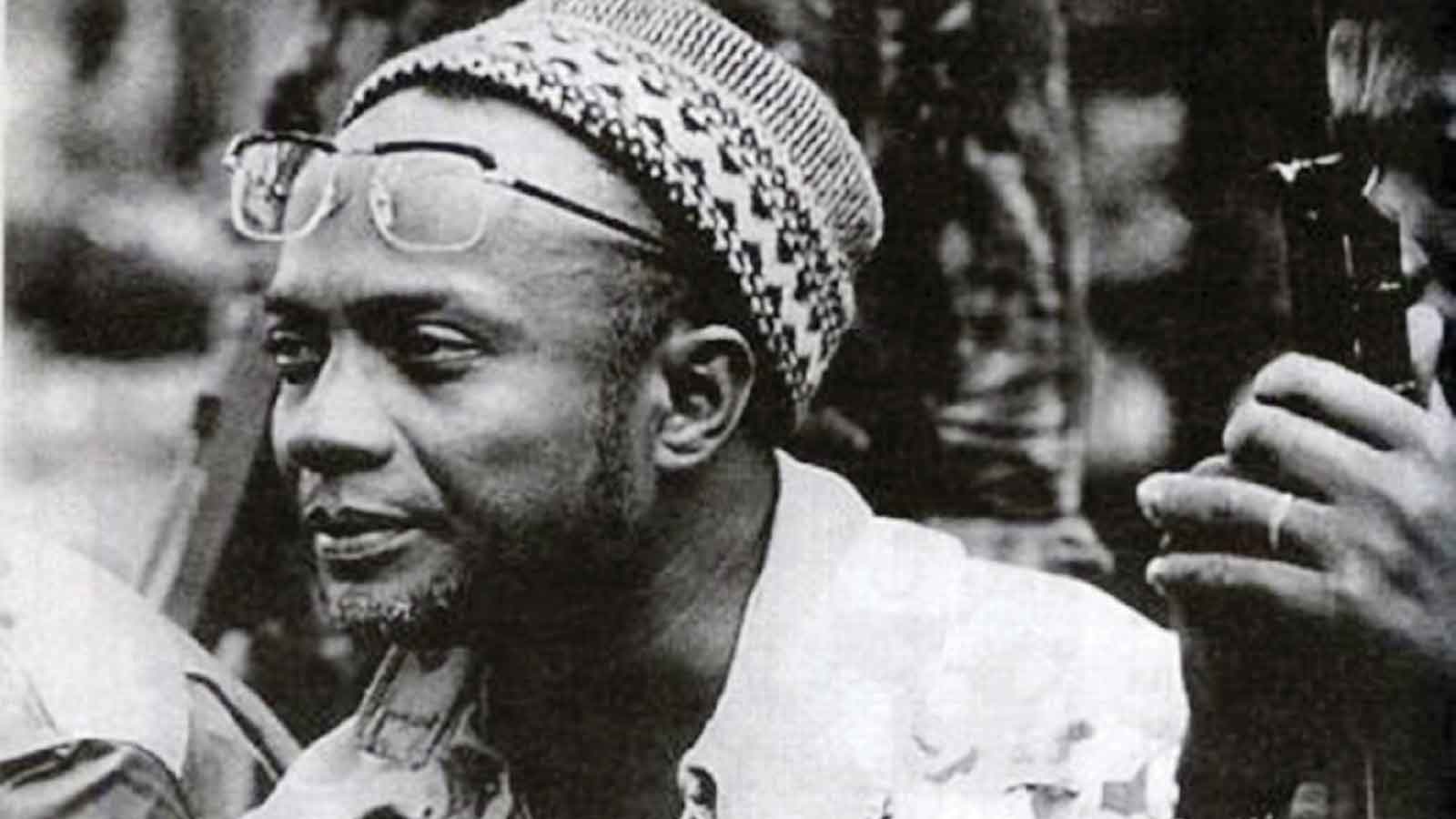
COMMUNION with Bishop Lazarus
We were all told to expect a cataclysmic political event on Friday — July 31 — largely by anonymous activists that were reportedly unamused by the passage of the Constitutional Amendment No. 3 Bill, which President ED signed into law on July 7.
To say it was a flop is to dignify it by giving it the semblance of a supposedly organised event that somehow fizzled out or was quashed.
Bishop Lazi will call it exactly what it was — a non-event.
It was largely a ghost event that was conceived by ghost characters hiding in the depths of social media’s anonymity.
As has gradually become the norm, behind the shield of social media anonymity, a curious theatre of political posturing unfolds.
Faceless actors, lurking in the digital shadows, attempt to conjure grand threats from the safety of their keyboards — cloaking themselves in an aura of revolutionary mystique while remaining utterly unaccountable for the chaos they seek to incite.
These are the self-styled digital insurgents, who mistake a flurry of posts for political power and confuse online noise with genuine influence. The purported July 31 protests in Zimbabwe laid this pathetic charade bare.
Organised by “shadowy groups” and “faceless malcontents” with no clear leader to point to, the planned mass action was promoted heavily through social media.
When the day arrived, the much-hyped insurrection simply evaporated. Businesses operated as normal, commuter transport ran and life continued uninterrupted.
This obviously exposes the vast gulf between the bombastic online rhetoric and the utter lack of real-world traction.
These lily-livered provocateurs, hiding behind the mysticism of the unknown, are not consequential political actors.
They are opportunists who lack clear identities and accountability, seeking to sow confusion and undermine national development without ever risking their own skin.
So, all told, the so-called protests were just a storm of digital fury that amounted to nothing more than a whimper, revealing these so-called threats for what they truly are — the pathetic posturing of cowards who mistake anonymity for power.
Governing in the era of social media
Governing in this hyper-digital era demands a razor’s edge of circumspection, for social media is an engine of emotional contagion, and not reason. Its algorithmic architecture rewards outrage, transforming a single anonymous provocation into a cascading wave of mass hysteria within hours.
However, for the state, there is a cruel paradox. To overreact is to legitimise the phantom, granting the nonentity the very political gravity it craves; yet to underreact risks being overwhelmed if digital fury suddenly coagulates into physical mobs.
The difficulty of discernment is now existential — bot farms impersonate grassroots dissent, generative artificial intelligence (AI) crafts credible manifestos without a human author and deepfakes blur the line between genuine grievance and foreign-manufactured psyop. In navigating this fog, governments must abandon the seductive trap of monitoring mere volume and instead anchor their vigilance in tangible, empirical ground-truths.
They must look for offline organisational footprints — physical logistics, financial flows and real-world meeting patterns that tether digital noise to material capability.
They must dissect network topology to separate organic, decentralised frustration from synchronised, top-down astroturfing, identifiable by statistically improbable posting cadences. Critically, they must track narrative provenance, flagging rhetorical echoes that align with known adversarial playbooks and measure the velocity-to-action gap — true revolutionary fervour alters behaviour, whereas performative hysteria evaporates the moment the Wi-Fi disconnects.
By calibrating their responses to these hard indicators rather than the shimmering spectres of the feed, states can defuse the weaponised hysteria while preserving their mandate to protect public order, refusing to be terrorised by the very cowards who dare not show their faces. Thankfully, our competent men and women, both uniformed and ununiformed, some of whom lurk and fight in the shadows, know all this too well. This is precisely the reason July 31 was incident-free.
The dissenters from Mars
There is, however, a certain poetic irony in the spectacle that has unfolded around Zimbabwe’s Constitutional Amendment No 3 Act.
After months of a legislative process, after a 90-day public consultation period that stands as one of the most extensive in the nation’s constitutional history, after parliamentary debates that spanned seven sitting days and saw 182 members contribute — a record for any constitutional amendment in Zimbabwe — only now, after the Bill has been gazetted and signed into law, do we hear the loudest cries from supposed dissenters.
Unless they recently relocated from Mars, where were these voices when the window for input was wide open?
It has to be remembered that the Constitution of Zimbabwe Amendment (No. 3) Bill was gazetted on February 16, 2026.
What followed was a mandatory 90-day public consultation period conducted in strict accordance with the Constitution, while nationwide public hearings were held across the country’s 64 districts between March 31 and April 2.
In addition to all this, Parliament also received a staggering 540 037 submissions — of which 537 102 were in support and 2 935 against.
Judging from the available evidence, no other amendment in Zimbabwe’s recent constitutional history has been interrogated by so many of its people. Parliament also weighed in over seven sitting days, where a record 182 members made substantive contributions.
The Bill passed its third reading with 216 votes in favour against 42 opposed, comfortably exceeding the two-thirds majority required. It was the same trend in the Senate.
So, clearly, these dissenters have been late to the party.
Rule of law
That Zimbabwe is a constitutional democracy is not merely rhetorical flourish, but a legal and political fact.
The Constitution of Zimbabwe is the supreme law of the land.
It guarantees rights — including the rights to freedom of expression and peaceful assembly under Article 61.
And it also provides clear avenues for those who are dissatisfied with legislative outcomes to seek redress.
Those who remain unamused by the enactment of CAA3 are not without recourse.
The courts stand as an independent arbiter.
As Bishop Lazi has said before, the streets will never be the arbiter of Zimbabwe’s political processes. Proverbs 6:12-19 warns: “A troublemaker and a villain, who goes about with a corrupt mouth, who winks maliciously with his eye, signals with his feet and motions with his fingers, who plots evil with deceit in his heart — he always stirs up conflict.
Therefore, disaster will overtake him in an instant; he will suddenly be destroyed — without remedy.
There are six things the Lord hates, seven that are detestable to him: haughty eyes, a lying tongue, hands that shed innocent blood, a heart that devises wicked schemes, feet that are quick to rush into evil, a false witness who pours out lies and a person who stirs up conflict in the community.”
There is a lesson here for our dissenting fringe — participation in a democracy is not a spectator sport.
Zimbabwe’s constitutional order is not fragile. It is not a house of cards that trembles at the first gust of political wind.
It is built on law, on process and on the principle that the people — through their elected representatives and through constitutionally mandated consultation — have the ultimate say in how they are governed.
A dead opposition
The much-hyped July 31 protests have come and gone. What was supposed to be a seismic political event, a moment of reckoning for the ruling establishment, instead laid bare an uncomfortable truth: The opposition is now as dead as a dodo.
The streets did not fill.
The revolutionary fervour never materialised. And the silence that followed was deafening — not for the Government, but for those who had banked their entire political relevance on the anger of the masses.
For years, the opposition and their civil society auxiliaries operated on a simple business model: harvest anger, monetise pain and package dissent for Western consumption.
This is precisely the reason the number of non-governmental organisations (NGOs) continued to increase exponentially.
Pain was monetised. Victims became voices; voices became platforms; platforms attracted budgets. The fuel for this machinery came from foreign coffers — press freedom groups, democracy foundations and human rights watchdogs based in North America and Europe, all too eager to underwrite narratives of state repression and civic struggle in Africa.
But here is the fatal flaw in their calculus: The people are not for sale.
As the revolutionary thinker Amílcar Cabral wisely cautioned, “Always bear in mind that the people are not fighting for ideas, for the things in anyone’s head. They are fighting to win material benefits, to live better and in peace, to see their lives go forward, to guarantee the future of their children.”
National liberation, democracy, resistance — all these grand philosophical ideals — remain meaningless to the masses unless they bring a real improvement in the conditions of life.
The opposition, drunk on Western funding and ideological abstractions, forgot this fundamental truth.
What they also failed to grasp is that the economic weather has changed — and Zimbabweans can feel it.
The economy is expanding and inflation has dramatically dropped to single-digit level for the first time in decades.
As Professor Gift Mugano aptly put it, the economy is like the weather — you do not need someone to tell you how it is performing; you can feel it in your bones.
Zimbabweans can now feel the cautious optimism of a nation slowly finding its footing.
They are also not demonstrating for no cause — they are busy building and rebuilding their lives.
They are not interested in risking life and limb for some imported philosophical ideals.
Their grievances, when they arise, centre on bread and butter, not on the abstract notions of “resistance” and “liberation” that fill the grant proposals of Western-funded NGOs.
The opposition’s brand of activism has always been a performance — a livelihood built on outrage and spectacle rather than on disciplined organisation or lasting policy influence. It thrives on foreign sympathy, not on genuine grassroots connection.
The people, however, have seen through the charade.
They know that the real heroes of reform are not those who perform dissent for foreign audiences, but those who work quietly, without foreign sponsorship or self-promotion.
The July 31 protest was supposed to be the opposition’s moment of triumph.
Instead, it became its epitaph.
The opposition is dead as a dodo — not because the Government silenced them, but because the people, in their infinite wisdom, simply walked away.
They have better things to do.
They have lives to rebuild.
Bishop out!


 Bongani Ndlovu