


 Vusumuzi Dube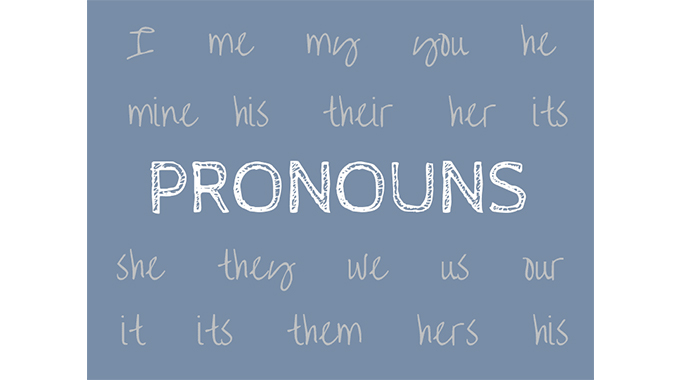
AVID followers of these pages will not be surprised to read a familiar title. When you learn grammar, you are bound to persistently move to and fro with these topics. To understand other topics better you to constantly refer to others.
These are the eight parts of speech: noun, verb, conjunction, pronoun, adverb, interjection, adjective and preposition.
Repeat: A noun is a word used to name a person, a place, a thing, or an idea.
Examples; persons – carpenter, tourist, team, cousins. Places – cities, theatre, forest, neighbourhood.
Things – telescope, bricks, birds, horseshoe. Ideas – justice, creativity, power, and opinions.
A common noun names any one of a group of persons, places, things, or ideas. A proper noun names a particular person place, thing, or idea.
Common nouns are not capitalised (except when they begin a sentence or are part of a title) proper nouns however, always are.
Common nouns – woman; Queen Victoria, Jane Austen. Nation – Egypt, Mexico, Zimbabwe, Zambia.
Event – National Youth Games, Academy Awards. Holiday -Independence Day, Heroes Day. Language: English, Hebrew, Ndebele.
Concrete and Abstract Nouns: A concrete noun names an object or event that can be perceived by the senses.
An abstract noun names a quality, a characteristic, or an idea. Examples of concrete nouns: sneeze, star, gravel, cinnamon, Harare.
Abstract nouns – peace, civilisation, honour, courage, romanticism, destiny.
A collective noun names a group. Examples: jury, band, family, class, flock, committee.
Compound nouns: A compound noun consists of two or more words used together as one noun.
Some compound nouns are written as a single word, some as separate words, and others as hyphenated words. One word: stairway, bookcase, and Newfoundland. Separate words: lieutenant, governor, ceiling fan, Hyphenated word: sister-in-law, jack-of –all-trades, and stick-in-the-mud.
The pronoun: A pronoun is a word used in place of one or more nouns or pronouns. The word that a pronoun stands for is called the antecedent of the pronoun.
The students complained to their teacher about the short notice he gave them for their test. They said she should have been informed earlier.
The noun students is the antecedent of the pronoun they. The noun teacher is the antecedent of the pronoun she.
A personal pronoun refers to the person speaking (first person), the person spoken to (second person), or the person or thing spoken about (third person).
Examples: First person singular: I, me, my and mine. Plural: we, us, our, ours. Second person singular: you, your, yours. Plural: you, your, yours.
Third person: he, him, his, she, her, hers, it, its. Plural: they, them, their, theirs.
Some of the personal pronoun forms – my, your, his, her, its, our, there are used before nouns in the same way that adjectives are used.
Demonstrative pronouns: A demonstrative pronoun points out a noun or another pronoun. (this, that, these, those). This is the man we met at the shops.
Interrogative pronouns: An interrogative pronoun introduces a question. (who, whom, which, what, whose). Examples: Who is the leader among these? A relative pronoun introduces a subordinate clause. (that, which, who, whom, whose).
Examples: The school that she chose is out in the countryside.
Indefinite pronouns: An indefinite pronoun refers to a person, place, thing, or idea that may or may not be specifically named.
Examples: all, both, few, nobody, several, another, each, many, none, some, any, either, more, no one, somebody, anybody, everybody, most, nothing, someone, anyone, everyone, much, one, something, anything, everything, neither, other and such.
The interjection: An interjection is a word used to express emotion. It has no grammatical relation to other words in the sentence. Examples: ah, oh, well, whoops, hey, ouch, whew, and wow.
For views link with [email protected]



 Bongani Ndlovu
 Online Reporter