Chronicle Editor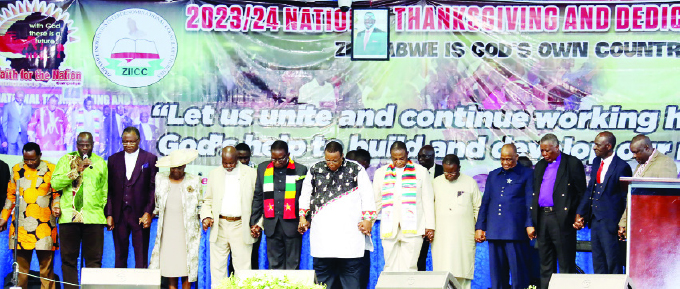
Mukachana Hanyani, Correspondent
The collaboration between the church and the Government in Zimbabwe holds immense significance, fostering a cohesive and supportive environment that benefits society on various fronts.
Firstly, Zimbabwe, like many other nations, has a diverse population with varying beliefs and values. The church, as a significant social institution, often serves as a moral compass, providing guidance and support to communities.
When the church and Government work harmoniously, they can combine efforts to address social issues effectively.
Their collaboration can create a unified voice that promotes values such as peace, justice and social welfare, aligning both institutions’ efforts for the greater good of the nation.
The collaboration between the church and Government is pivotal as it unites two influential bodies, harnessing their collective power to tackle societal issues comprehensively.
By working in harmony, they create a synergy that amplifies their impact in addressing multifaceted challenges that Zimbabwe faces.
The church, as a moral authority and a community-centred institution, possesses a unique ability to mobilise and engage individuals at grassroots levels.
It often serves as a beacon of hope and a provider of essential services to communities, leveraging its networks, resources, and moral influence to address pressing social issues.
When the church aligns its efforts with the Government, it bolsters the reach and effectiveness of initiatives aimed at fostering peace, social justice and overall welfare.
This collaboration doesn’t just merge resources but also aligns ideologies and values. The church, with its emphasis on compassion, empathy, and ethical principles, can infuse these values into Governmental policies and programmes.
Conversely, the Government can provide the infrastructure, institutional support, and broader reach necessary to scale up initiatives that promote social welfare. Moreover, this partnership presents an opportunity to create a unified front in advocating for crucial societal changes.
By combining their voices, the church and the Government can champion causes that transcend partisan or religious divides, ensuring that issues such as poverty alleviation, healthcare accessibility, and education receive the attention and action they deserve.
Furthermore, the collaborative efforts between the church and the Government can serve as a model of unity and co-operation for the wider society.
By demonstrating a willingness to set aside differences and work towards common goals, they set a precedent for constructive engagement, encouraging other organisations and individuals to join forces for the greater good.
Ultimately, the harmonious relationship between the church and the Government is more than a partnership; it’s a force multiplier for positive change.
It leverages the unique strengths of each institution to create a collective impact that transcends boundaries striving towards a more equitable, just, and prosperous Zimbabwe for all its citizens.
Collaboration between the church and the Government also enhances the democratic process by ensuring diverse voices are heard in policy-making. The church often represents various segments of the population.
When the Government actively engages with the church, it opens channels for inclusive dialogue and policymaking, taking into account the perspectives of a broader cross-section of society.
However, it’s crucial that this collaboration respects the principles of separation of church and State, ensuring that religious beliefs don’t unduly influence or dictate Governmental decisions. Instead, the collaboration should focus on shared values and goals, leveraging each institution’s strengths for the betterment of the nation. The principle of separation of church and State is a cornerstone of democratic governance, safeguarding the autonomy of both religious institutions and governmental bodies.
While collaboration between the church and State is beneficial, it’s imperative to maintain a delicate balance that upholds this principle while fostering productive co-operation.
Respecting the separation of church and State ensures that governmental decisions remain inclusive and secular, devoid of any religious bias or imposition. This principle safeguards the rights and freedoms of individuals, regardless of their religious affiliations or beliefs.
It ensures that policies are shaped by the needs of a diverse society rather than being influenced by specific religious doctrines. The collaboration between the church and government should thus operate within the framework of shared values and common societal goals. It’s crucial that both entities recognise and prioritise issues that hold significance beyond religious boundaries, focusing on areas where their missions intersect, such as promoting social justice, peace and welfare.
Rather than seeking to impose religious beliefs on governance, the collaboration should harness the strengths of both institutions for the nation’s betterment. The church can contribute its moral authority, community networks, and humanitarian initiatives, complementing the Government’s resources, infrastructure and administrative capabilities.
This collaboration should be guided by shared principles that align with the broader interests of the nation. This collaboration should operate with transparency and accountability, ensuring that the partnership doesn’t compromise the autonomy of either institution. It should be subject to scrutiny and checks to prevent any overreach or undue influence on governmental policies. By adhering to the principles of separation of church and State while collaborating based on shared values, the church and government can create a synergy that benefits Zimbabwe’s entire population. This approach ensures a productive partnership that amplifies their strengths without compromising the fundamental principles of democracy, pluralism and individual freedoms. In essence, a harmonious relationship between the church and the Government in Zimbabwe can be a catalyst for positive change.
It can foster social cohesion, amplify efforts to address societal challenges, and contribute to the overall well-being and progress of the nation by drawing on the strengths and resources of both institutions.


 Online Reporter