

 Chronicle Editor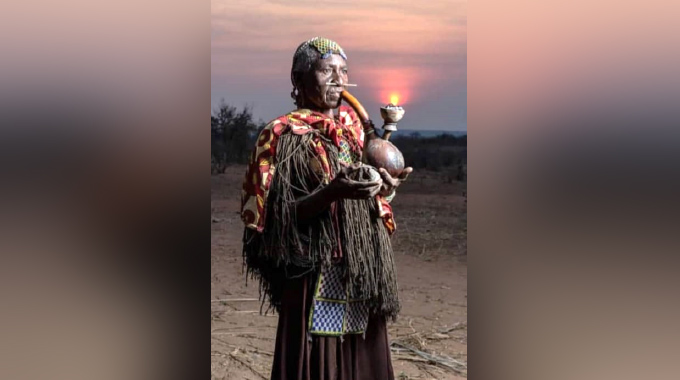
Simbarashe Murima
On the south eastern coast of Lake Kariba, across the lake from Zambia are the BaTonga people, also known as the Tonga, in Binga District, Matabeleland North province.
The BaTonga are subsistence farmers who grow crops such as millet (nzembwe), sorghum (mayila), and are also acknowledged as hunter gatherers.
Meek, loving and peaceful, the BaTonga people are a Bantu ethnic group of northern Zimbabwe and neighbouring southern Zambia who are understood to have arrived and settled in Zimbabwe between 300-400AD from Central Africa.
The Bantu people are an ethnolinguistic confederacy of roughly 400 different native African tribal groups who speak Bantu languages which are indigenous to twenty-seven African countries from almost the whole of Southern Africa, Eastern and Central Africa.
However, the BaTonga ethnic group speaks a language called Tonga which was constitutionally declared as one of the country’s official languages in 2013.
Some of the BaTonga people are found in parts of Kariba and Gokwe districts.

The name ‘Tonga’ means to ‘rule’, signifying that the BaTonga were a democratic and an egalitarian society, thus dispiriting the belief of one single rule as practised by the Ndebele, Shona and Zulu monarchs.
Since their language and culture is common, the Tonga are grouped together with a similar large tribal group called the Ila, who live in the region of Kafue (Zambia), and together they are identified as the Tonga-Ila speaking community.
History of the BaTonga people
The Tonga people were groups of people believed to be related to the Karanga (Shona) but were originally not under the tutelage and the direct rule of the Monomotapa, one of the most famous states of pre-colonial Africa.
In 1955, the Tonga were displaced from the land they had occupied for centuries along the Zambezi River, to allow the construction of the Kariba Dam, one of the world’s largest man-made lake and reservoir by volume, which was completed in 1959.
Mythology of the BaTonga
The Tonga people staunchly believe in their ancestors and they also strongly believe that the Nyami Nyami is one of their supreme gods.
Affectionately known as the Zambezi River God or Zambezi Snake Spirit, the Nyami Nyami is depicted as male and is publicised as having the shape of a huge snake and the head of a fish, a whirlpool, or a river dragon.
To this day, the BaTonga people still accept that the construction of the Kariba Dam significantly affronted Nyami Nyami by splitting him from his ‘wife’ as it is believed they were two. Thus, the flooding and many deaths during the dam’s construction were attributed to his anger.
Henceforth, it is posited to be one of the key causes of the hardships facing the Tonga people in this modern era.
Nevertheless, the Tonga people continue to have faith in that the Nyami Nyami protects and provides sustenance in difficult times.
Interesting facts about BaTonga people
The BaTonga people are humble and generous people, but if insulted or disrespected, they can be chancy.
The tribe is famed for potent muthi to harm fellow human beings, to improve the conditions of a person’s life, or even to secure promotions at workplaces. As a disclaimer, not every BaTonga person practices or does sorcery or harms anyone.
Some Tonga traditional healers have an assortment of powers ranging from fortune portions, love portions, good luck portions, traditional medicine, and power against dark magic.
On the other hand, women are mainly good at portions to do with fertility and attracting a partner. They make a string charm and tie it around the child-seeking woman’s waist to strengthen her pregnancy.
Binga is famous for the cultivation of cannabis. The use of cannabis in the area is illustrious and habitual since it’s a vital component of the culture of the Tonga tribe.
Binga has a prominent spring called Chibwatatata Hot Springs, which is a petite stream of hot mineral-rich water that shoots out of a large flat rock.

The spring is a spiritual locus that is used by traditional healers and self-proclaimed prophets who send their cohorts to the spot for them to drink the water to get healed and cleansed. Likewise, rainmaking ceremonies also occur at this sacred situate.
On another interesting annotation of the Tonga people, is that, before the coming of the rainy season, birds known as basikampembeza or ndiyo-liyo would produce a unique sound and fly over the sky to express joy on the change of the season.
Traditionally, these birds symbolise the coming of rain and are a reliable weather information source for the BaTonga people as they precisely point out a seasonal switch.
Socio-economic survival of the BaTonga people
‘Related to the waters’, the BaTonga’s main economic activity is fishing. The Tonga community is also renowned for their basket craft and works which are made from wild grasses, small vines, and palm leaves dyed with tree bark which depict their cultural heritage.
Basketry is an essential source of income for the majority of the rural women. Nowadays, the Tonga males survive on wood-carving, textile and jewellery making.
The BaTonga people have been consistent in protecting and practicing their culture and expressing it with self-importance and superiority. The notion of this column dubbed People and Places, is to uphold the significance of our dwellings, cultures and societies in Zimbabwe and other neighbouring African countries to help preserve culture from decomposition and decay by instilling knowledge, awareness and appreciation of our people and places.
*Simbarashe Murima (PhDc writes in his own capacity as an Education, Tourism and Hospitality expert in Namibia and Zimbabwe. Feedback: [email protected]/ +263781480742)



 Online Reporter
 derick.khumalo