Online Reporter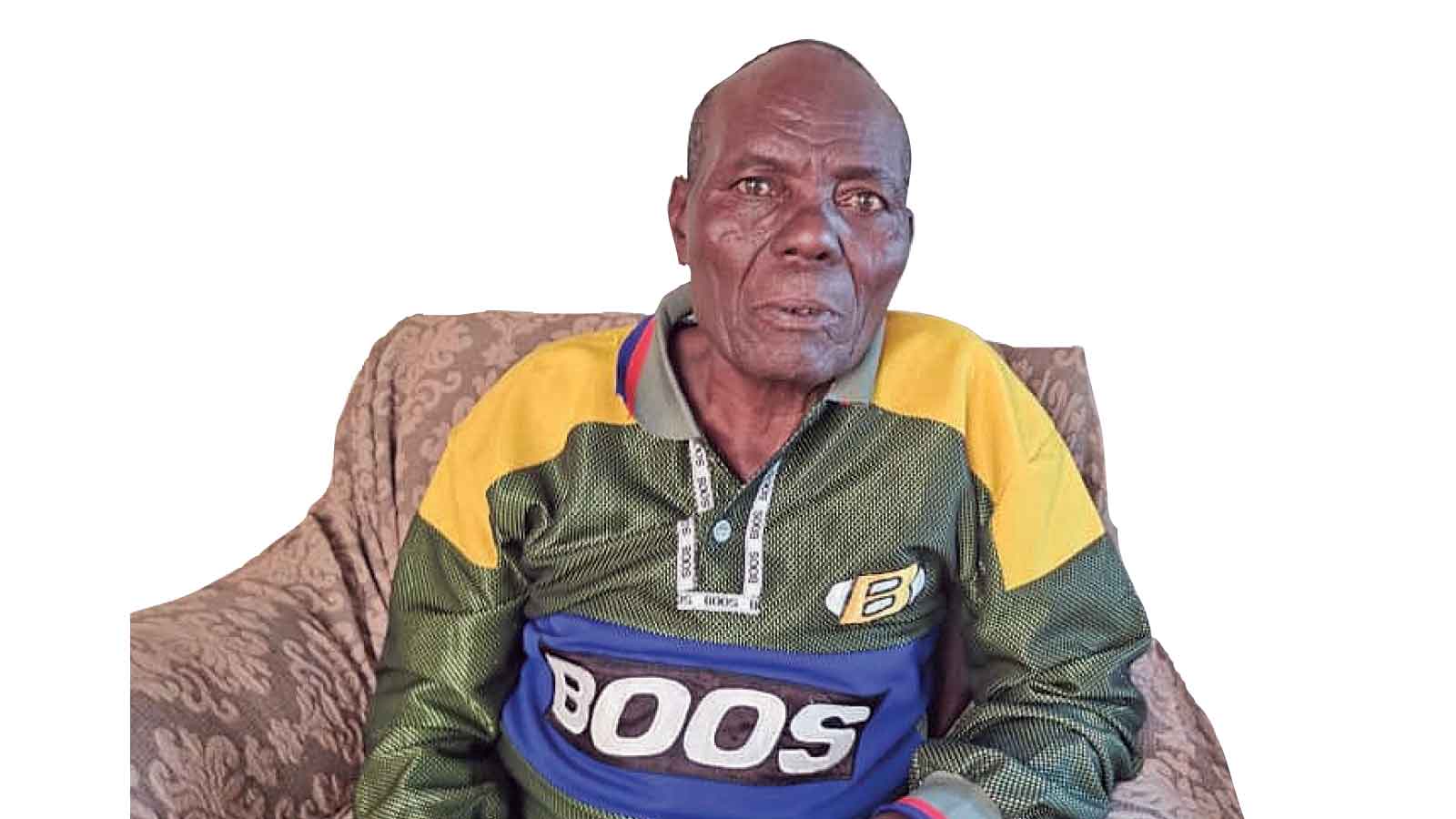
LAST week, Lieutenant-Colonel (Retired) HARRISON DZUNGWA, whose Chimurenga name was Cde Cover Takurira, recounted the fierce battle at Gandanzara Mountain, where many ZANLA fighters fell after an engagement with Rhodesian Security Forces. The confrontation came as liberation fighters pressed on with a mission to destroy Nyazura Bridge in retaliation for the Nyadzonya massacre of August 9, 1976. Although many comrades died, members of Cde Cover’s section survived the encounter. This week, he narrates how the guerrilla fighters regrouped, mounted a devastating attack on the enemy at Rugoi and continued operating in the Chiduku area despite losing more comrades along the way.
**************** Q: Members of your section survived the battle at Gandanzara Mountain, where many other comrades were killed. What happened after that battle?
A: The battle at Gandanzara had been costly. We had witnessed many brave comrades making the ultimate sacrifice, but surrender was never an option. Once the fighting had subsided, we immediately shifted our base to avoid enemy follow-up operations. Fortunately, every member of our section had survived and that meant our responsibility to continue the armed struggle remained intact.
The loss of our comrades did not weaken our resolve. If anything, it strengthened our determination to press on with the liberation war. We told ourselves that the best way to honour those who had died was to continue carrying the struggle forward.
After regrouping, our commanders resolved that the enemy had to feel the force of our retaliation. Plans were therefore made to attack an enemy military position at Rugoi.
Q: How was this attack organised?
A: The operation was planned at sector level under experienced commanders, among them Cde Lameck Tembo. By this stage of the war, our forces had become more organised and better equipped than before. We had begun receiving more effective weapons capable of challenging the Rhodesian army’s fortified positions.
One weapon that inspired confidence among us was the recoilless gun. It possessed tremendous destructive power and was particularly effective against enemy bunkers and fortified defensive positions. Having such a weapon significantly increased our confidence because we knew it could inflict serious damage on installations that ordinary rifles could not easily penetrate. We carefully studied the terrain, selected suitable firing positions and prepared ourselves thoroughly before launching the attack on Rugoi Camp.
Q: Describe how the attack unfolded.
A: It was not intended to be a prolonged battle to capture the camp. Like many guerrilla operations, it followed the principle of striking swiftly and withdrawing before enemy reinforcements.
We positioned ourselves on elevated ground overlooking the enemy camp. From there, the recoilless gun was carefully aimed at the Rhodesian position. When it fired, the explosion echoed across the surrounding hills with tremendous force.
Moments later, the projectile struck the enemy camp with devastating effect. A massive cloud of smoke, dust and debris rose into the air as defensive positions were ripped apart. One of the fortified bunkers that had provided cover for Rhodesian soldiers was shattered by the impact.
The blast created confusion within the enemy ranks.
Soldiers who had been occupying defensive positions abandoned them as panic spread throughout the camp. The recoilless gun demonstrated its immense firepower, proving that by the closing years of the liberation struggle, ZANLA forces had developed the capacity to engage heavily defended enemy positions using increasingly sophisticated weaponry.
Many enemy soldiers were killed during that operation. Having achieved our objective, we immediately withdrew as planned. Remaining in one place after such an attack would have exposed us to aerial bombardment and large-scale counterattacks, so we retreated and remained hidden for several weeks before resuming our movement.
Although we had successfully struck the enemy at Rugoi, our principal mission had not changed. Our objective remained the destruction of Nyazura Bridge.
Q: Tell us about the journey towards Nyazura Bridge.
A: After our withdrawal, we resumed our movement towards Chiduku. We travelled through areas that included Mutenure and Chipembere before crossing the Harare-Mutare Road on our way to Nyazura. However, this became one of the most difficult stages of our mission.
The Rhodesian forces had intensified security measures throughout the area and had laid numerous booby traps along routes they suspected guerrillas would use.
These hidden explosives presented a constant danger because they could not be easily detected.
During that journey, tragedy struck our unit.
One of our commanders, Cde Timothy, accidentally triggered one of the booby traps. The explosion killed him instantly.
His death was a painful reminder of the many hazards that guerrillas faced even when they were not directly confronting the enemy in battle. The Rhodesian Security Forces increasingly relied on mines and concealed explosives to slow guerrilla advances and inflict casualties.
After assessing the situation, our commanders concluded that continuing towards Nyazura would expose more comrades to unnecessary danger. The mission had to be abandoned.
Q: What happened after the mission was called off?
A: We withdrew once again and remained in hiding for several weeks before reviewing our operational plans.
Instead of continuing towards Nyazura, it was decided that we should establish ourselves in the Chiduku area.
Rhodesian forces maintained a strong presence there, making it an important operational zone.
Our immediate priority became gathering intelligence on enemy movements while strengthening our links with the local population.
The masses remained our greatest source of strength.
They provided information about enemy patrols, food supplies and safe routes, enabling us to continue operating despite constant enemy pressure.
Q: Which comrades were operating with you during this period?
A: Among the commanders in our detachment were Cdes Franco, Dust Kasiyapfumbi and Kushata. There were also other comrades who had entered the operational area ahead of us, including Cde Perry Perry Shungu.
Each commander played an important role in coordinating operations within different sections of the area, ensuring that our activities complemented one another despite operating in difficult circumstances.
Q: What became your next target in Chiduku?
A: Intelligence gathering became one of our most important responsibilities. During that period, we received information concerning a traditional healer named Zukwa, who lived near Dedzo Mountain.
Although widely known as a traditional healer, we established that he was collaborating with Rhodesian Security Forces. He supplied them with vital information regarding our movements, camps and routes. Using radio communication, commonly referred to as “over-over”, he directed enemy forces towards guerrilla positions.
Such collaboration endangered both guerrillas and villagers who supported the liberation struggle.
After confirming the intelligence, we resolved that he had to be dealt with because his activities were costing the revolution many lives. Before we could carry out the operation, however, we learnt that another section of comrades operating in the Makoni area had already apprehended him.
Q: Why was he considered such a serious threat?
A: His betrayal caused immense suffering. Because he possessed detailed knowledge of the local terrain, he could accurately identify places where guerrillas sought shelter or established temporary bases. His information enabled Rhodesian forces to launch surprise attacks across a wide area stretching from Mutungagore to Nyazura. Many comrades lost their lives because of the intelligence he supplied.
One of the most painful losses for me personally was that of my close friend, Cde Shorty. On one occasion, information supplied by this sell-out enabled the enemy to locate our positions, leading to an attack in which Cde Shorty was killed.
I continued operating in the Chiduku area for an extended period, until 1978. So, I participated in numerous operations there as the war intensified across the country.
Around August 1978, my commanders decided that I had served sufficiently under the Chiduku Detachment. I was subsequently redeployed to Mhondoro, where I continued participating in military operations against the enemy until Zimbabwe attained its independence.
Next week, Lieutenant-Colonel (Retd) Dzungwa chronicles his deployment to Mhondoro, as ZANLA forces intensified operations.